Seagrass plants feared dead survived winter

 Martina Bristow
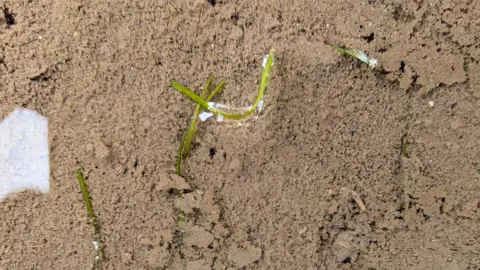
Seagrass plants making it through winter is "promising" for a restoration trial, a research officer said.
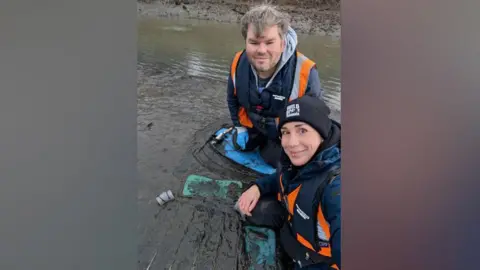
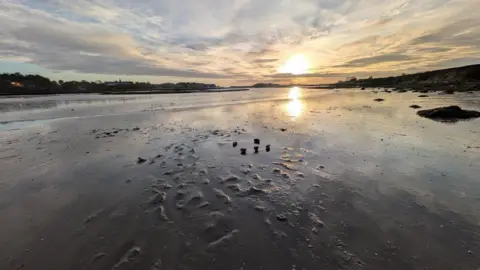
Durham Wildlife Trust carried out the plantings at the River Aln at Alnmouth at the end of November.
The trust's seagrass and seaweed research officer Dr Martina Bristow said at one point the plants appeared to have vanished, but further checks this month found them healthy and growing.
Bristow said it was "really quite promising" after facing "so many setbacks and challenges".
"That's quite important in that it tells us that they can stay anchored in the sediment and they can continue photosynthesizing," she said.
Seagrass meadows once thrived along the coastline, including in north-east England.
Although some pockets remain, over time a combination of human activity and environmental change has led to widespread habitat loss.
 Durham Wildlife Trust
Two further patches were planted at the River Don at Jarrow and Wansbeck Estuary.
Bristow said the Wansbeck plants did not make it and the future of the Jarrow ones was uncertain after mud washed on top of them.
However, she added it was possible they were still alive underground.
"There's been so many setbacks and challenges that we've had to face and so many times something looks good on paper and it just works out quite differently in the field.
"But to get to the point where we still have one site where the seagrass is surviving it's really quite promising and we've definitely learnt a lot through the process," Bristow said.
"Restoration trials don't always produce spectacular results, but sometimes simply surviving through a Northumberland winter is exciting enough to keep our teams plodding on in the mud and give us hope for the future."
 Durham Wildlife Trust
The work is part of the Stronger Shores project, which explores how working with nature can help protect coastlines.
It is funded by Defra as part of the £200m Flood and Coastal Innovation Programme which is managed by the Environment Agency.
The fieldwork stage of the scheme is now entering its final months.
Officers will then be examining the data once the trial wraps up at the end of September.
