Death records show horror of unmarried mums' home

 BBC
BBCYear after year, St Monica's home for unmarried mothers gave itself a glowing report, praising the "unfailing devotion" provided to pregnant girls, women and their babies. But behind the facade lay an awful reality for many, as laid bare by recently obtained records.
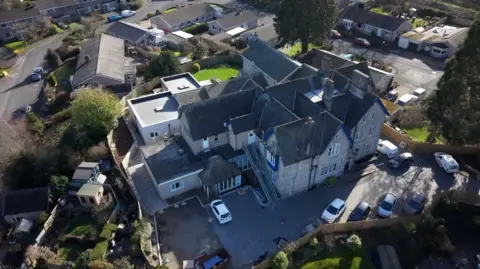
At the end of a private winding road in Kendal, Cumbria, St Monica's Maternity Home described itself as a safe, caring and understanding place for women and their unborn babies.
But cut off and hidden from the rest of society, the heavily pregnant teenage girls and women who arrived at the Church of England-run home were met with a brutal physical regime, designed with punishment in mind for their unmarried status.
There was no fully trained midwife and no pain relief allowed in labour. And alongside hundreds of forced adoptions, there was a pervasive pattern of stillbirths and deaths, described by a leading expert as being on an "unprecedented" scale.
In a bid to shine new light on why so many newborns died at St Monica's, BBC North East and Cumbria Investigations obtained records of more than 50 babies who died there between 1933 and 1967.
Though a number of these deaths would have been unavoidable in the context of the time, the documents show infants in the 1950s and 1960s dying from treatable conditions, while some suffered catastrophic head injuries in birth.
"What we're looking at is the perpetration of a massive injustice," says Dr Michael Lambert, a leading expert in homes for unmarried mothers.
Lambert has done extensive research on St Monica's, which closed in 1970, and has spent the last year compiling evidence about the deaths of infants at the home which he has passed on to Cumbria Police.
He analysed the records for the BBC.
The Lancaster University academic has long believed that babies who were "undesirable" in the mass drive for adoption in the post-war era were in line for even worse treatment.
Already cut off from advances in modern medicine, any children born at St Monica's with disabilities, of mixed race or the result of sexual abuse were afforded less care, while their mothers were subjected to even more cruelty, he believes.
"It sounds shocking, because it is shocking," he says.
"You look at these deaths, and you have the making of a scandal whereby the organisations that should have been caring for these young, very vulnerable women and girls were not fulfilling that because they had a different purpose in mind.
"That has ramifications for today about responsibility for what happened and what should stem from that in terms of accountability."
Lambert, a lecturer in medical humanities, described the documents as a "significant" step in further understanding what happened at the home.
"It's unlocked an important piece of the jigsaw," he says.

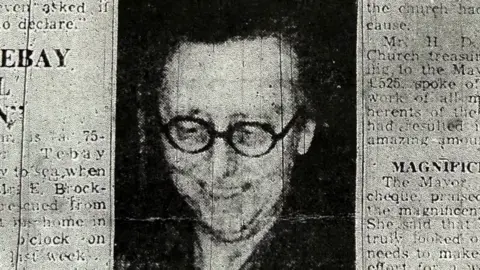
Many of the death certificates were signed by Elsie Stannard, the matron superintendent who ran the home from 1938 until her retirement in 1965.
"No MBE was ever more deserved," hailed the annual report of December 1963, as Stannard was named in the Queen's New Year Honours list to mark her 25th year at the helm.
But her "deep concern and understanding" for mothers depicted in the official records is in stark contrast to testimony the BBC has heard, describing her as cruel and fixated on punishment.
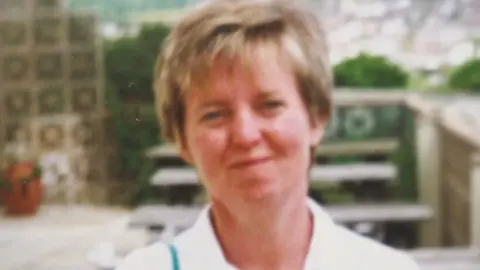
Steve Hindley's late wife Judith gave birth to a baby boy in January 1964. Despite begging for hospital treatment for her unwell child, Judith was told he would be treated "in-house".
"She was allowed to visit him from the doorway each morning and night before she went to bed," he says.
"She said 'all I could hear was his cries, and I wasn't allowed to touch him'. When her baby died, that was the first time she was allowed to nurse him.
"I find that so cruel."
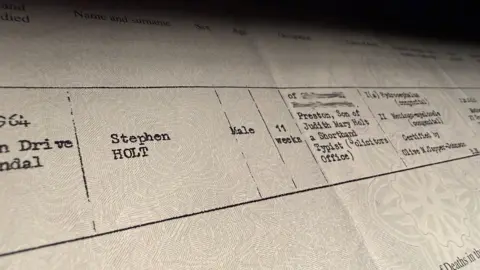
Lambert's findings concluded that baby Stephen was left to die by staff at the home because he was "undesirable" for adoption.
 Supplied
Lambert believes matron Stannard was also incompetent and that in part explains why the numbers of baby deaths were so high.
Though she attended nursing school and was a registered midwife, it is believed she was not fully trained, yet delivered the babies herself in the birthing suite.
"The matron isn't qualified to do what she's been tasked to deal with," he says.
"As the home evolves during the 1940s, 50s and 60s, the girls get younger and younger, 12 and 13 years old in some cases.
"The strain that puts on your body is immense and the risk it poses to you and your infant is very, very high.
"Those high risks are being confronted by someone who is completely out of touch with modern practices in midwifery and she's not capable of handling those situations.
"The infants here that could have had medical interventions placed on them aren't even being looked at by medical professionals, let alone being referred onwards, because the matron is taking it upon herself to not refer them."
Run by the Diocese of Carlisle, the home was funded by public money through grants from local authorities who sent women and girls there.
Each year the home presented its annual report to a committee made up of representatives from the church and local councils.
The reports from the home during Stannard's tenure reflect the rising numbers of unmarried young girls sent there as the decades passed.
"They do not know Christian standards, and have little sense of personal responsibility," the report of 1947 proclaimed about its users.
By 1962, St Monica's was full and plans were drawn up for a building extension to cope with demand.
Of the 78 girls who arrived to give birth over the course of that year, 14 of them were under 16, the youngest was aged just 12.
Two babies died that year, both noted in the official records as "born prematurely".
But the death certificates obtained by the BBC show the cause of one of those deaths was not just premature birth but also a tentorial tear - a severe head injury typically suffered during a traumatic birth.
While many deaths were recorded in official reports as "premature", others were simply explained as "deformed" or "abnormal" children.
Numbers recorded in the official documents show there were 52 stillbirths and two miscarriages at the home, more than 40 of them during Stannard's regime.

So what concerns existed about the home outside its isolating walls?
Lambert points to documents which show a recognition that the numbers of deaths were double that of similar homes.
His work has established evidence of a baby girl's death in 1953 which gave rise to concern among professionals outside the home.
In a letter written after the death, concerns were raised in what Lambert describes as "professionally guarded terms" by a consultant paediatrician who described the massive head injury suffered by the child.
"He describes bleeding inside the brain which has been caused by significant damage," Lambert says.
"It strongly suggests it's either intervention through forceps or potentially a hand that's pressing too hard and forcefully, during or shortly after delivery."
As a result of the letter, there is a suggestion action was taken by the local authority to find out what was happening at St Monica's.
And yet a decade on, Stannard was still in charge.
'Living with the consequences'
The diocese said it continued to offer heartfelt apologies to those affected by accounts of malpractice at the home, and was committed to full transparency.
"Each child and mother at St Monica's deserved the utmost care. One avoidable death was one too many," it said.
"Cruel or incompetent practice should have been prevented. Any behaviour which countered this was reprehensible."
Lambert says St Monica's can not be left to history.
"These things happened within living memory," he says. "Many of the people who passed through the home in later years are still alive.
"They are living with the consequences of what took place there. Organisations should be held to account for what occurred."
