Murder case from 1972 reopens after gunshot review

 BBC
BBCA murder conviction from 1972 is being re-examined after fresh ballistics evidence emerged more than 50 years on.
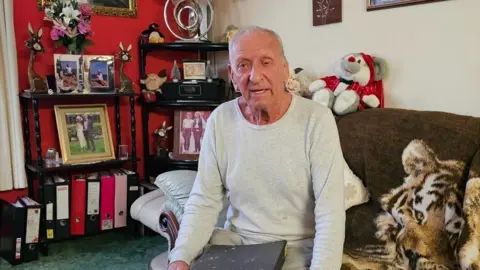
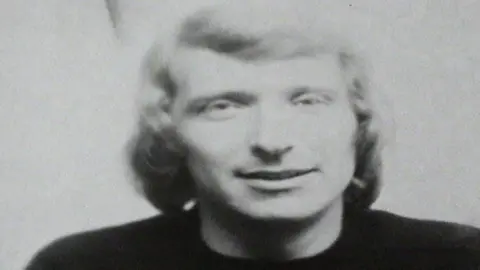
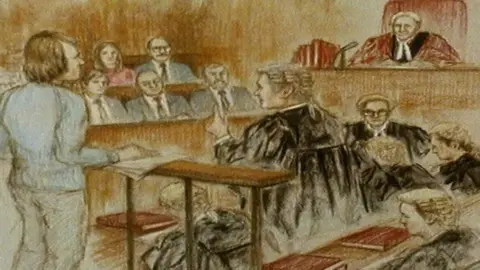
After Terry Clarke was shot dead in Hertfordshire in 1972, Kent pensioner Paul Cleeland was convicted of his murder and went on to serve 26 years in jail. Cleeland has protested his innocence ever since.
The Criminal Cases Review Commission (CCRC) has confirmed Cleeland's case is being reopened following a review of ballistic evidence. It will now assess whether the case should be referred to the Court of Appeal.
One of the review's findings was that it was not possible to establish whether gunshot residue was present on Cleeland's coat before it was seized by police.
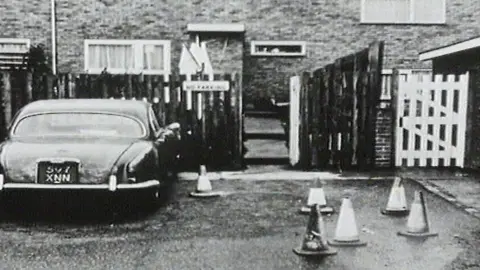
Clarke, who was a friend of Cleeland, was shot in Stevenage on 5 November 1972 after returning home from a bar. Cleeland, who now lives in Folkestone, said he was at home with his wife at the time.
'Let the court decide'
Cleeland said: "All this proves is that all the evidence was contaminated. All this is, is a cover-up."
He said it had taken the CCRC four months to reopen the case after they saw the latest reports, adding: "Their duty now is to refer it back to the Court of Appeal and let the court and the crown decide."
Cleeland's 54-year legal fight has included two failed appeals and repeated applications to the CCRC, along with a Westminster debate in 2024.
He has argued the case is similar to that of Barry George, who was found not guilty of murdering Jill Dando at a retrial following doubts over reliability of gunshot residue evidence.
 Hertfordshire Police
Ricky Arora, Cleeland's solicitor, has asked the CCRC to refer the case to the Court of Appeal within the next 14 days because of the 83-year-old's advancing age and failing health.
He said there was a "compelling public interest" in ensuring the matter proceeds without delay.
 Gale Cleeland
The CCRC review examined material retained from the 1972 Hertfordshire Police investigation, including cartridge wads, two spent shotgun cartridges and a coat recovered from Cleeland's home.
It also examined the role of the Met Police Forensic Science Laboratory, where Cleeland's clothing was sent for examination.
A forensic scientist told the CCRC the majority of gunshot residue recovered from the coat was unlikely to have originated from shots from the cartridge cases.
The expert said at least some of the gunshot residue recovered from the coat, if not all of it, was "likely to have been deposited when it was examined in a firearms laboratory".
The CCRC said: "It was concluded that it was not possible to establish if the characteristic gunshot residue was present on the coat before it was seized by the police."
CCRC officials have informed Clarke's family that the case is being reopened.
 Julia Quenzler
The CCRC told the BBC a decision was made to reopen the case as a result of work carried out by its Forensic Opportunities Programme.
"Several exhibits were sent to a forensic service provider for examination, resulting in new evidence that may assist his case," a spokesperson said.
They said a case review manager would analyse the results and other evidence "to see if there is a real possibility that the court would quash Mr Cleeland's conviction".
Follow BBC Kent on Facebook, X, and on Instagram and listen to BBC Radio Kent on Sounds. Send your story ideas to southeasttoday@bbc.co.uk or WhatsApp us on 08081 002250.
