Data reveals police use of force against under-18s

 PA Media
Norfolk Police has used force against children and teenagers more than 3,500 times in the past four years, figures reveal.
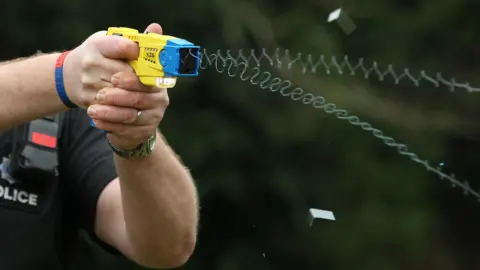
A Freedom of Information (FOI) request by the Local Democracy Reporting Service (LDRS) found that between 2021 and 2025 methods of force used included handcuffing, tasers, dogs, irritant spray, and two occasions of firearms aimed at children.
Officers also intervened physically 64 times with children under the age of 11.
A Norfolk Police spokeswoman said: "The figures reflect the ongoing complexity of incidents officers attend involving young people, where the priority is to safeguard, protect, and resolve situations safely, using the least intrusive option necessary."
The FOI found 52% of incidents in which force was used ended in an arrest with handcuffing accounting for the largest share of force used. Tasers were drawn 82 times and dogs were used on 18 occasions.
It also revealed more than 100 children were hospitalised as a result of incidents.
There was also said to have been an "unexplained" spike between 2022 and 2023 when incidents involving teenagers rose from 695 to 1,035 before falling to 779 the following year.
The figures come amid wider scrutiny of how the force handles incidents involving young people after a constable was struck off last year after being found to have used excessive force when he put a teenager in a headlock and handcuffed him to railings.
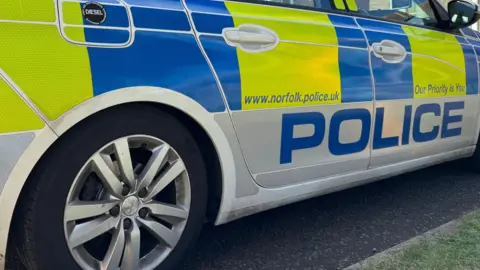
The LDRS said the figures were in line with the national average.
According to the Home Office, across England and Wales, police forces recorded almost 90,000 use of force incidents involving teenagers in the span of one year.
In response to the findings, Norfolk Police said the incidents were varied and frequently linked to vulnerability, safeguarding concerns, mental health and risk of harm.
A Norfolk Police spokeswoman said most uses of force are "low-level" and used in fast moving situations including guiding a person by the arm or handcuffing "to prevent harm".
She said: "Importantly any use of force must be justified, proportionate and recorded in line with national guidance.
"Officers are trained to prioritise safeguarding, de-escalation, and proportionate, lawful intervention, applying a child-centred approach supported by national guidance and partnership working.
"The nature of incidents increasingly reflects wider national challenges such as mental health and exploitation, alongside improved recording practices that provide greater transparency."
Do you have a story suggestion for Norfolk? Contact us below.
Follow Norfolk news on BBC Sounds, Facebook, Instagram and X.
