Farmers question future as costs soar amid Iran war

 BBC
BBCSome farmers in parts of the south of England have said they are questioning the future amid soaring operational costs due to the war in Iran.
According to recent figures, inflation - the rate at which prices rise - for farm running costs was more than 7% higher in March, compared with March 2025.
The Andersons Centre, a UK-based agricultural consultancy and research firm, has warned of another "cost of farming squeeze".
The BBC has spoken to farmers in the South about the impacts and how some are turning to novel methods to cut costs.
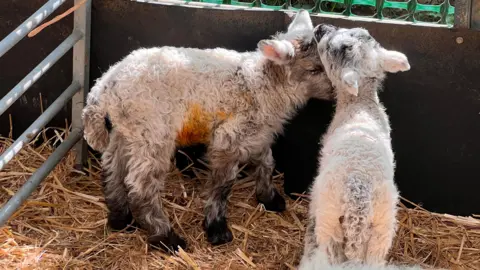
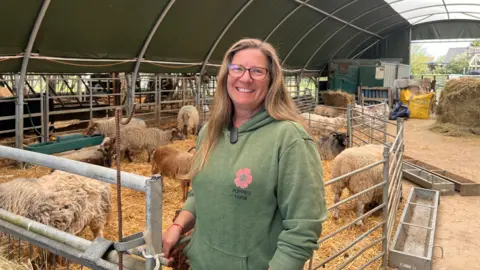
Jo Robertson, a farmer at Poppies Farm in Hurst, Berkshire, said she collects bread from food banks, scraps from a juice pressing company and nutrient-rich brewers' waste to feed her animals.
She said collecting the waste feed meant the farm's main expense was diesel, but added that a livestock farm could not survive on farming alone.
"The animals on the farm don't earn us enough money to pay the wages or pay for the diesel," Robertson said.
Children outside the mainstream schooling system due to illness or exclusion, who visit the farm as part of its alternative provision, was providing a secondary income, she said.
"I don't what our future is, hopefully to keep going and hopefully farm better."
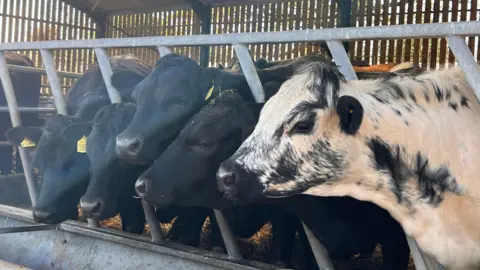
David Christensen, from Kingston Hill Farm in Oxfordshire, said some arable farmers were having to reconsider growing certain crops amid rising fertiliser prices.
A third of the world's key fertiliser chemicals pass through the Strait of Hormuz, which was closed to shipping after the US and Israel launched coordinated attacks on Iran more than a month ago.
While the price of cereals "may have gone up £5 a tonne", Christensen said that was "certainly not enough to offset the cost increases we are having to pay, and that's a challenge for the sector as well".
He added that the UK economy "didn't look very attractive before the Iran situation kicked off, it's worse now".
A two-week ceasefire means shipping traffic will be allowed through the Strait of Hormuz again but Christensen said he was concerned it would do little to reduce costs.
He said: "I think the disruption that has been caused is going to take a while to sort out. There's been damage to production facilities, so we need to ascertain the implications of that.
"I don't see a [return] to normal straight away, even if this ceasefire holds."
The Department for Environment, Food & Rural Affairs has said it expects "no change to food availability", adding that it would monitor increases in fertiliser and oil prices, "ready to act to protect rural communities".
It said: "We are taking seriously the Iran war's possible impact on the food and farming sector.
"We will continue to meet with the NFU and stakeholders to gather information on the effects of the conflict on the industry."
