Excavated Roman board game revived by 3D printing

 Vindolanda
A Roman board game discovered at a former settlement has been revived through 3D printing.
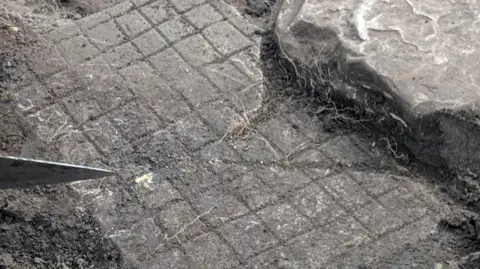
Archaeologists at Vindolanda, in Northumberland, excavated a board for Ludus Latrunculorum, also known as the game of little brigands or soldiers, between a bathhouse drain and workshop wall in 2019.
The stone board is currently on display in Toronto, but before the game was sent to Canada the Roman fort asked Newcastle University experts to help create a modern version of the game.
Activity and diversity officer at Vindolanda, Sophie Westlake, said the 3D printed version had made the game "more accessible" by letting people play it instead of looking at it in an exhibition.
The game was discovered outside the fort and it had been reused as a flagstone.
While the rules to the game have never been discovered, it is known as an ancient Roman strategy game for two players, similar to modern draughts.
Evidence suggests players use their "soldiers" to trap enemy pieces, with the ultimate goal of immobilising their opponent or capturing their king piece.
 Newcastle University
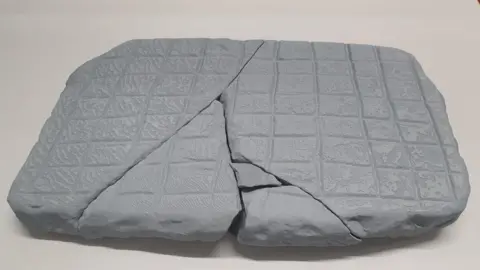
The team at Vindolanda asked electrical and electronic team leader Paul Watson and Dr Jenny Olsen, a lecturer in mechanical engineering, to help create a realistic replica of the game through 3D printing.
The original Roman board consisted of five separate stone pieces, which joined together to form the complete game.
Each individual piece was scanned separately using the university's handheld high resolution 3D scanner and the pieces were printed using polylatic acid plastic.
Once the replica was produced, it was handed over to Vindolanda Charitable Trust to be used as part of a public engagement programme at The Roman Army Museum.
"It really brings you back into how it would have been and you know the downtime on the force as well.
"They're not just active military spaces all the time, it would have been people just sitting around playing board games," Westlake said.
She added the lack of strict rules has made it a great tool for SEND groups and those with dementia.
"You're constantly negotiating with the other person that you're playing with," she said.
"So if you forget the rules, it doesn't really matter."
