How I fell victim to 'ghost' insurance broker scam

 BBC
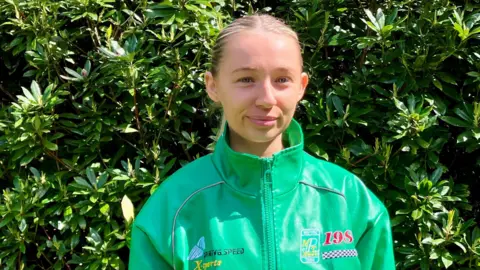
BBCA world champion Irish dancer has been left with a criminal conviction after being conned into thinking she had car insurance by a "ghost broker" who sold her a fake policy.
Amie Donaghey is one of "thousands of unsuspecting motorists" across the UK who City of London police said had fallen victim to the scam, which targets young motorists.
The fraud only came to light when the 21-year-old was stopped by police in Northern Ireland and told she was not insured, despite her belief she paid £700 to be covered by a legitimate insurance company advertising on social media.
Her lawyer said she was the victim of a crime and questioned if prosecuting people like her was in the public interest.
'Hard lesson learnt'
The reason the mother-of-two had gone down the route of internet insurance in the first place was "a no brainer" - it was "a fraction" of the £4,500 premium she was being quoted by high street insurance companies.
Figures from CompareNI indicate that Northern Ireland is the most expensive place in the UK for younger drivers outside London, with premiums averaging more than £3,000 in some areas.
She said it had all been "a hard lesson learnt".
Amie recalled the day she was stopped by police in her home city of Londonderry in August.
"I saw the flashing lights behind me and I was going 'oh, my God, what have I done?'," she said.
"I got pulled over and he said 'you're not insured' and I said 'I am insured'.
She showed the police an email chain from what turned out to be the bogus broker, based in England.
Officers told her it was a scam.
She also contacted the legitimate company called Dayinsure, who she had falsely been told she had been insured with.
They had no record of her and said they never sold policies on social media.
When she tried to contact the "broker", she said he "ghosted" her.
"I was blocked on everything," Amie said.
She said anyone considering taking out an internet insurance policy should "do their background checks" before they paid out any money.
"Make sure it's a real person you're talking to and don't just be doing it because your friends are doing it," she said.
At Londonderry Magistrates' Court on 8 May the district judge imposed no penalty due to the circumstances in the case.
'Reconsider prosecutions'
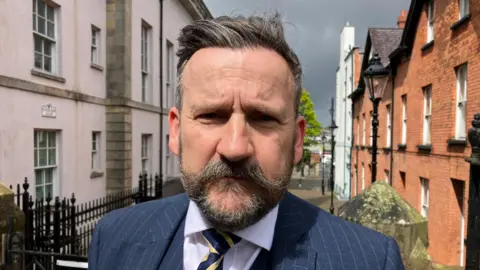
Defence solicitor Derwin Harvey said it was clear his client was "the victim of a crime", who had thought "quite rightly that she was insured".
He has now called on Northern Ireland's Public Prosecution Service (PPS) to reconsider whether it is in the public interest to prosecute in cases like this "where there is clear evidence that the accused is actually the victim".
The PPS explained driving without insurance cases were governed by a legal rule where liability arises from the act itself "regardless of recklessness, intention or negligence".
They said a decision was taken in this case based on the evidence and information on the police file.
The Police Service of Northern Ireland declined to comment on Amie's case.
But Insp Ian Ferriby said scammers could be "very convincing and those who commit fraud are always looking for ways to steal your money".
"Motorists should always be wary of deals which seem 'too good to be true' which offer heavily discounted prices for car insurance and should always verify that they are dealing with a legitimate company, which can be done on the Financial Conduct Authority website," he said.
At an earlier hearing the judge said she was minded to dismiss the charge.
A prosecutor said that that could not be done, so the district judge decided not to impose any punishment after a guilty plea was entered.
And the money, paid for by Amie's father, was eventually reimbursed by his bank.
How widespread is this?
Aviva, one of the leading insurers in the UK and Ireland, said ghost brokering was up more than 4% year-on-year and by 22% over the past two years, with young drivers aged 17-25 the "primary target".
The company said one suspected ghost broker detected by them had made around £150,000 selling fake car insurance to young drivers.
Owen Morris, from Aviva, said: "These fraudsters exploit social media to sell worthless insurance, leaving victims thousands of pounds out of pocket, driving without insurance, and at risk of prosecution.
What are the police doing?
 City of London Police
City of London Police has special units investigating ghost brokers across England, Wales and Northern Ireland - and it accounts for half of their insurance fraud work.
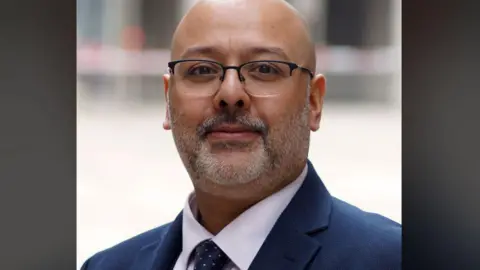
Det Ch Insp Nik Jethwa, head of the Insurance Fraud Enforcement Department, said ghost broking had become "increasingly prevalent", with criminals using social media to push fake policies.
"Avoid buying cover from unauthorised brokers or so-called 'ghost brokers', who leave thousands of unsuspecting motorists driving without valid insurance," he said.
Did Dayinsure say anything?
Dayinsure said it was "all too aware" of scammers selling fake insurance and it was "deeply concerning" when innocent people fell victim to criminal activity.
"Dayinsure never sells policies via social media and would never ask customers to pay by bank transfer," the company's director of insurance John Cooper said.
What does the industry say?
The Association of British Insurers represents more than 300 member companies.
"Many people who have fallen victim to a ghost broker, won't realise their policy isn't genuine until they're stopped by the police or try to make a claim," a spokesperson said.
Its advice is: If it looks too good to be true, it probably is.
Information about scams is available on the BBC Action Line website.
