Visiting England was magical, say Chernobyl kids

 Supplied
Forty years ago, the Chernobyl nuclear disaster shook Europe and affected generations of people living in Ukraine and the surrounding area. For years afterwards, English families stepped in to bring children from the region to the UK for respite holidays.
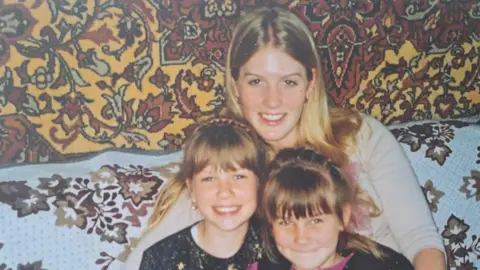
"It was just heartbreaking to hear what these children were going through," recalls Jill Quarmby, whose family arranged trips for about 60 children from Mogilev in Belarus – an area severely affected by radioactive contamination.
"How could you not be part of it? How could you not want to help children?"
For eight years, the Quarmbys brought children over to Ruston Parva, a leafy hamlet nestled at the foot of the Yorkshire Wolds between Driffield and Bridlington.
So how did it begin – and why?
 Supplied
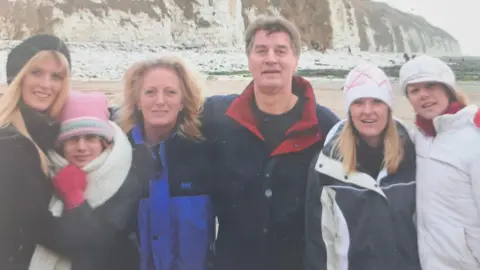
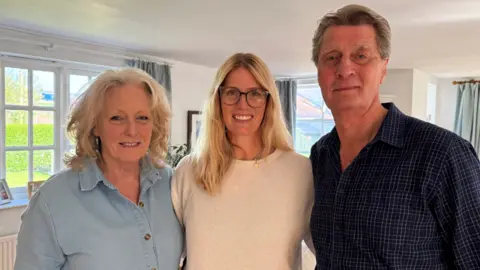
Jill is sitting on her sofa alongside husband Rob and daughter Beth Knoth. They are laughing and smiling while flicking through photos of Beth and her brother Tim when they were younger.
Beth is now 41 and has daughters of her own, but back in 1999, when 14, she sat through a school assembly she will never forget.
"The discussion led to how fortunate we are as a nation compared to others," she explains. "The example that was used were the children of Chernobyl.
"As a 14-year-old, hearing that children could possibly only live until the age of 21 was really quite distressing.
"At that moment, I felt really inspired and driven to so something."
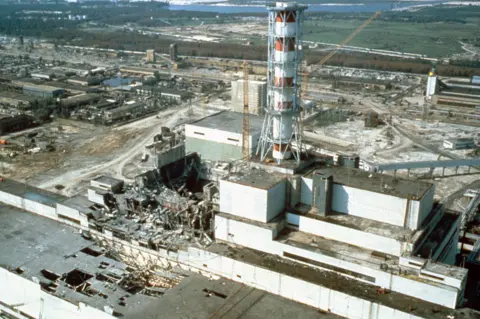
This was 13 years after reactor number four at the Chernobyl nuclear power plant suffered a catastrophic explosion that exposed the core and threw clouds of radioactive material over the surrounding area.
The majority of the radioactive cloud fell around Mogilev and around 800,000 people in Belarus were registered as being affected by radiation following the disaster.
After hearing about their plight, Jill says Beth then came home and wanted to help.
 Getty Images
"She'd heard that they were very poor children and everything they ate and everything they were drinking was contaminated," she remembers.
Jill got in touch with the Friends of Chernobyl's Children charity, which was already organising trips from Belarus to England.
The family set up an East Yorkshire branch of the charity and, after months of fundraising, Jill flew to Belarus to meet the families of 16 children who then came to the UK.
Recalling their arrival in East Yorkshire, Jill says: "They all looked very pale. They looked grey, they had dark circles under their eyes.
"A lot of them were very hungry in the sense that they weren't getting nourishing food."
Each of the children was given an apple, which they did not eat as they "couldn't believe it was for them".
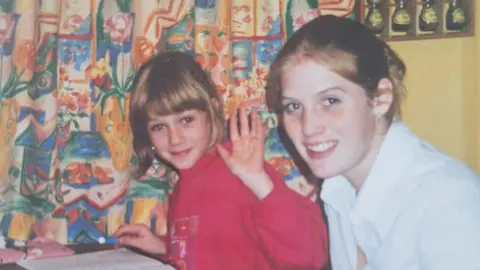
Among them was seven-year-old Olga Staravoitova.
Now 33, Olga is a mother of three boys and lives in Lebanon. Over a video call, with one of her sons sitting next to her, she remembers her childhood.
"[Belarus] is a nice country. We went to school as normal kids. OK, it was a hard time. But I had luck to visit England, be with an amazing family."
 Supplied
Her first impression was that it was a "wonderland".
"I was excited, you know. We were all excited," she says. "Everything [was] new, different buildings, different people, different language."
She laughs while telling stories of trying new food and visiting the school, doctor and dentist. She believes she would still be able to remember how to get to the Quarmbys' house.
During the visits, Jill arranged packed schedules for the children, with trips to the beach and theme parks, as well as health checks and new clothes to take home to Belarus.
But "just giving them fresh air to breathe and clean food" was the main objective.
She says none of this would have been possible without the generosity of local people.
"You can't begin to name how many people were so kind, very thoughtful."
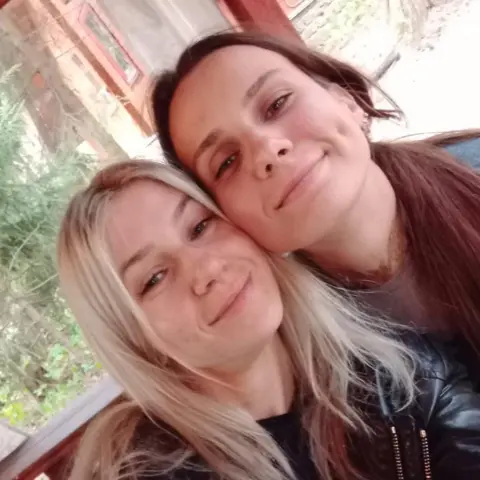
Olga stayed with the Quarmbys for five summers, before being joined by her six-year-old sister Ekaterina, also known as Katya.
 Supplied
Now 28, Katya is a marketing specialist and lives in Belarus, where a photo of the Quarmby family is a proud possession.
Although neither sister was born at the time of the disaster in 1986, she believes it affected their lives.
"It's not just the health issues," she says. "It's also had maybe financial consequences, because I remember we were not really rich at the time."
She beams when recounting her time spent in England.
"I remember those days were filled with joy.
"They not only supported us with entertainment, they also financially supported us, emotionally, educational support as well.
"I'm so grateful for my English family and I just want them to know it."
She tells of visiting a fire station, seeing a giraffe at a zoo and just how "tasty" Cadbury chocolate was.
Pointing to her mouth, Katya describes one of her most vivid memories. On her last trip to East Yorkshire, when she was 10, Rob, a dentist, fixed a chip in one of her front teeth.
The trips were usually arranged for a month over summer, but Katya and Olga were also part of two group visits over Christmas.
"Everything seemed to me really magic", Katya recalls.
The charity funded the final trip at Christmas in 2007.
Jill says raising money became more difficult each year, but they continued to support the children until they were 18.
When asked about what difference they think they made, Jill and Beth are very humble.
Beth says: "Obviously there were lots of health benefits for them, coming to be with us for that month each year.
"[Then] the language. They really picked up on English to the level that was incredibly inspiring.
"The relationships that were formed with the family, knowing that there's people out there who care, knowing that there's options for them and that we would be there for them whenever they needed us.
"There was a lot that was gained, in both directions."
Listen to highlights fromHull and East Yorkshire on BBC Sounds, watch the latest episode of Look North.
Download the BBC News app from the App Storefor iPhone and iPad orGoogle Play for Android devices
