Maternity review must go further - bereaved mother

 BBC
BBCAn investigation into maternity services needs to go "much further", according to a Bradford woman whose daughter was delivered stillborn after failings in her care.
The National Maternity and Neonatal Investigation found a "clear gap" between how staff at Bradford's maternity services "intend" to care for women and how families actually experience that care.
The review, led by Baroness Amos, found maternity services nationally require "urgent" reform and are no longer fit to give high-quality care.
Mel Pickup, Bradford Teaching Hospitals NHS Foundation Trust (BTHFT) chief executive, apologised to the "women whom we have let down" and said she recognised the "lasting trauma and harm" caused.
However, she added that neonatal services at the trust had recently received an Outstanding rating from the Care Quality Commission health watchdog, while its maternity services had been rated as Good.
Among 12 NHS trusts visited as part of the investigation, women cared for by BTHFT said they had not been "believed, listened to or taken seriously".
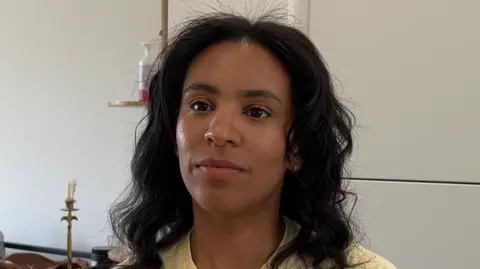
During her pregnancy, Lauren Caulfield was under the care of Leeds Teaching Hospitals NHS Trust and BTHFT, but her daughter Grace died in the days before her birth in 2022.
She said: "It's a known fact that women and families are not listened to in maternity services, but I honestly don't feel women or families have been listened to as part of this report.
"I've been involved in it since the beginning, there's been many families that have put to Baroness Amos and her team what needs to happen in maternity to make it more safe, make it more equitable, and ensure that people don't harm or experience harm and that's been completely ignored."
Caulfield, who is currently a student midwife, said a statutory public inquiry was needed and there was a "systemic problem".
"Most of the staff I work with have been wanting to do the best they can but they're working in systems that do not support them - whether that's not enough staff, excessive work hours or not enough patient care, not enough time to provide the care that people want to," she said.
 Google
Baroness Amos' report revealed busy wards, stretched staffing, heavy administrative workloads and digital systems that were "difficult to navigate" at Bradford Royal Infirmary.
Families told investigators the service at the hospital felt "under pressure", which affected the care they experienced.
The report stated: "Staff spend significant time looking for information or completing tasks that take them away from families.
"Families noticed this too, describing staff being drawn to computers, when what they needed was reassurance and encouragement."
Some of the women who spoke to investigators in Bradford said they felt patronised and described feeling their symptoms had been dismissed.
They told investigators they felt "coerced rather than supported", with some claiming they had been told "they could not go home or make feeding decisions unless they complied with staff expectations".
Baroness Amos' report raised concerns about language and background, as well as concerns about communication, with some mothers describing receiving differing advice from staff members.
They also spoke about the state of the buildings, with the age and layout of the Bradford Royal Infirmary site leading to delay, stress and extra pressure.
Meanwhile, the complaints process at the Bradford trust was described as hard to understand and slow, and families felt they were met with "silence and a lack of explanation", according to the report.
The report warned that the women's experiences covered a range of time periods, which meant some of the issues, such as the condition of the estate or ways of working, may have since changed.
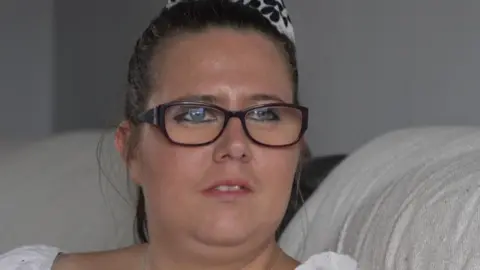
Bethany Sugden told the BBC she went to Bradford Royal Infirmary to have her third child, who was eventually delivered via emergency C-section.
She said she received poor care throughout the birth - and "only one midwife was caring through that whole time".
"During the C-section, no one talked us through a single thing. I didn't even know the baby had been born," she said.
"Even right down to asking for a shower for hours and hours, and a student midwife said, 'yeah, you go, I'll watch the baby.'
"A couple of minutes into the shower on the ward, I could hear the baby absolutely screaming and I was thinking, she's all right, she's with somebody.
"I wasn't in the shower long, but when I got out, the baby was on her own. She was just left on her own to scream."
Sugden said when she was discharged from the unit, the trust did not send out the correct information to the community midwives.
When a midwife came to visit two days after Sugden had returned home, it was discovered the newborn baby had jaundice.
"She was treated, but it was missed because of how exhausted I was and how exhausted everybody was by the whole ordeal," Sugden said.

Beth Troy told the BBC she suffered an acute kidney injury during her labour at Bradford Royal Infirmary three years ago, but her cries for help and complaints of pain had been repeatedly ignored.
Her kidney infection had been missed because a member of staff had recorded it on a piece of template paper and that was "shoved in my file - no one ever looked at it ever again", she said.
"I was begging for pain relief – explaining that I didn't think my symptoms were right, that I was having really bad pain with my kidneys and I wasn't being listened to," she remembered.
"I was put in a side room. It was a room full of piles of chairs, about eight birthing balls and an old sofa. No medical equipment, no bed. I was in there for about four hours."
When she gave birth via emergency C-section, her son arrived in just four minutes, not leaving staff enough time to put up a privacy screen.
Troy said she had since received a report from the trust explaining what went wrong and apologising for the lack of care she received.
"It was really scary to get that report afterwards and things could have gone so much worse than they did, and what did happen was really traumatising," she said.
Troy said the experience had led her and her husband to decide not to have any more children.
'Not good enough'
Responding to the findings of the report by Baroness Amos and her team, Pickup said: "Every year, thousands of women give birth under our care, and we want each and every one of those women and their families to receive excellent care and have a positive experience with us.
"In most cases this happens, but we know that it does not happen for everyone – and that is not good enough. For those women whom we have let down, I am sorry.
"I recognise the lasting trauma and harm experienced both by Bradford families sharing their experiences of care, and the many families contributing to the wider investigation."
Pickup said she knew it "takes strength and great courage" to share experiences, and the trust would "welcome any further opportunities to listen to our local families, who want to share their experiences with us so that together we can continue to improve the care we provide".
She said that "dedicated and passionate colleagues" had "worked hard" to improve the trust's maternity and neonatal services.
"Over the past 24 months this has resulted in an 'Outstanding' rating for our neonatal services and a 'Good' rating for our maternity services from the Care Quality Commission. We know we can do more and we will do so," she explained.
"I hope that the involvement of families, colleagues and our trust in the national investigation helps bring about lasting change across all maternity and neonatal services," Pickup added.
"We will continue to work with our colleagues and partners to provide the best possible care for our families and create a service that our colleagues are proud to work in. That should be the lasting legacy for the families who have so bravely taken part in the investigation."
Listen to highlights from West Yorkshire on BBC Sounds, catch up with the latest episode of Look North.
