New method deployed in fight against winter potholes

 BBC
As the wet and cold weather rolls in across the UK, a new weapon in the fight against potholes is being deployed.
Oxfordshire County Council has begun using Viafix - a water-activated asphalt compound that is laid cold - on the county's roads.
The method is the first to come out of a two-year scheme to test different pothole repair methods, which began in Banbury in June.
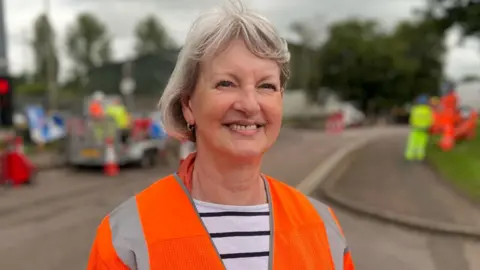
Liz Leffman, the council's pothole czar, said the Viafix compound would "save" the authority's repair teams "a lot of time".
"In the past, what you would have to do would be go and put a temporary filling in and then go back and fill the pothole permanently when it got warmer," the Liberal Democrat explained.
"What's great about it is that you can go out in the wet and the cold and fill a pothole permanently without having to go back and do another filling at a later stage."
She added that alongside saving repair crews time, the new method "makes it much safer for our residents to drive along those roads".
Oxfordshire County Council is responsible for 3,000 miles (4,800km) of road across the county - with an estimated 600 potholes to repair at any one time.
Last winter saw a particularly bad pothole epidemic across the county's roads, with then-Prime Minister Sir Keir Starmer even wading in on the issue.
To get ahead of this years cold season, in June the council commandeered a 700m (2,300ft) stretch of Wildmere Road Industrial Estate in Banbury.
The route was divided into sections, with nine different firms testing different methods to repair the potholes and in turn find what may work best for Oxfordshire's roads.
Rich Lovewell, business director at council contactor M-Group, called the experiment "hugely exciting".
"We're here to bring innovation, we've got over 20 different techniques and different materials that we're looking to trial over a number of months, maybe even years" he explained.
He added that the scheme allowed the firm to "look at what durability, what cost-effectiveness, what low carbon materials are out there so we can deliver a better solution".
