What makes people want to 'take a break' from work?

 BBC/PA
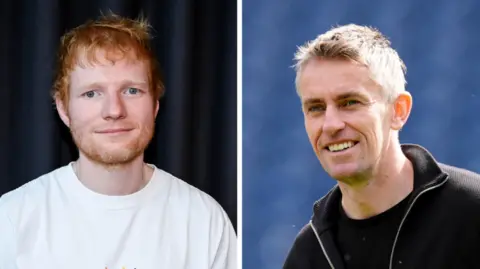
Kieran McKenna's decision to step down as the manager of Ipswich Town – and temporarily walk away from football altogether – came as a shock to fans and players alike.
Just weeks prior, he had helped the club secure another promotion to the Premier League and, arguably, his stock had never been higher.
The intensity of the past five seasons, however, had taken a toll, and, as he said upon his departure, he was "looking forward to a break" after "giving so much".
The 40-year-old also said he would be "dedicating some time to my family," something musician Ed Sheeran has also hinted at doing following the end of his current tour.
But needing to step away from high-pressure environments is not something unique to elite football managers and singing superstars.
According to Mental Health UK, one in five people – or two in five 18-24-year-olds - took time off work in the last year due to poor mental health caused by stress.
Its 2026 Burnout Report also showed the risk of burnout was still "stubbornly high", with nine in 10 adults experiencing high or extreme levels of pressure and stress.
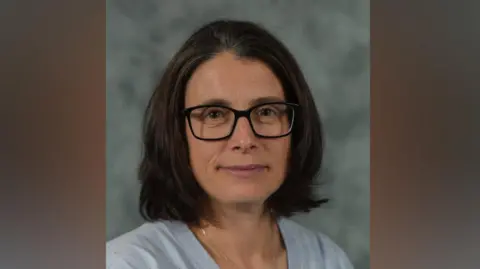
While it has not been suggested McKenna suffered burnout, Prof Valerie Gladwell, director of the Institute of Health and Wellbeing at the University of Suffolk, said "he really needs to be looking after his own health".
 University of Suffolk
"Quite often we would always recommend that people take time away from a stressful situation first and foremost," she said.
"In terms of being a football manager, being able to switch off from that role and just be a dad or a wife, or a friend, is really important.
"Football managers are always on, it's a 24/7 job, and there's always things that you are having to deal with. The role doesn't have much downtime.
"He mentioned his family as well and [as a manager] you're away from your family constantly, and we know support mechanisms are really important for wellbeing."
'You become less emotionally engaged'
While the World Health Organisation does not recognise burnout as an illness, it does acknowledge it as a "syndrome resulting from unmanaged chronic workplace stress".
Yet, according to Mental Health UK, more than one in three workers do not feel comfortable discussing high or extreme levels of stress with a manager.
But Gladwell said burnout was a "proper thing" and a "bigger issue than we realise" - one that can significantly affect people's mental and physical health.
"Too often in the past it was put on the person to solve their own problems and just get on with it," she told the BBC.
"But, although you may be functioning, it makes it more challenging to get the pleasure out of actually doing the work that you are doing.
"You become less productive and less emotionally engaged in what you are doing."
 Florry the Lorry
While taking some time out when suffering from burnout is recommended, what you does with that time is equally important – endlessly scrolling on your phone, for example, is not advised.
Gladwell recommended spending time in nature and just "being in that moment where your feet are" – advice practised by Catherine Carlton, from Lowestoft, Suffolk.
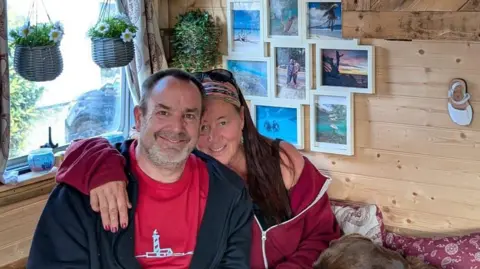
She and her husband, Chris, were living just outside of London when they decided to turn their backs on the "rat race" in favour of "freedom".
The former teacher told the BBC they made the decision after her husband suffered "a bit of a burnout" caused by more than just his job working in IT.
"He was having to commute an hour just to get to his office in the morning and then an hour back, but it was more to do with the rat race of living in London," she said.
"It was just a constant battle against paying mortgages, earning enough, working and trying to keep on top of everything, which took its toll and we just thought was silly."
 Florry the Lorry
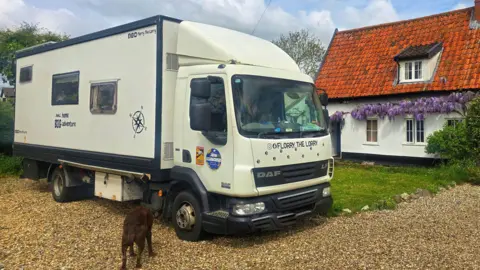
That was nearly 10 years ago, and since then Catherine and her husband have given up their old jobs, converted a lorry into a mobile home and hit the road.
"I now work part-time when I want and he's working online and doing less hours, and he's obviously not got a commute and can work from wherever he is," she added.
"We wanted to travel and not necessarily be in one place, and this gives us the life we wanted – we've got more freedom and flexibility and it's a more peaceful way of life."
 Supplied
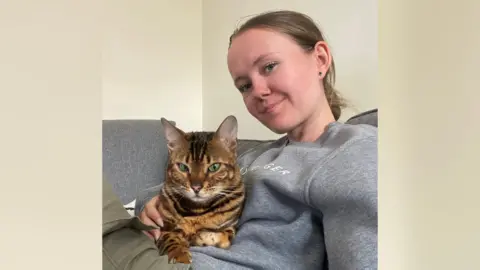
Jade, 29, from Kesgrave, meanwhile, left her dream marketing job in 2023. She felt she had been given too much responsibility too soon with unattainable expectations.
"I didn't realise I was burnt out at the time, but I look back now, and I was actually really, really burnt out and it affected my mental health a lot," she said.
"I just thought it was normal and that was how I should be treated and how I should be feeling, but then I became anxious and was crying all the time."
Since then, Jade secured a job at a cattery and now runs her own pet sitting and animal content creation businesses.
"It's sad because with high level roles you expect you're going to be stressed and unhappy, but you've got this big paycheck so you just have to deal with it," she said.
"But in reality, it shouldn't be that way. There should be mental health support in place and people looking at your workload."
 Suffolk Mind
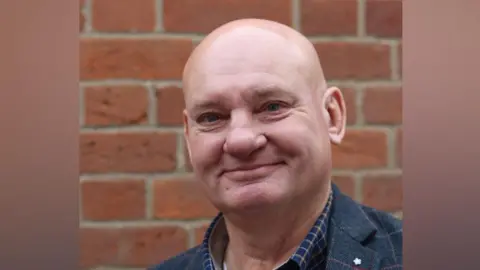
Father-of-three Martyn, 67, left his public sector role after the pressures put on him from those above became too much and left him "tumbling into a big black hole".
"I got signed off sick and I got to the very dark stages where I went outside one day and I left my dog and my phone at home, and I was not in a good place," he said.
"I think for men it's harder for to open up and so you keep it in, you keep going, but it gets to the stage where you can't go no further."
Martyn now volunteers for Suffolk Mind, which helps treat people with burnout by offering counselling, anxiety courses, and a free employment programme.
"I miss the blokes I was working with, but as far as the rest of it, I'm glad I left," he added.
What to do if you're suffering from burnout
Nicki Bush, from Suffolk Mind, said anyone who thinks they are suffering from burnout should reach out to their GP and speak to their work manager to arrange time off.
She said: "Once you are ready to return to work, or if you decide to stay in work, discuss reasonable adjustments with the manager and HR.
"Things like an adjustment to working hours, reduced workloads, regular breaks, flexible working and hybrid working."
She added that time should also be taken for self care.
"Take time away from digital devices, eat regularly, keep hydrated, have a good sleep routine and go for a walk or do something that makes you feel good," she said.
Do you have a story suggestion for Suffolk? Contact us below.
Follow Suffolk news on BBC Sounds, Facebook, Instagram and X.
