Older domestic abuse victims 'suffer in silence'

 Wiltshire PCC Office
Older domestic abuse victims are "suffering in silence" and feeling "shame" say professionals after a 64-year-old woman was sentenced for killing her mother.
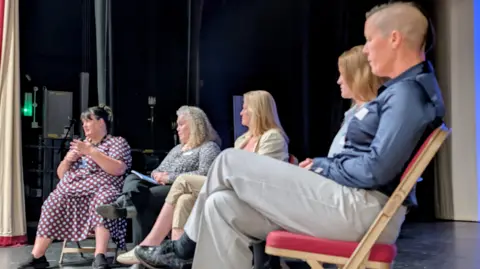
The Domestic Abuse in Later Life conference in Wiltshire addressed the issue, including pressure on unpaid carers. Debbie Beadle, from charity FearFree, said there is "shame and guilt" about coming forward.
Stefania Glowka was recently jailed for eight years after killing her mother, who she had been caring for, in Devizes.
Maria Milton, commissioning manager for victims at Wiltshire's Police and Crime Commissioner office, said it was clear people are "under immense pressure and suffering in silence".
Milton's office said about 700,000 people aged over 60 are estimated to experience domestic abuse each year in the UK, but the real number is likely to be higher, partly due to lack of reporting.
Until recently, the office said, national data did not include people over 75, reinforcing the idea that domestic abuse is mainly an issue affecting younger women.
Beadle added older people may have been in an abusive situation for a while but because they had been "surviving", it was not spotted by either family members or professionals.
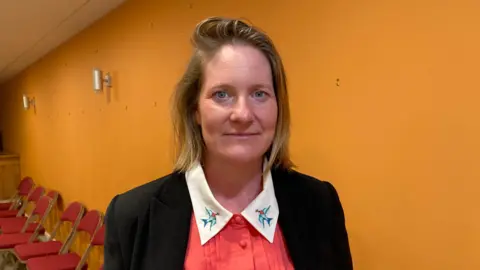
Kerry Hearsey, from the Princess Royal Trust for Carers in Hampshire, told the conference in Chippenham on Monday that her organisation has carers who "think they are on the brink of potentially creating some harm".
She explained carers can be so overwhelmed and exhausted that they might "walk out" and leave somebody who may be relying on them.
 Wiltshire PCC Office
Hearsey said older people are often carers themselves, with women between the ages of 75 and 79 most likely to provide 50 hours of care or more a week and men between 85 and 89 doing the same.
She added "carers are very stoic" and will insist they are fine, needing to build trust to admit they need help.
"Very often their loved one is very insistent that the person becomes a carer because they have total trust and faith in them," she added.
"That can leave somebody, especially if they have a fractured or complicated relationship, in a situation that increases risk."
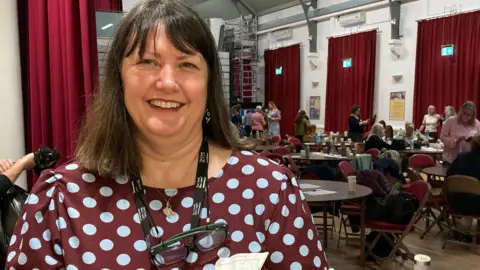
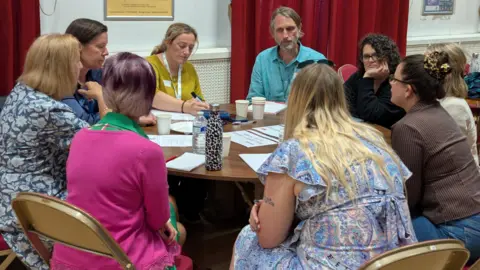
Milton said more than 100 people were at the conference, allowing professionals from organisations to learn from each other and "identify how we can work better to improve the service we provide to one of our most vulnerable groups".
Councillor Clare Cape, Wiltshire Council Cabinet Member for Public Health and NHS Co-ordination, said the authority wants to raise awareness of the problem.
She said: "We are committed not only to supporting victims and survivors, but also to preventing domestic abuse from happening in the first place through the funding and support we provide to local services and community initiatives."
If you have been affected by any of the issues in this story, help and advice is available via theBBC Action Line.
Follow BBC Wiltshire on Facebook, X and Instagram. Send your story ideas to us on email or via WhatsApp on 0800 313 4630.
