'Slow tourism' plan for Flow Country world heritage site

 Getty Images
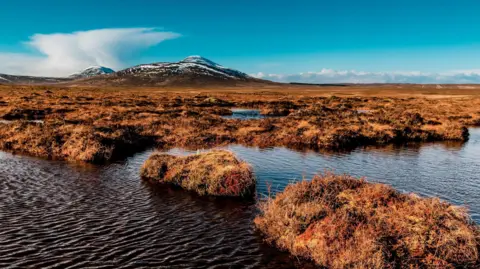
A "slow tourism" strategy is being developed for the Flow Country Unesco World Heritage Site in the north Highlands.
The status was awarded two years ago and covers almost 469,500 acres of one of the most intact and extensive blanket bog systems in the world.
The Flow Country Partnership said its plans would balance tourism and conservation, and were aimed at bringing benefits to communities and businesses.
The strategy could see towns and villages surrounding the vast area of peatbogs, lochans and hills in Caithness and Sutherland becoming "visitor gateways" to the site.
Under the strategy, other locations would have facilities explaining the Flow Country to visitors.
Designated walking and cycling routes within the world heritage site for locals and tourists would also be promoted.
Slow tourism is a term used describe longer, more immersive visits to a destination.
Janet Bromham, the partnership's project manager, said: "As we enter our third year as a world heritage site, we're working to raise the Flow Country's profile across the UK and internationally, while creating lasting opportunities for communities across Caithness and Sutherland."
Chairman Ian Ross added: "The Flow Country is of global importance and the world heritage site designation is a recognition of the contribution peatlands can make as a carbon sink and help in mitigating the challenge of climate change.
"It is important that this is seen as a living landscape."
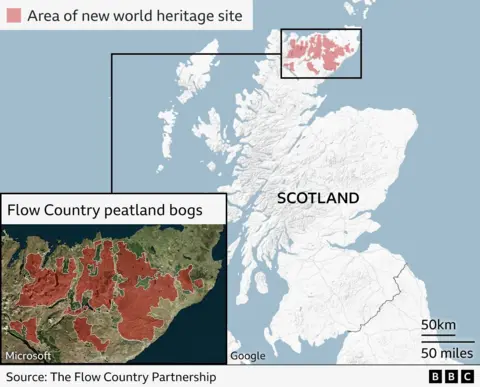
Unesco status was achieved in July 2024 after an almost 40-year campaign.
The rare blanket bog ecosystem supports a range of notable species including a host of sphagnum mosses and other wetland plants.
There are all sorts of insects and a host of rare birds including greenshank, golden plover, dunlin and hen harrier.
