'We voted in an election for the first time - this is how it felt'

 BBC
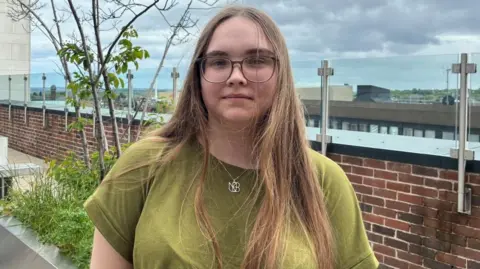
BBC"When you're stood in the box it's like: these three crosses could mean absolutely everything - or absolutely nothing," says 18-year-old Ruby on the the moment she stepped into the polling booth to exercise her right to vote for the first time.
"It feels weird, when you go in and hand over your ID [but] it doesn't actually hit until you've seen the results. That's why it's important to vote for whoever, just vote," she adds.
Earlier this month in the nationwide local elections, Labour's 50-year reign in Barnsley came to an end, after Reform UK gained a majority on the council.
It was also the first time in two decades that all 63 council seats were contested.
For some of the borough's younger residents, this year was significant for another reason - it marked the first time they've been able to have their say at the ballot box.
We spoke to 18-year-old politics students at Barnsley College, to find out how they felt voting as first-timers in what transpired to be a landmark political shift for the town.
'A big change'
According to Ruby, as soon as she could register to vote at 16, she signed up, although she wasn't eligible to have her say for another two years.
"I already knew I was voting no matter what," she explains.
Although she wasn't shocked by the result, she says the scale of the shake-up was surprising.
"It's going to be a big change, especially for culture in and around the town," she says.
With voter turnout for this year's all-out election at 37.25% across the borough, what is Ruby's advice for tackling voter apathy?
"Find something to care about within it - whether it's for your mum, or your brother or sister, just something within it which can edge you towards voting," she says.
"It's so important, especially in this day and age when we don't know what's happening. Are we moving from a two-party to a multi-party system?
"It's all up in the air, so your vote matters now more than ever."
'Students are town's heart'
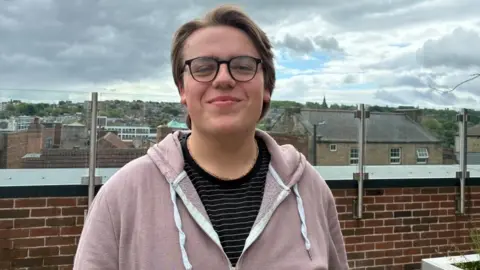
For Lewis, he used his first time voting as a way to encourage others to do the same.
"Not many people in my family do actually vote. Especially with the declining turnout in all elections, it's even more important that people go and vote."
Lewis thinks the reason local elections see much lower turnouts is because people struggle to connect to candidates beyond "a list of names".
"I felt personally very disconnected from who I was voting for, and if you could improve that connection, you might see more people voting," he says.
Although the results "felt like dominoes falling", he understands people wanted change, he adds.
Lewis hopes the new council will continue to explore affordable transport options for young people, citing the MiCard scheme as a good example of this.
The initiative, funded by South Yorkshire Mayoral Combined Authority and Barnsley Council, grants free bus travel at certain times to people aged between five and 18.
Describing students as part of "the heart and soul of Barnsley", Lewis adds that time would tell as to whether a Reform-led council's policies would favour an older rather than younger demographic.
'More involved'
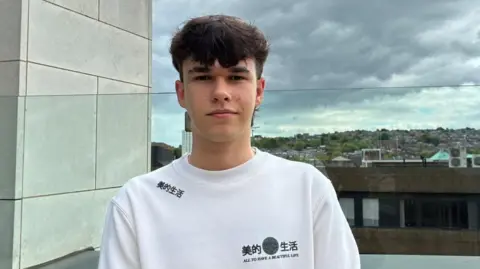
On the run-up to the election, Elliot says he felt there was an absence of local issues addressed by most parties, with the focus staying on national issues.
Some of his friends even chose not to vote, because of what they felt was "a lack of information", he explains.
"When I asked them they said they didn't know who they wanted to vote for, they didn't have enough information, and they didn't know who to trust."
Being able to have his say helped him feel more involved in Barnsley's future.
"Unlike a lot of my politics class, I wasn't really involved in politics growing up, until I chose it for A-level," Elliot says.
"I didn't have a connection to it, so when the results of [previous] local elections came out I wasn't really interested."
He adds that it gave him "a bigger feeling of responsibility than before".
'Felt like an adult'
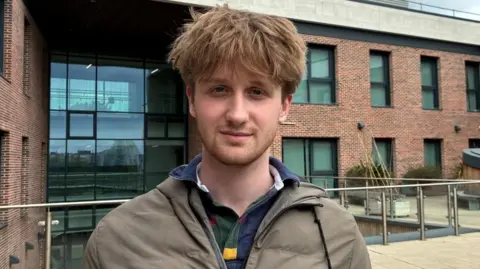
"When I walked in and voted, I felt like an adult," Matthew jokes.
"I remember walking and out and thinking, 'I just did that'. It was quite surreal."
Describing the voting process as "simplistic", he says he doesn't "see why other people don't vote", adding it "suggests it's more apathy rather than the system itself".
Like Ruby, Matthew says he wasn't surprised by the election results as he could "feel there's been a general sentiment around the town".
One of his concerns is that some newly-elected councillors have little experience of how local government works.
"To see the council replaced with a lot of new faces, I suppose time will tell," he adds.
Now he's voted in a local election, what are his thoughts about doing it again?
"Councillors don't just sit in the town hall and speak - they are important," he says.
"It's almost the philosophy of your town represented, it's not just something to brush off - I think people should value their vote more."
Listen to highlights from South Yorkshire on BBC Sounds, catch up with the latest episode of Look North.
