London osteoporosis care hit by postcode lottery

 BBC
BBCDelays in rolling out fracture liaison services (FLS) have created a "postcode lottery" in London, leaving many osteoporosis patients without access to fracture prevention care.
Three of London's 16 NHS trusts do not have one, while the Royal Osteoporosis Society (ROS) says no clinics have opened since a national rollout was pledged two years ago.
About 382,000 Londoners have osteoporosis. More than 8,000 were identified through FLS last year, but provision varies sharply with more than 5,000 patients identified in north-west London versus 30 in north-east London.
The government said it remained committed to rolling out the service by 2030, as part of its ten-year health plan.
Osteoporosis weakens bones, making them more likely to break. In some cases, fractures can occur after a simple fall, lifting an object, or even everyday movements.
Experts estimate that one in two women over the age of 50 will experience a fragility fracture, compared with about one in five men.
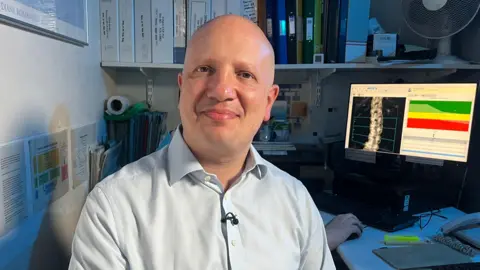
Professor Alex Comninos, clinical lead for the FLS at St Mary's Hospital in Paddington, said women could lose up to a fifth of their bone mass following menopause.
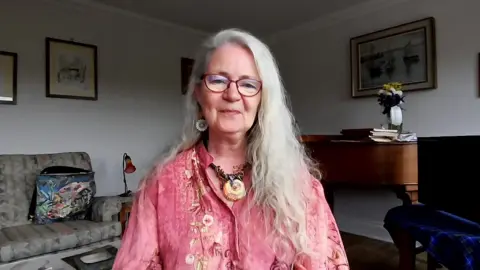
When Frances, 67, bent down to pick up a vegetable box at her north London home, she heard something snap.
At first she thought she had strained her back, but within days the pain was unbearable.
"I couldn't move. It was absolutely excruciating," she said.
Frances, a professional singer, waited four months for a diagnosis which came as a text message telling her it was osteoporosis.
"It was devastating. You think, 'hang on, this has changed my life'," she said adding that she believed much of her suffering could have been avoided with specialist FLS support.
FLS are specialist NHS clinics that identify patients over 50 who have suffered a fracture and assess whether osteoporosis may be the underlying cause.
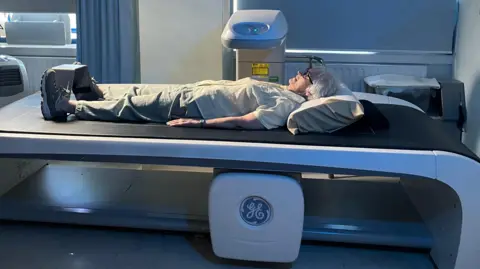
Patients receive a detailed assessment, which can include bone-density scans, blood tests and a review of their risk factors before being offered treatment to strengthen their bones and reduce the risk of future fractures.
"The motto is that your first fracture should be your last fracture," said Comninos.
The service at St Mary's treats more than 800 patients each year, which the hospital says has contributed to a reduction in hip fractures from around 240 a year to 170, helping save more than £1m annually.
London trusts which do not have the service are Barts, Homerton and Whittington.
In April, an FLS service was introduced at University College London Hospital, however it is not yet registered with the national database that is managed by the Royal College of Physicians.
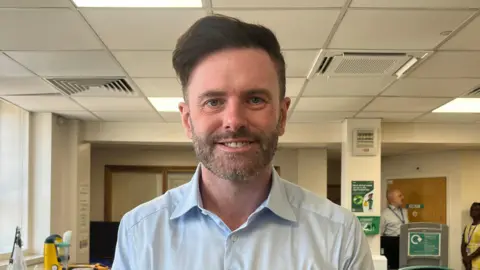
Craig Jones, ROS chief executive, said: "Unfortunately there is a postcode lottery.
"They are the people who go on to suffer broken hips. Very sadly, a quarter of people die after a broken hip."
He added many patients were being "fixed up and forgotten about" after an initial fracture, missing the opportunity to receive treatment before suffering a more serious injury.
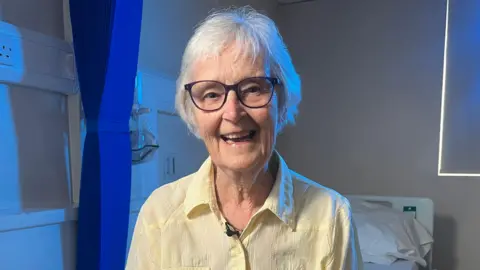
For 82-year-old Brenda Dorrian, the system worked exactly as intended.
After breaking her wrist, she was referred to St Mary's FLS where a bone-density scan revealed early osteoporosis. She was prescribed medication, calcium and vitamin D supplements.
Today she continues to live independently.
"I can go for walks, I do my shopping, I do the cleaning, I drive a car as well," she said.
"I just lead an extremely normal, healthy life."
She believes every woman should have access to the same care.
"I've been really very blessed having this service, but I shouldn't be the only person it.
"I want to live life to the full and I want other people to be able to live life to the full. I think that's it, as long as I can and not become a burden.
"I wish all the women would have this."
Frances believes her experience might have been very different had a similar service been available to her.
"When we know so much more about this disease and there's so much more you can do about it, not to have that service seems absolutely outrageous," she said.
The bone-building treatment she eventually received has improved her condition, but she still lives with the consequences of the fractures.
"It took a year before I got any treatment at all," she said.
'Holy grail for healthcare'
ROS is urging Health Secretary James Murray to honour a two-year-old promise to roll out FLS nationwide. The charity says no new services have opened since the pledge was made and estimates that more than 4,000 people – most of them women – have died following fractures during that time.
Comninos believes expanding the service would benefit both patients and the NHS.
"This is the holy grail for healthcare," he said.
"It improves patient quality of life, reduces hospital stays and saves the NHS money.
"For me it's a no-brainer that every trust in the country should have a fracture liaison service."
For Frances, the message is simple.
"Stop promising it and do it for goodness' sake," she said.
"You're making people suffer for no reason."
A Department of Health and Social Care spokesperson said the government was committed to the roll out.
"We're also taking action in the meantime by investing in 20 new state-of-the-art DEXA scanners across the country, building on the first wave of 13 last year.
"These new machines will help diagnose fragile bones earlier and prevent painful, life-changing fractures - particularly among older people and women, who are disproportionately affected by osteoporosis."
Listen to the best of BBC Radio London on Sounds and follow BBC London on Facebook, X and Instagram. Send your story ideas to hello.bbclondon@bbc.co.uk
