What you need to know as Bexley heads into local elections

Tony GrewLondon
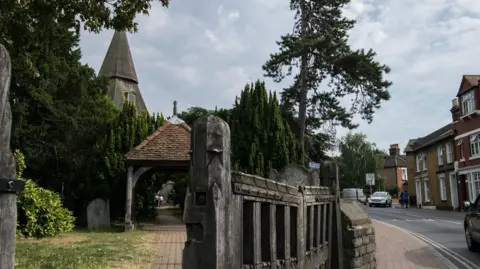
News imageGetty Images A medieval church with an old wooden gate and porch stands in a green with trees at the side of a road in a village in suburban London. Getty Images
Much of the borough has a rural feel, such as St Mary the Virgin church in Bexley

What happened in Bexley at the last council election in 2022?

The turnout was 32.8% and there was a 5.2% swing from Conservative to Labour.

Conservatives: 33 seats (-1)

Labour: 12 seats (+1)

Since the election, three Conservatives have become independents and Labour retained a seat in a by-election.

Election expert Tony Travers on what might happen in Bexley in 2026

Professor Tony Travers explains what might happen in Bexley

Professor Tony Travers, of the London School of Economics, said Bexley is Reform UK's biggest chance in London.

If you look across the boundary into Kent last year where there were local elections, Reform won almost everything.

It looks as if Bexley could well be Reform's big win in the capital.

Why do the local elections in London matter?

At the moment, Labour are dominant in London - they have 21 of its 32 councils, a record-equalling high.

The Conservatives run just five - having lost their former "crown-jewel" councils of Wandsworth and Westminster to Labour at the last borough elections in 2022.

The Liberal Democrats run three councils in south-west London and will be looking to gain Merton from Labour.

The Aspire Party run Tower Hamlets and two boroughs are currently in no overall control.

Nick Bowes, insight director from the London Communications Agency, said: "These are likely to be the most consequential elections in London, certainly for the past 20 years - possibly since the first borough elections in 1964."

He added: "The ways things are fragmenting in the polls it's very difficult to predict exactly what's going to happen but it does look like being a very bad night for Labour and the Conservatives in London."

When are the 2026 local elections in Bexley and who can vote?

More than six million Londoners can vote in the council elections on Thursday 7 May 2026.

All 32 London boroughs are up for election.

There are also elections for the mayor in five boroughs: Croydon, Hackney, Lewisham, Newham and Tower Hamlets.
All candidates in the Bexley Council election are listed on the borough's website.

Use our tool to see what elections are being held in your area.

Key dates in Bexley Council local election

The deadline to register to vote is Monday 20 April 2026.

The deadline to apply for a postal vote is Tuesday 21 April 2026 at 17:00 BST - you must be registered to vote before you can receive a postal vote.

The deadline to change existing postal or proxy voting arrangements is also Tuesday 21 April 2026 at 17:00.

The deadline to apply for a proxy vote is Tuesday 28 April 2026 at 17:00.

Photographic voter ID is required to vote at a polling station - if you do not have valid Voter ID, the deadline to apply for photo ID to vote (called a Voter Authority Certificate) for this election is Tuesday 28 April 2026 at 17:00.

Election Day: Thursday 7 May 2026 from 07:00 to 22:00.

You can find more information about voting in Bexley on the borough's website.

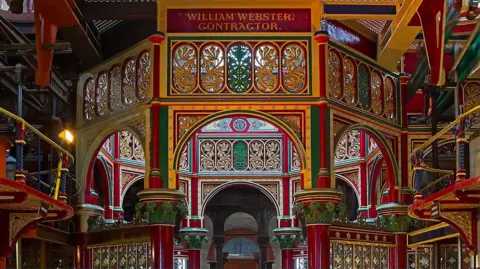
News imageGetty Images The interior of highly decorated Victorian pumping station with painted and intricate iron works. Getty Images
Crossness Pumping Station is a jewel of Victorian engineering and design

Where is Bexley and who lives there?

The London Borough of Bexley is in south-east London and borders Kent, Greenwich, Bromley and the River Thames.

What's it like? A quiet outer borough with high rates of home ownership and a predominantly suburban, residential character. The Thamesmead estate is high density urban housing notable for its Brutalist architecture.

Neighbourhoods: Bexleyheath, Sidcup, Welling, Erith, Crayford, Bexley Village, Abbey Wood, Blackfen, Belvedere, Barnehurst, Slade Green and Thamesmead.

Places of interest: Crossness Pumping Station, Lesnes Abbey Woods, Red House, Danson Park, Bexley Village and Old Bexley, Hall Place and Gardens - and more than 100 parks and woodlands.

Pub quiz fact: London's longest publicly-accessible pier is in Erith. Shaped like a boomerang, it is around 360m (1,180ft) long and popular with anglers and walkers.

Population (2024 estimate): 256,434

Demographics: According to the 2021 census, 71.9% of people in Bexley identified as white, 12.2% as black, 9.9% as Asian and 3.5% as mixed race.

Average property price: According to the Office for National Statistics (ONS), the provisional average house price in Bexley in December 2025 was£404,000.

Average monthly rent: The ONS says the average monthly private rent in Bexley was £1,411 in January 2026.

Council tax: Band D council tax in the borough for 2026/27 is £2,366.

Transport: There are no Tube stations in Bexley, but it does have 12 Southeastern rail stations, primarily operating on the Bexleyheath, Dartford Loop, and North Kent lines.

TfL maintains one Elizabeth line station (Abbey Wood) and around 610 bus stops. There are also 21 railway stations within the borough.

More information about Bexley can be found here.
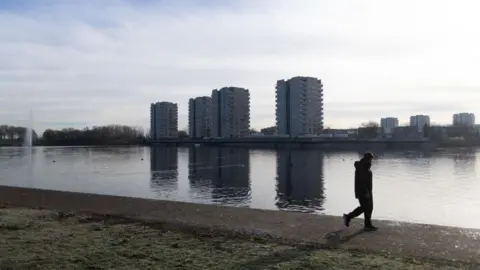
News imageGetty Images A group of residential tower blocks overlook and artificial lake. A man is walking along the lake in the foreground. Getty Images
The Thamesmead Estate was built in a Brutalist architectural style

What is Bexley's local history?

Bexley was mostly fields until its population rapidly expanded in the 19th century. Even today the area has many disconnected settlements, interspersed with areas of open ground and parks.

Erith dates to the Saxon era as a landing place on the Thames and became a significant industrial hub in the 19th and 20th centuries, with notable manufacturing from Vickers and a Royal Dockyard.

The Crossness Pumping Station, described as a "a masterpiece of engineering" and "a Victorian cathedral of ironwork", was opened in 1865 as part of the ambitious redevelopment of the London sewerage system.

It was decommissioned in 1956 and fell into disrepair but was later renovated and is now open to the public as one of the borough's more unlikely tourist attractions.

What is Bexley's electoral history?

In the 1960s Bexley, Erith and other councils in Kent were merged and transferred into Greater London. Bexley has mostly been under Conservative control with a few periods of Labour dominance and no overall control.

The Tories have run the council continuously since 2006.

Listen to the best of BBC Radio London on Sounds and follow BBC London on Facebook, X and Instagram. Send your story ideas to hello.bbclondon@bbc.co.uk

Related internet links