Chartwell's obscure past as a children's haven

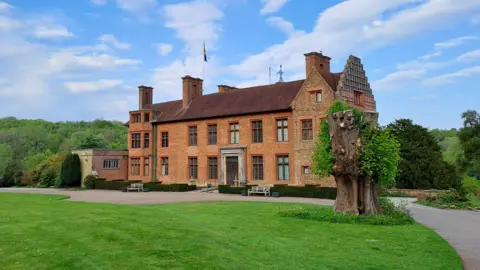 Jen Reznick/National Trust Images
Before becoming the home of Sir Winston Churchill, Chartwell was once a refuge for hundreds of young people.
The Westerham Foundling Hospital was set up in collaboration with Thomas Coram, who established the Foundling Hospital in London in 1739.
Claire Vincent, from the National Trust, told Secret Kent that as demand for services increased dramatically in the capital, Coram decided more branch hospitals were needed.
The Kent village was selected because of its "good location, fresh air and close proximity to London".
Additionally, Westerham had respected local governors, including Thomas Ellison who was the owner of Spiers (now Quebec House) and Wellstreet (now Chartwell).
According to the National Trust, after Ellison offered the hospital a lease on Wellstreet, the Westerham Foundling Hospital was opened in 1760.
For nine years, it accommodated 469 children.
'Ahead of his time'
Alethea Mitchell, a Westerham local historian, said Coram was a "kind-hearted and delightful man".
"When he returned from the Americas, he was upset with the abandonment of babies in the street and wanted to do something to prevent it," she added.
Mitchell said the foundling hospital allowed mothers to bring in their children with anonymity and no questions were asked.
"This would allow the woman to go on and still have a life. Coram was quite ahead of his time," she added.
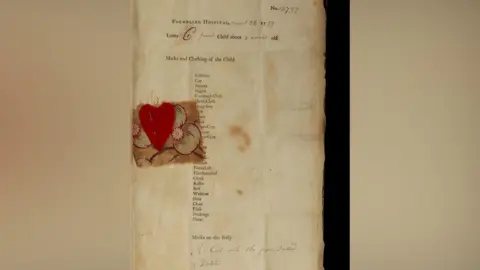 Coram
CoramMitchell said the foundling hospital system enabled mothers, if they had a change in circumstances, to reunite with their child.
"A billet would be printed, with details including the date they were brought in and gender," she explained.
The records also included tokens, such as fabric scraps or notes, left by mothers so they could later identify their child.
Mitchell said the children were well-fed and dressed and had lots of playtime but were also encouraged to look after themselves.
"The children also learnt to spin flax," Mitchell added. "They would be indentured when they reached 21."
She said the hospital kept an eye on the children.
"If they were mistreated, the hospital would question the apprentice master and mistress," Mitchell added.
The historian said families in Westerham existed today because of the hospital.
"Children survived and were able to continue their lives," she added. "It's an amazing story of childhood resilience."
The National Trust and Coram have worked together to present The Story of the Westerham Foundlings exhibition at Quebec House.
Follow BBC Kent on Facebook, X, and on Instagram and listen to BBC Radio Kent on Sounds. Send your story ideas to southeasttoday@bbc.co.uk or WhatsApp us on 08081 002250.
