Maternity safety improvements 'taking too long'

 BBC
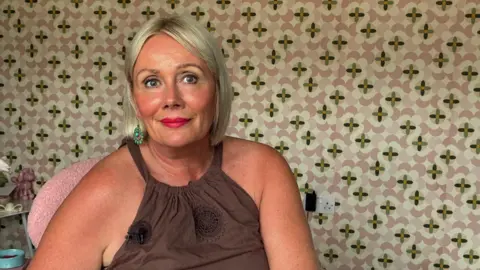
BBCA woman whose grandson was stillborn in Leicester has said she fears improvements to maternity services are happening too slowly as a new report is published calling for "urgent reform" to the system.
University Hospitals of Leicester NHS Trust was one of 12 trusts examined in Baroness Valerie Amos's National Maternity and Neonatal Investigation.
Its findings were released on Tuesday with families describing care as "inconsistent" in Leicester.
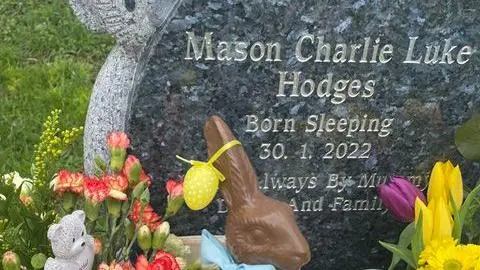
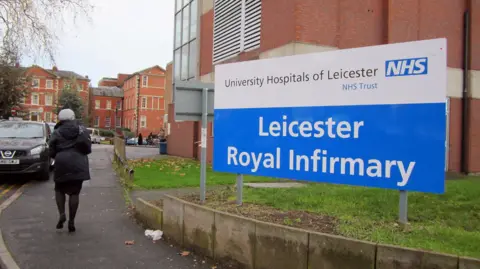
Jo Holland, from Countesthorpe, said her family had been "forever changed" by the "unforgivable" death of her grandson at Leicester Royal Infirmary in 2022.
Baby Mason was delivered stillborn with his cause of death recorded as pre-eclampsia.
His mother Ellie Harrington claimed staff at Leicester Royal Infirmary failed to respond correctly to her symptoms of pre-eclampsia.
An investigation found there were multiple failings in her care.
"It is unforgivable," said the 54-year-old. "My daughter will never be the same, I will never by the same. This has had a ripple effect and all of it was avoidable."
 Supplied
Holland said she was unsurprised by the some of the issues raised in Baroness Amos's review.
"What makes me really sad is that people are saying the same things now as we were saying back then," she said.
"I had hoped that I had caused enough noise and raised enough awareness that there would be some changes, and it doesn't seem to be that these changes have been made, certainly not quickly enough.
"One of the things that we were made aware of after Mason was born, it was around the triage BSOTS system.
"We were told that they were going to introduce this new system and then in a different letter we were told that that they were going to reintroduce this system which suggests that this system already existed, they just didn't use it.
"Now in Amos's report, it talked about one of the most utmost things around safety is triage and I know for certain that is one of the biggest risk areas certainly with us and with other people."
'Long waits'
When the investigation team visited the University Hospitals of Leicester NHS Trust on December 11 and 12 last year, they found buildings at Leicester General Hospital and Leicester Royal Infirmary that were "old and not fit to provide 21st Century care".
Families told the investigation of "feeling unsafe, unheard and without clear information on their care", while some felt "early warning sign symptoms" were "not recognised or responded to quickly enough".
The report said patients described "long waits to be assessed", while they were "given limited reassurance about concerns while waiting" and concerns were "not being addressed quickly leading to outcomes that were 'lucky mistakes' rather than safely planned care".
The investigation team noted that postnatal rooms at Leicester Royal Infirmary were described as "very small" with "bathroom access and showers that could be difficult to use after birth."
The report also said the layout of the sites "raised practical concerns about safety and flow, including movement across floors in emergencies and equipment that was not ideally positioned or ready for use."
Baroness Amos has set out eight recommendations for the system which she said needed "urgent reform", including for a statutory national maternity and neonatal commissioner to lead "system-wide change" and for improvement in how the system "responds and learns when something goes wrong".
Holland agrees the creation of a national maternity and neonatal commissioner is a "good start" but feels maternity service failings in Leicester were serious enough to warrant their own inquiry, like the one carried out in Nottingham.
 Press Association
The Amos report also heard from staff across the trust, who said shortages across midwifery, medical, nursing and support roles "affected their wellbeing and the care they could provide".
It said: "They described starting shifts short-staffed, missing breaks, working beyond their contracted hours and struggling to protect training time, which contributed to exhaustion, sickness absence and difficulties in staff retention.
While Holland said she was "absolutely" concerned to hear about staffing pressures, she felt it could "be easy to be hoodwinked slightly" into the narrative that problems with maternity services in Leicester were "all about" insufficient staffing levels.
Holland felt hospital bosses did not learn from cases where babies had died or suffered harm and that learning bulletins given to staff were often "inadequate".
"It's half-page, there is no measuring whether staff have read it and staff have reflective conversations," she said.
"That is absolutely inadequate, that is inappropriate when you have caused in some way the death of a child."
Julie Hogg, chief nurse at University Hospitals of Leicester NHS Trust, said: "The report recognises the compassion and dedication of our colleagues and the improvements already under way. It also makes it clear that some families have not consistently experienced the safe, kind and responsive care they deserve. To those families, we are deeply sorry.
"We also apologise to those who felt they were treated differently because of their ethnicity or cultural background, or who experienced discriminatory comments or behaviour. This is unacceptable. We are taking clear action to address this and to ensure every family receives respectful, equitable and inclusive care.
"We have made important progress in recent years to improve our maternity and neonatal services, including strengthening how we listen to families, increasing staffing, improving triage and introducing digital systems to support safer care.
"We know there is more to do, and we are continuing to work closely with partners to ensure women, babies and families experience these improvements consistently in the day-to-day care.
"We will continue to listen to families and colleagues, act on what we hear, and ensure learning translates into meaningful and lasting change."
Listen to BBC Radio Leicester on Sounds and follow BBC Leicester on Facebook, on X, or on Instagram. Send your story ideas to eastmidsnews@bbc.co.uk or via WhatsApp on 0808 100 2210.
