Will devolution impact the West Midlands unfairly?

 BBC/Shropshire Council
Setting out his vision for the UK its latest prime minister, Andy Burnham, outlined devolution plans in a bid to delegate powers away from Whitehall.
He promised it would be the "biggest rebalancing of power our country has seen", bringing "power home to every postcode in the country."
As part of this, Burnham would give the mayors of all of England's city regions a share of income tax for the first time, along with getting more control over services like housing.
But the key word in that announcement to many in rural parts of the West Midlands has been "city". What about those areas without a metro mayor?
"I get it when residents say we don't think we're getting a particularly fair deal," says Alex Wagner, deputy leader of Shropshire Council, for example.
Non-metropolitan areas will still get devolutionary powers through new, strategic authorities in England - which would bring local councils together to oversee regional issues, like transport and economic growth.
In those cases, leaders of the councils would take decisions and the government wants everywhere to have one by the end of 2028, meaning fiscal benefits will not be felt for more than two years, at least.
The Institute for Government's Thomas Pope describes the situation as "a stretching timetable", adding new authorities "often start small and take time to develop capacity".
'Rewards next April'
Meanwhile, areas with metro mayors are expected to start getting revenue from business rates from next April and receive a portion of income tax from April 2028.
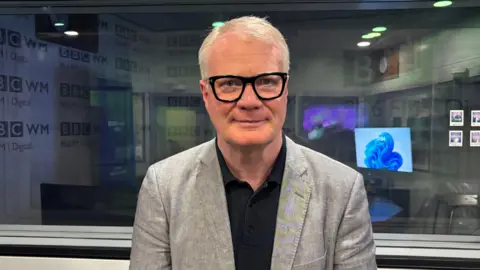
In the West Midlands region, the only metro mayor is Richard Parker, who presides over the West Midlands Combined Authority (WMCA) and has described Burnham's devolution plans "phenomenal" and "monumental".
The WMCA covers the council areas of Sandwell, Walsall, Wolverhampton, Dudley, Birmingham, Solihull, and Coventry.
While Parker is likely to start reaping the rewards of devolution next April, other areas of the region will need to form new strategic authorities before fiscal benefits can be realised.
Authorities in Shropshire, Staffordshire, Warwickshire, Herefordshire and Worcestershire will be considering their options, while some may be eyeing up opportunities to join existing combined authorities.
For those keen to merge with the WMCA, they fear they will be disappointed.
Parker has told the BBC that "this job is big enough" and said the authority was being "really clear" that the boundaries of the WMCA were "sacrosanct".
He added he would be taking on additional powers, including around police and fire services, a result of the government deciding to scrap police and crime commissioners, last November.
"It really is up for the parts of the region outside the West Midlands to put their own case forward for devolution and reach their own agreement with government," Parker said.
Areas without metro mayors have understandably been less enthusiastic than Parker about the current devolution plans.
Martin Murray, leader of Staffordshire County Council, said: "The government has promised the 'biggest transfer of power, funding and responsibility from Westminster in a generation', but if the prime minister is really serious on delivering this, it must include devolving powers and funding to all counties and cities - and not just existing English mayoral areas."
"For far too long, areas like Staffordshire have been overlooked in favour of major cities and I am making the case directly to Andy Burnham that now is the time for this to stop," Murray said.
Two different mayors?
Worcestershire County Council's deputy leader, Adam Kent, agreed with the principle of devolution but expressed concern income tax retention is set to begin in the same month the county is carved into two separate councils.
"It is entirely possible that residents of the same county end up in two different strategic authorities, paying into two different pots, under two different mayors, with two different sets of priorities," he said.
Corin Crane, chief executive of the Coventry and Warwickshire Chamber of Commerce, also welcomed the tax share plans but said the whole of Warwickshire needed to see the benefit.
"Right now, Coventry is part of the West Midlands Combined Authority but Warwickshire – which is soon to be split into councils for the north and the south – is at a different stage of devolution," he said.
"The government must find a way to ensure that more devolved powers and funding reach areas such as Warwickshire as quickly as possible if the prime minister wants to realise his ambition of 'good growth in every postcode'."
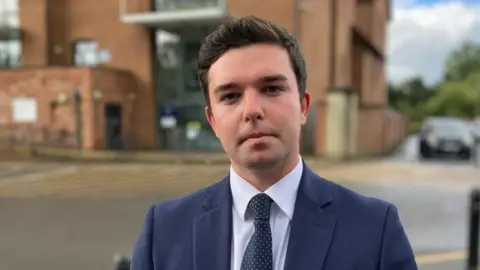
Wagner told the BBC that "anything that's taking power out of Whitehall and Westminster, giving it to local authorities or mayors, in my eyes that's clearly a positive step".
But he added Shropshire did not necessarily have obvious partners in the same way the West Midlands and Greater Manchester have had in the past.
And while Wagner believes that devolution can help the council pay for its services, he said he worried devolution for the area could be "years and years away".
"There's not going to be an impact, possibly even in this parliamentary term, unless the government get a real move on," he said.
He also told the BBC that government funding formulas had not "been kind" to Shropshire over the years, leading to dissatisfaction from residents in the county.
 Patrick Mahon
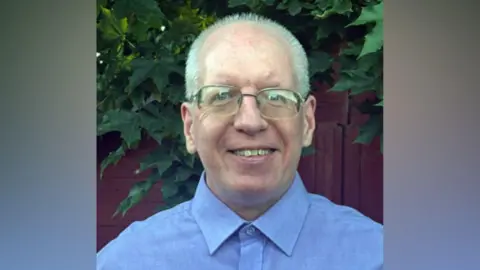
Patrick Mahon, head of policy and public affairs at Action with Communities in Rural England (ACRE). said he welcomed the prime minister's "focus on place".
However, he says it is not clear yet how devolution will impact the rural communities currently without a mayor.
While it was possible to end up in a place "where we're worrying constantly about rural areas being left behind", he said, the flip side was rural areas having a lot of social and economic potential.
'Real potential here'
"There's potential for quite a lot of billions of extra tax pounds coming out to the Treasury if the government helped rural areas to help themselves," he said.
"In an ideal world, the devolution agenda would help to bring that potential out, helping rural areas to get ahead."
Mahon said that while rural productivity tended to be lower than urban productivity, it did not have to be that way, explaining that rural productivity in many EU countries was higher than that in the UK.
"If we bring UK rural productivity up to EU levels, the tax take for the Treasury would be around £9bn-£19bn a year," he said.
"There's real potential here if the power and money that is needed to make those things happen is devolved out to rural areas."
Follow BBC Birmingham on BBC Sounds, Facebook, X and Instagram.
