'I'm selling the red squirrel reserve my parents created'

 Julie Mariotti/BBC
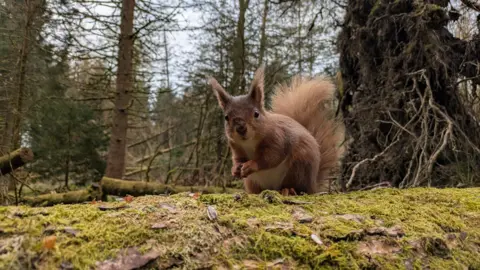
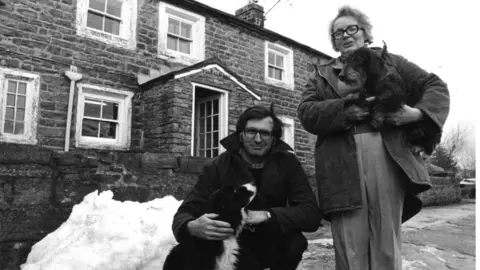
When Jane and Hugh Kemp started planting Christmas trees in their woodland in the Yorkshire Dales in the 1960s, they had no idea what would take up residence in the conifers 25 years later.
At first, they were in disbelief. But the newcomers' striking orange-red colour and bushy tails were unmistakable.
Red squirrels had moved into Mirk Pot Woods, near Snaizeholme, and they remain there today on a reserve where they can live wild while the land is managed to protect them.
The Kemps have now both passed away and their son Magnus is selling the 37-acre site in the hope that it will be taken on by a wildlife enthusiast who will continue his parents' legacy.
"We couldn't figure out how they got here. We still don't know how they got here.
"Red squirrels had not been seen in this area before."
Red squirrels are mostly found in Northumberland and Cumbria, and there are thought to be less than 40,000 left in the country, according to Forestry England's squirrel policy advisor.
The endangered species' biggest threat is the grey squirrel which carries - but is not affected by - a pox that causes red squirrels to die.
The Mirk Pot squirrels have thrived and are now seen in gardens in nearby Hawes and Bainbridge, and in 2025 a new colony was identified in a sitka spruce plantation in an undisclosed location nearby, which the landowners agreed to support.
Magnus and his brother have inherited the woods as well as the farmhouse where they grew up. Much of the surrounding land is still managed for commercial forestry, but the squirrel refuge his parents built is tranquil and undisturbed.
"My mother was a massive naturalist. For my father, although he started off being very keen on trees, the enthusiasm for nature wore off on him, and he became very enthusiastic about protecting those squirrels and the environment."
In collaboration with the Yorkshire Dales National Park Authority, the late landowners created the viewing area and trail for the public and continued to ensure that all decisions regarding planting and woodland management prioritised wildlife conservation and ecological health.
The woods are for sale with a guide price of £500,000, as the Kemps' sons do not live in Yorkshire and are unable to continue their work.
 Courtesy of Magnus Kemp
Jane died at the age of 92 in 2021, and her husband Hugh a decade earlier aged 84.
"It was my parents' dream. It makes me quite emotional to think about what they did," said Magnus, 59.
"When they came here, the place was a barren hillside and all of the trees that you can see were planted by them.
"In terms of wildlife, there was none, and now the place is teeming with birds, and we've got the red squirrels. Their legacy is incredible."
The sympathetic woodland management meant other forest species, such as Scottish crossbills and roe deer, flourished as well, and the presence of the rare pine marten has been suspected over the years.
The Woodland Trust and Yorkshire Wildlife Trust have both supported and recognised the Kemps' work. As the Christmas tree plantation was wound down, native broadleaf species were planted in their place.
"We've still got plenty of conifers of cone-bearing age so there is going to be plenty of food for the squirrels for a long time."
 Julie Mariotti/BBC
Chartered surveyors Jonathan Wallis have been handling the sale of Mirk Pot Woods since they first went on the market around a year ago.
They said the sale of the property offered a "rare opportunity" to take on a meaningful role in preserving the woods and their wildlife.
"Its rich mix of planting and sensitive stewardship has made it an important part of wider conservation efforts across northern England.
"Beyond its ecological significance, the woodland has become a much-loved destination for visitors, offering a peaceful retreat for walkers, birdwatchers, and nature enthusiasts alike.
"Its unique character and accessibility have allowed many people to connect with and appreciate this exceptional environment."
Listen to highlights from North Yorkshire on BBC Sounds, catch up with the latest episode of Look North.
