Blackberries 'panic' and ripen early in extreme heat

 Barnaby Perkins / BBC
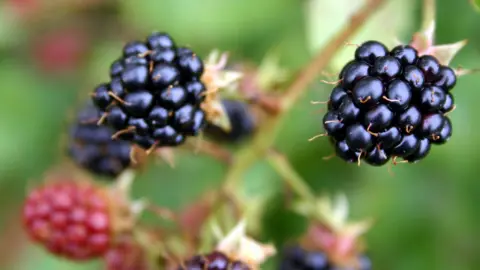
Blackberries that are usually associated with being picked in the late summer and early autumn are ripening earlier than expected this year due to high summer temperatures.
The Woodland Trust recorded the first ripened blackberry on 26 June, and some people in Suffolk have shared that they picked up to 2lb (0.9kg) of the fruit in early July.
Experts say the early yield is a result of the plants being "stressed by the lack of water".
Temperatures in Suffolk soared to 37.3C in June, and the region was declared as being in drought on 29 July.
 Supplied
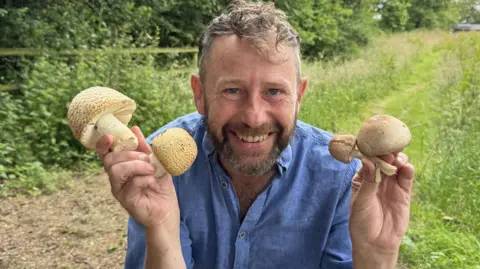
Marlow Renton is one of the co-founders of Wild Food UK — a company that teaches people about foraging. They run courses in Thetford Forest and Thorpe Forest on the Norfolk/Suffolk border.
He said "this year and last year have been probably the earliest" he had seen blackberries ripe enough for picking.
And it's not just the blackberries being affected by the heat.
"The gooseberry bushes, which are actually a more common hedgerow plant than you might think, I'm seeing them already dried up and shrivelled up whereas normally they'd still be ripening and looking good on the bushes at the moment," said Renton.
 RSPB/PA
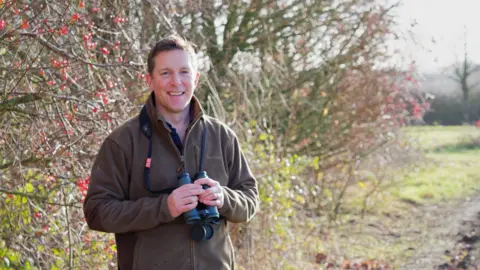
Patrick Barker farms at Westhorpe, near Stowmarket in Suffolk, and his land has 48km (30 miles) of hedgerow.
"What we're seeing this year is haws on hawthorn, plums in some of the hedges, apples on apple trees and blackberries on brambles at the same time that they're in flower, which is a really curious kind of anomaly for nature," he said.
"In very dry conditions, hedgerow plants, and trees as well, get to a point where they start to panic that they are either going to run out of water or die.
"So what they do is they get as much fruit out as early as they can just to go through all their natural processes."
 Supplied
Barker said the effect of hot, dry weather on wild fruits such as blackberries will have a negative impact on animals.
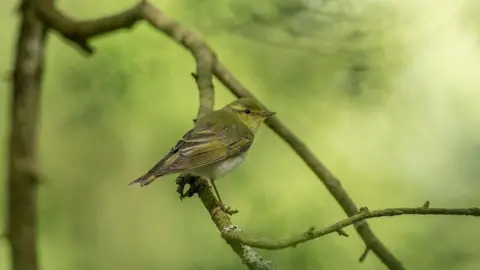
"If there's a loss of fruit early, all those birds that come down from Scandinavia and northern Europe over the course of the autumn and the winter to feed won't find any food," he said.
"A lot of the birds that are here now that look to go back to sub–Saharan Africa over the course of autumn feed up on blackberries to put as much weight on as they possibly can before they migrate.
"So they're going to have to look for food a lot harder."
However, Renton has seen a positive side to plants producing fruit earlier in the past couple of years while foraging.
"The oak trees were dripping with acorns last year as well and the upshot of that this year is I've seen more baby oak trees than I've ever seen before."
Do you have a story suggestion for Suffolk? Contact us below.
Follow Suffolk news on BBC Sounds, Facebook, Instagram and X.
