Psychiatrist hopes attacks inquiry leads to change

 The Nottingham Inquiry
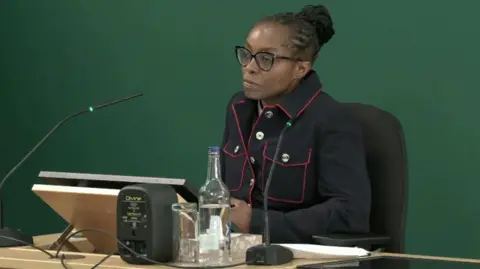
One of the country's most senior psychiatrists has said she hopes an inquiry into the killings of three people in Nottingham will lead to improvements in mental health provision.
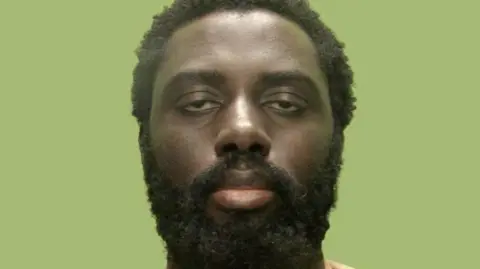
Valdo Calocane, who was diagnosed with paranoid schizophrenia in 2020, fatally stabbed students Barnaby Webber, Grace O'Malley-Kumar and grandfather Ian Coates on 13 June 2023.
Prof Lade Smith, president of the Royal College of Psychiatrists, said Calocane should have been checked on before he was discharged due to lack of engagement with services.
She told the statutory public inquiry examining the attacks that she hoped the hearings would lead to "practical change" in all areas of mental health provision.
 Supplied
Calocane was discharged in September 2022 due to a lack of engagement with mental health services in Nottinghamshire - a decision that has been scrutinised by the Nottingham Inquiry.
Nine months later he killed Barnaby, Grace and Ian before attempting to run over Wayne Birkett, Sharon Miller and Wayne Gawronski, who survived but were left with life-changing injuries.
On Calocane's discharge from care, Smith said he should have been checked on before he was discharged.
Last month, a senior leader at the NHS trust responsible for Calocane's care told the inquiry he was discharged because healthcare workers could not find him.
Smith told the inquiry the way psychiatric care was delivered had "changed" since she started 33 years ago and that it had gone from a "continuity" approach to one that was now "fragmented".
"From my experience, [looking after someone] with a severe mental illness... if they stop coming [to appointments], that's usually a bad sign, not a sign of [good] health," she said.
"Often in medical terms, if someone doesn't need to come and see you anymore, it's because they're well but when it comes to psychosis, it can be that person does not realise they are unwell.
"What we would have done is ensure we'd have gone to have seen that person to make sure they are well, before we would have discharged them."
But Smith said due to a "reduction in resources", teams had to "cut their cloth accordingly" and the threshold for people accessing services had increased.
 Nottinghamshire Police
Before she began answering questions to the inquiry, Smith addressed the victim's families directly.
She said: "These tragic attacks should never have happened and there is nothing I can say can lessen what you've lost or the impact on your lives – but I am truly sorry for your loss.
"Mental health services need to be good, but they can fail and when they fail, the consequences are devastating for the patients and for the public.
"I'm glad that this inquiry is taking place and that it's looking carefully at not just how people in crisis are understood, but how they're cared for, but also how the risks are recognised and where the system falls short.
"Myself and all my colleagues hope that this inquiry will lead to practical change, better commissioning decisions, clearer co-ordination and more effective and properly resourced care."
Calocane is currently serving an indefinite hospital order at a high-security facility after he pleaded guilty to three counts of manslaughter on the grounds of diminished responsibility, and to three counts of attempted murder.
The inquiry continues.
Listen to BBC Radio Nottingham on Sounds and follow BBC Nottingham on Facebook, on X, or on Instagram. Send your story ideas to eastmidsnews@bbc.co.uk or via WhatsApp on 0808 100 2210.
