How is the heatwave affecting the North West?

 PA Media
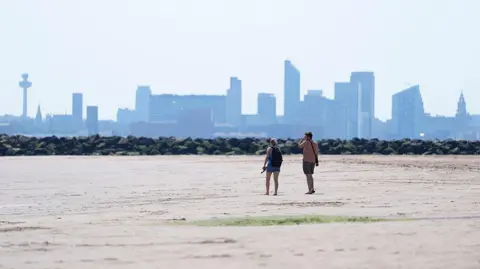
An amber warning of extreme heat in the North West has been issued by the Met Office while some other parts of England and Wales have a rare red warning for extreme heat.
Temperatures in the region could reach 36C.
The Met Office says hot and humid weather is expected to continue until Thursday in the region, with exceptionally warm temperatures both day and night.
Here is a look at the impacts the heatwave is having on North West England.
How will the heatwave affect schools?
There is no legal maximum temperature for classrooms – and the government does not normally advise schools to close.
Many classrooms do not have air conditioning and are too hot to use but schools are encouraged to stay open if possible and to make adjustments to help children feel cooler and more comfortable.
The adjustments include relaxing uniform requirements, with some allowing children to wear PE kits, ventilating classrooms and using fans if temperatures are below 35C. Above 35C, fans can worsen dehydration.
Some parents have said it would be better if they had the option of keeping children off school in hot weather – particularly at schools without air conditioning.
Matt Naylor, from Lytham, told BBC North West Tonight: "It'd be great for the kids to have the option not to go to school when it's too warm because some of them just can't cope."
Keeley Fairhurst, also from Lytham, added the extreme heat made it "very difficult for them to concentrate".
 EPA/Shutterstock
What does it mean for public transport?
National Rail has urged people to "only travel if absolutely necessary".
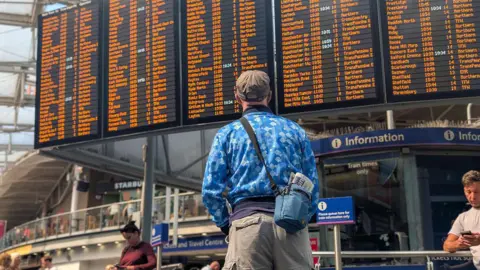
There is disruption and cancellations to some rail services because of the severe weather with Avanti West Coast, Northern and Transpennine warning passengers to check before travelling.
Network Rail said that while all lines across the North West would remain open, operators would run amended timetables to help manage the impact of extreme temperatures on the railways.
For safety reasons, trains will operate at reduced speeds, meaning journeys will take longer and there is a heightened risk of delays, cancellations and last-minute alterations.
There will be no rail replacement bus services during this period.
Merseyrail said because of the expected temperatures, Network Rail had put speed restrictions in place on the Headbolt Lane line, and the service would run every 30 minutes.
 Network Rail
Network Rail said passengers should expect stations and trains to be busier than usual.
Passengers who do need to travel are advised to prepare for the conditions by taking plenty of water, wearing sunscreen and hats, and ensuring they have back-up plans in case of disruption.
Bus operators are also warning the high temperatures may affect services.
Bee Network said speed restrictions might be in place throughout the week and journeys might take longer than usual. It advised customers to carry water and avoid travelling when the sun is at its highest.
Stagecoach recommended checking its app or website before travel for live times and the latest updates.
What about the roads?
Drivers are being urged to consider whether they really need to make car journeys as delays amid the extreme heat could affect people's health.
National Highways North West has advised drivers to pack plenty of water and snacks as well as a phone charger, and to "plan your route before you travel".
Lancashire County Council said it had gritters on standby in case the scorching temperatures affected the road surface.
It said gritters had been deployed during a recent spell of hot weather in several areas of the county.
What other support is available?
The Salvation Army in Blackburn is opening its doors to help homeless people and rough sleepers.
Bramwell House has activated its severe weather protocol, offering shelter, water and showers as temperatures are expected to top 30C.
The charity said extreme heat could be life-threatening on the streets and it is urging people to donate bottled water if they can.
Manchester City Council's libraries will become cool spaces where people can access free drinking water and use resting areas on Wednesday and Thursday.
What about bin collections?
Many councils are have said that bin crews will start rounds earlier this week to help them work in cooler conditions and reduce heat-related risks.
Blackpool Council is starting its collections at 05:00 BST while Manchester City Council is among starting collections at 06:00 BST.
 PA Media
How does it affect farming?
High temperatures can put cattle, sheep and pigs off their food, which can slow their growth rates. Dairy cows may produce less milk and their protein and fat levels can be affected.
Grass can become dry and stunted. This means there may not be much left to cut. The impact is acutely felt in winter when there is less hay to give cattle and so farmers have to use more expensive feed instead.
The Agriculture and Horticulture Development Board warns this can result in more rapid breathing. Cattle might stand for longer around water rather than lying on the grass. In severe cases, animals can show signs of open-mouth breathing and distress, and vets might be needed.
Farmers often take steps such as feeding their animals later in the day.
Read more stories from Cheshire, Lancashire, Greater Manchester and Merseyside on the BBC, watch BBC North West Tonight on BBC iPlayer and follow BBC North West on X.
