I have a new 'English grandma' after being evacuated from Afghanistan

 BBC
BBC"There was a party thrown for us, they brought us flowers, cakes and everything, we were so emotional, everyone was just so nice."
Pervin Juma says she was "shocked" by the welcome her family received when they were offered a home to rent in Southwell, Nottinghamshire.
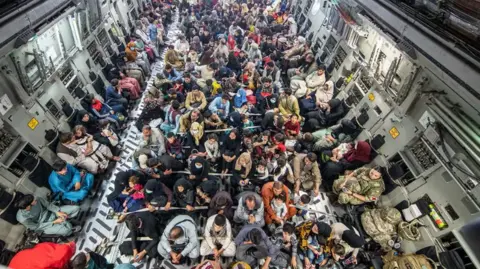
Her family had spent several months in hotels after Boris Johnson's government evacuated them from Kabul in 2021 in the UK's "biggest humanitarian airlift in recent history".
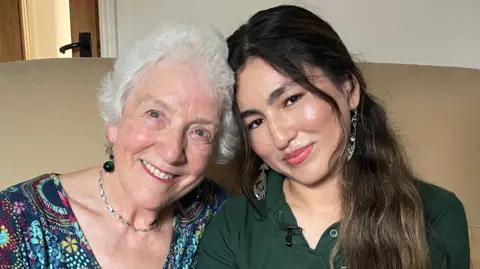
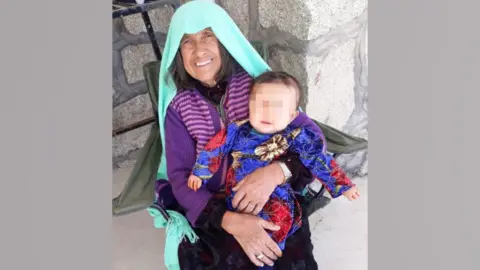
The driving force behind their welcome to the town was Gill Wright, who Pervin now describes as her "English Grandma".
Gill helped them with everything, from paying bills to navigating the education system through a group she was part of called Support Refugees in Southwell.
"How lovely to be called grandma. Every time this family calls me grandma it makes me want to cry, truly it does," she says.
She and Pervin both agree they now consider each other "family".
"We'd go to her house for Christmas. We'd give her presents. She'd give us presents and everything, it's lovely," Pervin adds.
 Pervin Juma
Pervin, now 21, reflects on the fifth anniversary of being evacuated to the UK from Afghanistan and says she could never have imagined how much her life was going to change in the past five years.
Gill encouraged her to join the Scouts to make friends and improve her English, which became such a passion that Pervin volunteered as a "young leader" after turning 18.
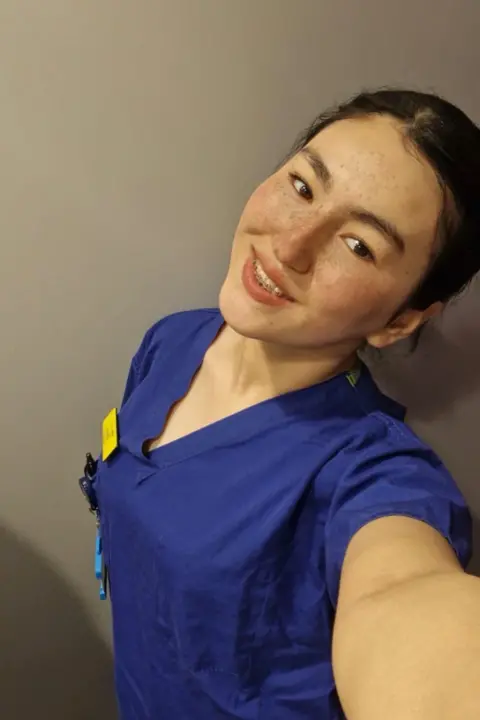
Now Pervin is a student nurse at Birmingham City University, where the first year of her master's degree course included placements at The Royal Orthopaedic and Good Hope hospitals.
"I'm going to be a nurse, it's always been a dream," Pervin says.
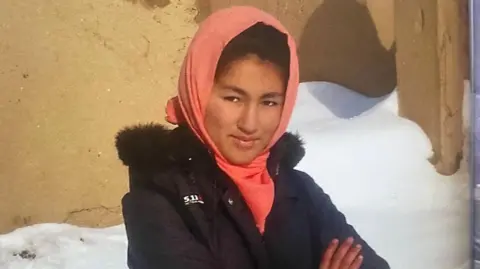
Pervin grew up in a remote part of Afghanistan's Ghazni Province and had never left the country before the Taliban swept back into power on 15 August 2021.
Her family are from the Hazara minority, which had often been persecuted by the group, so they joined the chaotic scramble for evacuation flights at Kabul Airport.
"We were in the airport for two nights... sitting there in the dirt... it was boiling, there was no water, no food," Pervin says.
She recalls some mothers were giving birth and others were crying because their children had not been allowed into the airport.
"They could go back [and] stay in that situation or leave the country," she says. "It was a very hard decision for everyone."
 Ministry of Defence
Pervin was among more than 15,000 people who were airlifted out and resettled across the UK because of their British connections.
They included the Afghan wives and children of men who could have faced reprisals after working for the British Army or becoming UK citizens.
But wider extended families were not entitled to join them, and Pervin struggled to hold back tears as she recalled how her real grandmother was turned back.
"We didn't know that we were going to leave her behind, so we didn't even say goodbye to her in that rush," she says. "We didn't even have the chance to say goodbye."
 Supplied
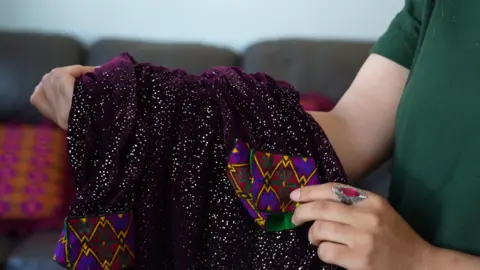
Pervin still cherishes the ornate patterned dress that she was carrying for her grandma in the small backpack she was allowed to bring.
Her grandmother never left Afghanistan and died three years later.
Pervin says her former schoolfriends are now living under a strict regime that bans women from studying or working.
She says: "Imagine going to a shop as an Afghan girl, you're not allowed to ask 'brother, how much is this?', because Taliban say 'don't talk to a man'."
Pervin still speaks to those friends and is acutely aware of how different their lives have become.
"It's heartbreaking. A cat or a dog in Afghanistan's got more freedom and rights than a woman.
"They are all depressed, they are all married, most of them have kids, because they're not allowed to do anything else and I am.
"I've got all the freedoms and they've got none," she says.
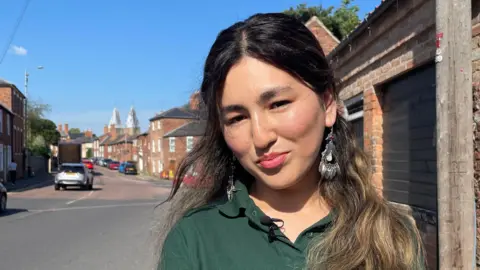
Pervin compares the current situation in Afghanistan to her family's arrival in London during the pandemic.
"I was in a hotel for lockdown for 14 days not being able to do anything, and I feel like they've been doing that for almost five years now," she says.
"I'm free and whenever I post something online in my stories on Instagram, I always think twice before I post.
"I feel like I've got all my friends in there - what will they think?"
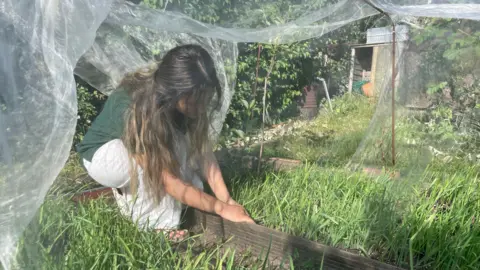
Five years after their evacuation from Kabul, many resettled Afghan refugees are still fearful for relatives back home and reluctant to speak about their traumatic experience in public.
But Pervin says she is looking forward to a bright future in healthcare and loving student life in her shared accommodation.
"We're getting along very nicely, it's amazing, it's just lovely to be there," she says.
"I just feel free, whatever I do with my hair, with my body, going out with my friends, I'm free."
Listen to BBC Radio Nottingham on Sounds and follow BBC Nottingham on Facebook, on X, or on Instagram. Send your story ideas to eastmidsnews@bbc.co.uk or via WhatsApp on 0808 100 2210.
