Volunteers sought to restore Carlisle's last tram

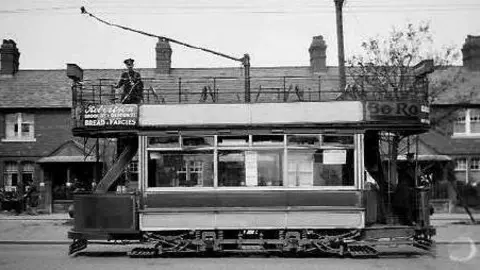 H Nicol/National Tramway Museum
Volunteers are being sought to help restore a tram from the 1900s, with the aim of it becoming a local tourist attraction.
Carlisle's last remaining electric tram was taken off the tracks in 1931 and, over the years, has been stored in various locations, including Carlisle College, Carlisle Railway Station, and its current home in the Old Ironworks in Denton Holme.
Now the Workington Transport Heritage Trust (WTHT), which bought the lower-seating carriage for £50 in 2005, is urging carpentry enthusiasts to come forward.
"It's a big woodwork project, but everything is do-able, [we] just need the will power," said Philip Tuer, from WTHT.
Originally operated by the City of Carlisle Electric Tramways Co Ltd, the tramway opened on 30 June 1900 and ran north to Stanwix, south down London Road, east towards Warwick Road, and west to Denton Holme.
Tuer said it had "revolutionised Carlisle", with tram lines still in place today on some streets in the city, including Etterby Street.
"There's a lot of industrial and railway heritage that we don't shout about," he said.
"I go to Beamish Museum and travel on the trams. They have been fully restored -we could do the same with this."
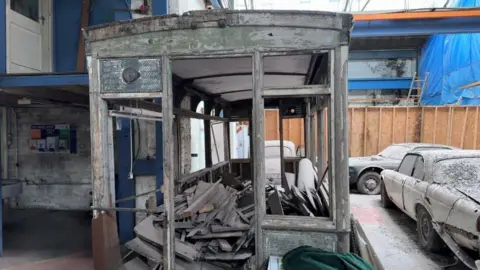
The WTHT has restored sections of the carriage in previous years, but said the tram needed new windows, doors, a staircase and chassis.
The heritage group said it had a small amount of funds and enough material set aside to restore the main body, so the general condition of the tram should not deteriorate any further.
Thereafter, the group intends to apply for grants, and hopes to source more than £20,000 in estimated costs to restore the seating and get the tram running again.
In the short term, the restored carriage could be exhibited at the National Tramway Museum or at Beamish Museum in County Durham, which is an open-air "living-museum" that recreates scenes from the past.
But the long-term goal would be to turn the tram into an attraction in Carlisle itself, by reinstating the former tracks, said Tuer.
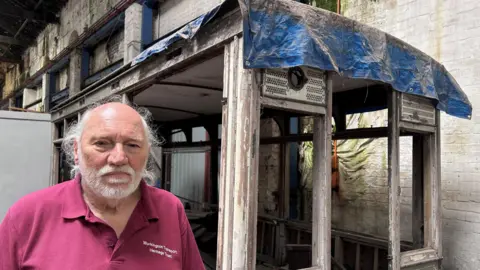
The project was delayed by a few years because of family bereavement, he explained.
"There's an awful lot of work to be done and we require several people who are committed and have the time to take it forward," said Tuer.
If funding and volunteers could not be found, the tram would remain in place until the proprietors of the building where it is stored asked them to move it, at which point it could "unfortunately end up as a big bonfire", he warned.
