Concern about 999 process before meningitis death

 Getty Images
A coroner has raised concerns about emergency call handling after the death of a teenager from meningitis.
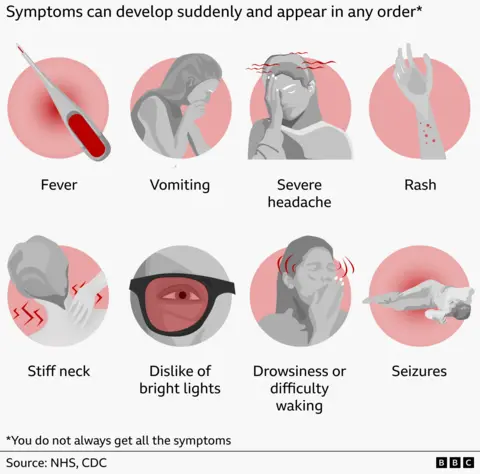
Oliver Shelley died in July 2024 aged 17 from meningococcal septicaemia. His parents had rushed him to East Surrey Hospital in Redhill as an ambulance was not dispatched after their 999 call.
Surrey assistant coroner Dr Karen Henderson wrote, after an inquest in February, of concern about the lack of a sepsis pathway on the computer system assisting call handlers.
South East Coast Ambulance Service (Secamb) said it was "committed to continuing to learn from Shelley's death and listening to all patients and families".
At February's inquest, a jury found Shelley's parents had phoned emergency services at 14:51 BST on 22 July 2024, reporting he had meningitis symptoms.
An ambulance was not dispatched so they took him to hospital themselves, arriving shortly before 16:00.
The teenager had a "widespread rash and evidence of septic shock and organ dysfunction", according to the report, and he "continued to clinically deteriorate".
He died seven-and-a-half hours after being admitted to hospital.
During the 999 call, the handler began to triage the call but was unable to prioritise any of the symptoms on the NHS computer software, according to the coroner's report.
Henderson wrote that Shelley's parents were told "a call back was scheduled within 20 minutes", but it instead came one hour and 41 minutes later.
She said call handlers find it "challenging to triage individuals when multiple signs and symptoms were present in relation to a possible sepsis diagnosis" on the system.
Having a "dedicated sepsis algorithm" would assist responding to callers and managing cases, according to the prevention of future deaths report.
A further concern raised was that call handlers' official job title - emergency medical advisors - could be "misleading the public" as staff have "no qualifications in medicine or nursing".
In its formal response to the coroner, NHS England said the concerns raised "have been listened to and reflected upon".
The organisation said its programme "would screen for potential sepsis" in a range of situations and that both sepsis and meningitis were "addressed within core training".
"Trained clinicians are available at all times to provide immediate advice" to call handlers, it said.
NHS England added that Secamb had "implemented a number of improvements", including clearer rules for escalating calls to clinicians and better staff training.
Jo Turner, Secamb's interim chief nursing officer, said the service's "deepest sympathies remain with Oliver's family" and it was "extremely grateful to them for working so openly with us".
"Their involvement has helped us better understand what happened and implement necessary improvements to our systems, processes and training," she said.
Follow BBC Surrey on Facebook, on X, and on Instagram and listen to BBC Radio Surrey on Sounds. Send your story ideas to southeasttoday@bbc.co.uk or WhatsApp us on 08081 002250.
