Decision due on plan for town's derelict area

 BBC
BBCA decision on a major regeneration project for a market town is expected to be taken in the next week.
Willenhall's Locksmith Quarter, once a hub of activity for the West Midlands town's lock-making industry, has fallen into dereliction and become a hot spot for anti-social behaviour and arson over recent years.
Walsall Council started to demolish the crumbling factories earlier this year, most of which have been cleared.
Plans to redevelop Temple Bar, Moat Street, Cemetery Road, Villiers Street and New Hall Street will be decided on by Walsall Council's planning committee at its next meeting.
If the proposals are approved by the planning committee, developer Keepmoat will build 33 two-bedroom homes, 57 three-bedroom homes and 19 four-bedroom homes, each with two parking spaces.
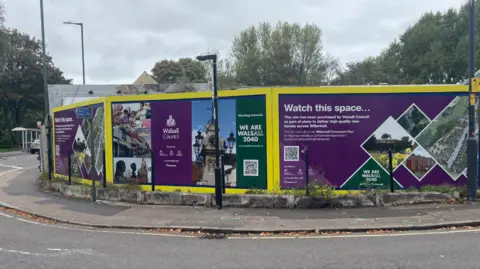
Officers have recommended the plans be approved subject to Section 106 agreements to include education, healthcare and open space contributions.
Section 106 agreements are legally binding and are drawn up as part of the planning process.
They are demanded by councils if they think a development will place extra burdens on a community, such as increased traffic or loss of public space.
The Willenhall History Society believes that part of the site at Moat Street is home to the remains of the former Leveson's estate, one of the oldest families in Willenhall who arrived as part of William the Conqueror's army in 1066.
The council's archaeological officer has recommended that an evaluation of the site be carried out as soon as possible, to look for opportunities to preserve any remains.
Planners will meet on 30 July at Walsall Council House to decide on the proposals.
This news was gathered by the Local Democracy Reporting Service which covers councils and other public service organisations.
Follow BBC Birmingham on BBC Sounds, Facebook, X and Instagram.
