How has the Iran war hit the NI economy?

 Getty Images
More than 3,000 miles separate Belfast from Tehran, but Northern Ireland's economy is linked, for better or worse, to that of Iran.
Figures from before and after the Iran war show the ups and downs of oil prices' effects, especially on finances a continent away.
Northern Ireland's economic output hit a record high in the months before the Iran war began, new official data suggests.
But since then, higher oil prices have hit the finances of households and businesses, while according to one survey business confidence has fallen.
However, the rapid fall in the price of oil in the last two weeks means there are hopes that the economic impact could be short-lived.
What was happening before the conflict?
The latest Northern Ireland Composite Economic Index (NICEI), covering the period from January to March, suggests the local economy hit an historic peak just as global tensions escalated.
The economy grew by 0.7% compared to the final quarter of 2025 and was more than 3.5% bigger compared to the same period a year ago.
Growth was driven by the dominant services sector, particularly business services which has been the best performing part of the local economy in recent years.
The main area of concern was hospitality which saw falling output in the face of a series of cost increases such as higher minimum wages.
The jobs market also remained relatively robust.
Figures from HMRC suggest the number of people on company payrolls in February was just over 819,000, up by more than 10,000 compared to the same month in 2025.
What happened after the conflict began?
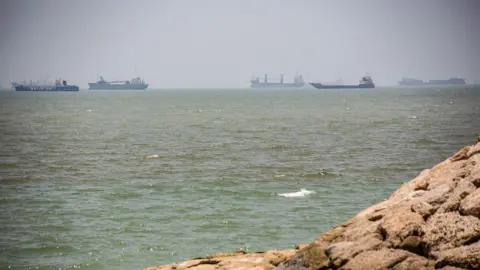
US and Israeli strikes on Iran began on 28 February with Iran closing the Strait of Hormuz in response.
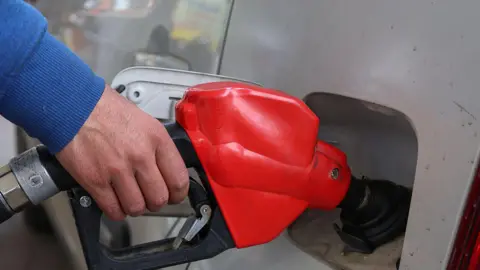
The strait is a key transport route for oil and gas produced by Gulf states and the reduced supply caused prices to rise across energy markets.
The Ulster Bank's monthly growth tracker is a useful way to assess how this fed through to local businesses.
It suggests that business activity effectively stalled in April and then fell sharply in May.
The May report shows business activity suffered its steepest contraction since December 2022, with NI registering the worst performance of all 12 UK regions.
For the first time in nearly three and years, local firms were, on balance, pessimistic about future growth prospects.
Some of this has also been seen in the HMRC jobs data.
Payrolls fell in March before rising marginally to just above 820,000 in April and May. The figures also suggest that pay growth stalled in May.
 Getty Images
What is happening now?
An interim deal between the US and Iran has seen the Strait of Hormuz partially reopened and oil prices have fallen steeply as a result.
This can be seen most vividly in NI's home heating oil market.
Before the crisis began 500 litres of oil cost on average £307, according to NI Consumer Council data.
It spiked to almost £630 by the middle of April but by this week had dropped back to £348.
Around two thirds of Northern Ireland households use home heating oil so falling prices will help household disposable incomes and consumer confidence.
Stormont ministers have also agreed to make a £100 heating oil payment to 340,000 households at a cost of £36m.
If prices remain low this could feel like a windfall to some households and give a small boost to high street spending.
Falling energy prices should also help rebuild business confidence.
However, economists are still warning of 'second round effects' as higher energy prices continue to ripple through the economy.
For example, the Dublin-based Economic and Social Research Institute (ESRI) warned this week that higher fuel and fertiliser costs typically take around nine months to feed into food prices.
That means that the cost of groceries will be rising through this autumn and winter.
