Eight-year-old among paddleboarders rescued at sea

 RNLI
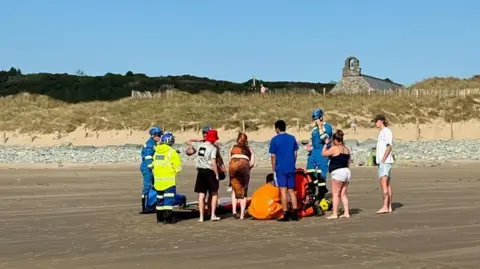
RNLIFour paddleboarders, including an eight-year-old child, have been rescued at sea after being blown offshore by the wind.
Two teenagers, one adult and the child were using two paddleboards when they were blown offshore at Llandanwg Beach, south of Harlech, Gwynedd, on Thursday.
RNLI said volunteers were called to the "rapidly evolving situation" at 16:15 BST, after a family member on the shore became concerned.
One paddleboarder was found in the water "suffering severely from the effects of the cold", while the others were holding onto one of the paddleboards some distance offshore.
All four paddleboarders were rescued, as well as a member of the public who entered the sea to try and help.
Criccieth RNLI launched its Atlantic 85 lifeboat, The Frank Townley, in order to reach the distressed paddleboarders. A Coastguard rescue helicopter from Caernarfon was also scrambled.
Owing to the tide, the lifeboat landed on a sandbank on its return, and the casualties were walked ashore - with one of the five carried on a paddleboard owing to their "weakened condition".
Holyhead Coastguards and the RNLI said it highlighted how quickly conditions can change at sea, particularly with offshore winds.
Warning to beachgoers
It comes as the lifeboat charity issued a general warning about cold water and tidal dangers ahead of the bank holiday weekend.
The RNLI cautioned that while it may feel warm outside, the sea temperature remains cold enough to cause cold water shock.
"Anything below 15C is defined as cold water and can seriously affect breathing and movement," said Ross Macleod, RNLI water safety manager.
There was also a warning about spring tides - which are currently occurring across the UK.
A spring tide means at high tide, the water comes in further and can move faster than on smaller tides, increasing the risk of becoming stranded.
Macleod urged those visiting the coast to check tide times with a trusted source such as the Met Office, before they travel, "and to be aware that the high and low water may change quickly and very differently to what may be expected".
