Village People frontman Victor Willis dies aged 74

 Getty Images
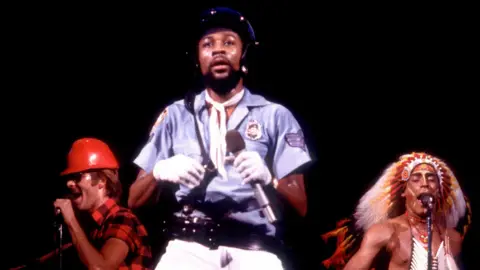
Victor Willis, the frontman of 1970s disco group Village People, has died at the age of 74, the band's official social media page has announced.
The Texas-born musician was the lead singer and co-writer of the band's biggest hits including YMCA, Go West and In The Navy.
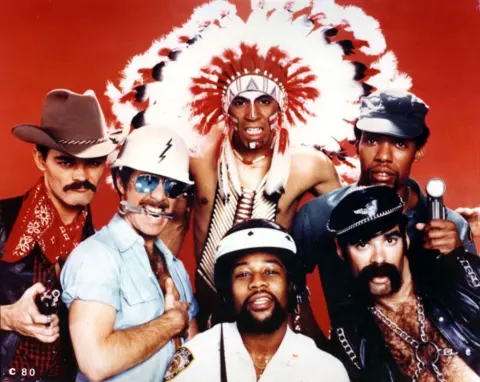
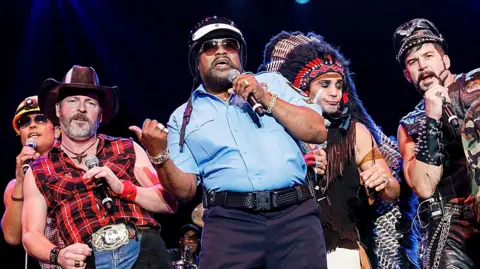
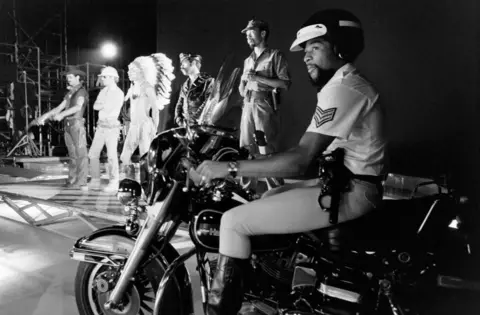
The group became international stars in the 70s by performing while dressed as archetypal macho characters. Willis was alternately a policeman and a naval officer.
He left the band in 1980 and spent years fighting a legal battle over copyright to the songs he'd written. But he rejoined in 2017 and performed YMCA at US President Donald Trump's pre-inauguration rally in January 2025.
 Michael Ochs Archives / Getty Images
Trump paid tribute, writing on Truth Social that "we loved them and their great and uplifting song".
He added: "We will think of Victor every time YMCA is played, like today, and all throughout this July Fourth Birthday week. My condolences to his wonderful family and group."
Willis's death was announced on the band's official Facebook page.
"We are profoundly sad to announce the death of Victor Willis, lead singer of Village People," said the brief statement.
"Victor passed on Monday June 30, 2026 of a short but aggressive illness. Privacy is requested."
His wife, Karen-Huff Willis, posted a similar statement on the musician's own Facebook page.
 Getty Images
Willis grew up in San Francisco, singing gospel music in his Baptist minister father's church before turning to jazz and soul.
His high school band, The Ballads, supported The Temptations, and Willis sat in on sessions with Dizzie Gillespie among others.
After college, he landed a role in the Las Vegas production of musical Hair, which subsequently earned him Broadway productions of Two Gentlemen of Verona and The Wiz.
It was at the latter that he met his first wife - future Cosby Show star Phylicia Rashad. Willis later helped her write and record the disco album Josephine Disco.
In 1977, he met French producer Jacques Morali, who hired Willis to sing background vocals on a new set of disco songs he'd written.
The four-track demo, called The Village People, earned the group a record deal, and Morali asked Willis to become the frontman.
"I had a dream that you sang lead on my album and it went very, very big," he told the musician.
 Getty Images
The group went on to release the albums Cruisin' (1978), which featured YMCA, and Macho Man, (also 1978) which included the title song and Key West.
Following a live album, Live and Sleazy, they released Go West (1979), whose title track became a gay anthem - later covered by the Pet Shop Boys. The album also included In The Navy and I Wanna Shake Your Hand.
Billboard magazine described the band's output as "some of the most irresistible rhythms in today's pop/disco genre". The New York Times singled out Willis for his "hoarse, sweaty vocals".
However, he quit the group in 1979 during pre-production of a Village People movie, Can't Stop The Music. It turned out to be a wise move - the film was a disastrous financial flop that ultimately led to the band's demise.
Despite that, Willis found it hard to distance himself from the band's camp image and be taken seriously as a solo artist. A 1979 solo album, Solo Man, remained unreleased for three decades before finally being issued in 2015.
The situation left the musician at his lowest ebb.
Drug problems
"I got very depressed over the years and decided to just drop off the map. So I got into drugs," he told the San Diego Union Tribune in 2015.
"I spent the 1980s and '90s... well, I got kind of drugged out, because I was disappointed with the way things were and got frustrated, and gave up for a bit, and decided I didn't want to be a part of it.
"So much had been taken away from me that I just turned to drugs."
He began to turn things around in 2006 after he received court-ordered substance abuse treatment and completed three years of probation.
Around the same time, he met his second wife, an attorney who helped him fight his copyright case against the companies who controlled the Village People's hits, Can't Stop Productions and Scorpio Music.
In 2015, a federal jury ruled that he was entitled to 50% ownership of 13 of the group's songs in the US, including YMCA.
The resolution paved his way to return to the group in 2017.
By that point, President Trump had adopted YMCA as a theme song at his political rallies - but Willis was not a fan and said the group had asked him not to use it.
"I don't endorse Trump, I've never endorsed Trump, nor has the Village People," he told the BBC in 2020. "We have even asked him basically to even stop playing our music at his rallies.
"But because of the copyright laws in the United States... he's able to play our music any time he wants to at any venue because he's not using it in an incorrect way, so we don't knock it."
Willis surprised many fans last year by agreeing to take part in the politician's second inauguration.
"We know this won't make some of you happy to hear, however we believe that music is to be performed without regard to politics," he wrote on Facebook.
"Our song YMCA is a global anthem that hopefully helps bring the country together after a tumultuous and divided campaign where our preferred candidate lost."
In his tribute on Wednesday, the president said Willis "was a great and happy guy", claiming that he "was there for us right from the beginning" and "loved that I used his group's song, YMCA, at my Rallies".
Trump added: "Victor Willis will be sorely missed, God Bless Him!!!"
In recent years, Willis also threatened to sue news publications who described the track as a gay anthem.
"As I've said numerous times in the past, that is a false assumption based on the fact that my writing partner was gay, and some (not all) of Village People were gay, and that the first Village People album was totally about gay life," he said.
Instead, Willis claimed, the song's lyrics were informed by his observations at YMCA branches in "urban areas of San Francisco", where young men participated in "swimming, basketball, track, and cheap food and cheap rooms".
"That was my interpretation of it," he told the BBC in 2019. "I didn't know anything about the lifestyle of other people that go there.
"For me, YMCA was about, like the last line says, 'They can start you back on your way'. A person could go stay at the Ritz Carlton or the Hilton, or these expensive hotels. But if you don't have that kind of money, you might have to go to the Y."
Regardless of its origins, YMCA remains Willis' biggest hit - reaching number one in 17 countries after its release in October 1978, and spawning a dance routine that's a staple of wedding discos around the world.
In 2020 it was preserved for posterity by the National Recording Registry of the US Library of Congress as "culturally, historically or aesthetically significant", and inducted into the Grammy Hall of Fame.
