Stroke test at new clinic 'will save lives'

 BBC
BBCA ground-breaking test offering quick results to improve the treatment of minor strokes is being piloted in Nottingham.
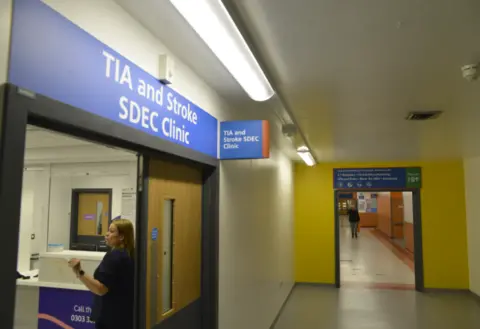
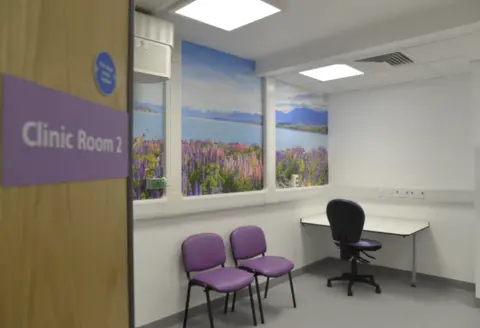
The test is carried out at a new clinic at Queen's Medical Centre (QMC), specialising in assessing and treating patients following a suspected minor stroke.
A cheek swab will show, within hours of an attack, whether a patient carries a genetic variation that determines if the most commonly used drug to treat strokes will work.
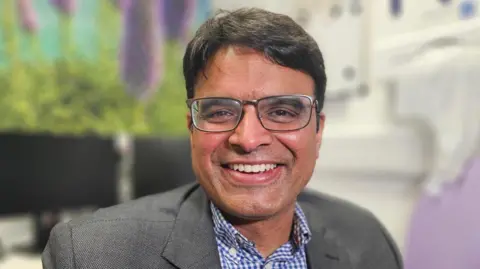
Dr Kailash Krishnan, head of stroke medicine at Nottingham University Hospitals (NUH) NHS Trust, said: "This test will save lives".
The test also has wider benefits, as it can indicate whether other medications - including Warfarin, certain anti-depressants, drugs used to treat anxiety or indigestion, and some statins - are working effectively for patients, allowing treatment to be adjusted if they carry the gene variant.
 Nottingham University Hospitals (NUH) NHS Trust
A stroke is a condition affecting about 100,000 people a year in the UK, where a clot blocks blood supply to part of the brain, potentially causing serious and even fatal damage.
The pilot of the stroke test, believed to be the first of its type in the UK, is specifically for those suspected of having a transient ischemic attack (TIA) or "mini-stroke".
The test identifies whether the patient has the CYP2C19 gene variation, seen in one in three people nationally, and double that in some ethnic groups, which means their bodies do not respond to clopidogrel, a drug which helps prevent such clots.
Additionally, those carrying the changes in the CYP2C19 gene are twice as likely to have further strokes when treated with clopidogrel, the trust said.
 Nottingham University Hospitals (NUH) NHS Trust
A test for the condition already exists, but it can take up to a week to confirm results. And because TIAs often precede larger, more dangerous strokes, medics say speed is of the essence.
Krishnan said: "This rapid test can be done in the hospital while we are carrying out other brain and neck scans, and allows us to make the changes to the patient's treatment all on the same day.
"We can, therefore, be confident that this test will save lives.
"The results could also have huge ramifications for other treatment the patient is receiving, as medications which may not be working for them because of their genetic variation, can also be adjusted."
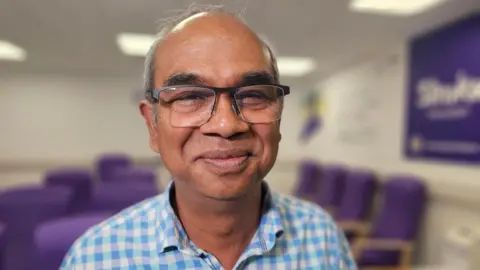
Rashaad Ashraf Ali suffered a stroke, which affected his right eye in 2024, then another in 2025, which damaged his left eye.
This prompted concern his medication was ineffective, a situation confirmed when he took the new test.
He said: "It's a big relief, actually. You can take the medication, but if it doesn't work for you, you may end up getting further strokes.
"So, it is a big relief to identify the problem early and be put on new medication, which hopefully will be working in the future."
Listen to BBC Radio Nottingham on Sounds and follow BBC Nottingham on Facebook, on X, or on Instagram. Send your story ideas to eastmidsnews@bbc.co.uk or via WhatsApp on 0808 100 2210.
