Bangkok's bar fire is the city's latest deadly blaze - will anything ever change?

 Getty Images
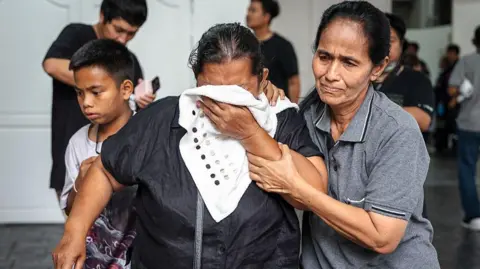
A sudden blast of flame across a crowded bar sends revellers in panic towards a single, narrow exit. Thick, toxic smoke chokes them. The bodies of those who have succumbed block the escape of those who have not.
These horrific scenes occurred not only at the Rong Beer Na Ladprao pub in Bangkok last Sunday night, where 32 people are now known to have died, but also in another night club called Mountain B four years ago in the coastal town of Sattahip.
Twenty six people died in that inferno, which bears a striking similarity to the recent one in Bangkok.
Both these fires are similar to one at a new year celebration in the Santika Club in Bangkok in 2009 which killed 67. After each of these tragedies there were calls for lessons to be learned to prevent them happening again.
One of those, after the Mountain B fire, was made by Worsak Kanok-Nukulchai from the Asian Institute of Technology. Now he finds himself repeating the same warnings.
"Even though the fire from these three incidents occurred in different locations, at different times and might have different causes, the pattern was very similar: multiple deaths in a crowded building, the fire spreading rapidly either in the stage area or in the ceiling, thick smoke cutting visibility and preventing people from finding the exits, and people dying from toxic inhalation, not directly from the fire."
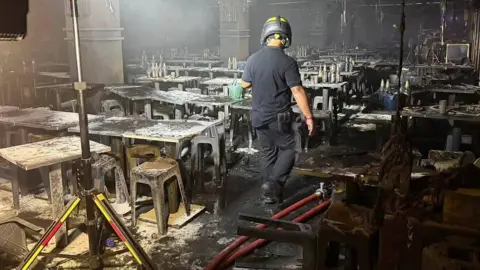
He believes the fire may have been ignited by an electrical fault, and spread through flammable material used for sound insulation.
The terrifying jets of flame seen roaring out into the street through the front entrance were most likely being drawn out by new sources of oxygen once it was opened to let people out.
That intense fire around the entrance may have forced some customers to head to the rear of the pub, where the two exits are reported to have been partially blocked, and would have been difficult to find once the power was cut.
Many of the dead were found there.
 Fire and Rescue Thailand/ Getty Images
"The key question is not just what caused the accident, but why a spark of fire that starts in one place leads to a tragedy which costs so many lives," Prof Worsak says.
The shocking death toll in the Santika Club in 2009 did result in improvements to safety regulations for night clubs.
From 2012 they were required to use fire-resistant materials for sound insulation, to have wider exits that opened outwards, and power backup systems that would keep signs illuminated. Sprinkler systems were mandatory for venues accommodating more than 500 people.
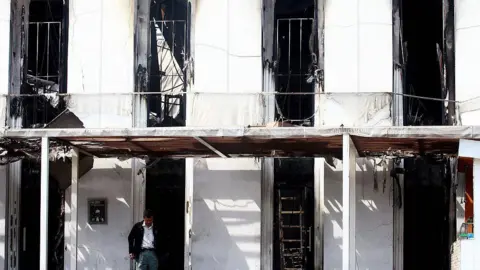
But these tighter regulations only apply to those venues in designated entertainment zones. In Bangkok there are just three. Most pubs are outside these zones, and so are categorised as restaurants with live music. The regulations do not apply to them, even if they can accommodate large numbers of people. That was the case with Rong Beer Na Ladprao and with Mountain B.
Bangkok's governor, Chadchart Sittipunt, has now acknowledged this huge, lethal loophole. The Rong Beer Na Ladprao pub was inspected just three months ago and declared safe. So he has ordered city officials to start carrying out random checks of all so-called restaurants which are actually functioning as pubs or clubs, without giving prior notice.
"From now we will apply the stricter standards to venues like these," he said at a recent press briefing.
"Even if we do not have full legal powers we will make suggestions. If they don't follow these, we will try to find ways to stop them from operating. We must be able to shut them down if there's a risk."
But there are thousands of such establishments in Bangkok.
It is not clear that the Bangkok Metropolitan Administration has sufficient staff to carry out that many inspections, and there would likely be strong opposition to closing down all those, probably most of them, which do not meet the higher standards applied to official entertainment venues.
 Getty Images
Then there is the perennial issue of corruption in Thailand, among local officials and police officers.
It is an open secret that many entertainment venues in Thailand make payments to the police to be able to stay open. Even if stricter regulations are applied to pubs outside the designated entertainment zones, it is not clear that they will be enforced.
After the Mountain B fire, five police officers were suspended, the presumption being that they may have turned a blind eye to what was supposed to be a restaurant operating as a club. But nothing further has been heard of any action against them.
The owner and three other people were convicted by a lower court on various charges and given prison sentences of up to 10 years, but they remain free on bail while appealing, which can take many years in Thailand.
In the case of the Santika Club, the owner and the man responsible for organising the indoor fireworks blamed for starting the fire were sentenced to three years in jail, but stayed out on appeal for six years before the sentence was finally confirmed by the Supreme Court. No other officials are known to have been prosecuted over those disasters.
Safety lapses are prevalent in many areas in Thailand.
Road fatalities are 10 times higher per capita than in Britain. In October 2024 a bus fire killed 23 people, 20 of them schoolchildren, caused by illegally installed gas canisters.
Thirty two passengers died in January this year when a construction crane fell on a train. Earlier this month 10 monks were killed by a pickup truck driven by an 11 year-old boy.
Every one of these incidents has been followed by promises of official action. Yet they just keep on recurring.
