Police put domestic abuse victims at risk - report

 Getty Images
A police force's handling of a scheme giving people the right to know if their partner had a history of domestic violence was putting victims at risk, a watchdog ruled.
His Majesty's Inspectorate of Constabulary and Fire & Rescue Services (HMICFRS) deemed Suffolk Police's application of "Clare's Law" to be inadequate.
During the inspection, the force had more than 500 outstanding requests for information, and was creating digital records where the identities of victims could be revealed.
Roy Wilsher, inspector with HMICFRS, said he had issued an "accelerated cause of concern" and the force had already "taken immediate action". Suffolk Police said it was "committed to improving" the service.
"Suffolk Constabulary's approach to Clare's Law is inadequate and they don't have the necessary processes, capability or capacity in place," he said.
"I will be closely monitoring its progress."
The Domestic Violence Disclosure Scheme - aka Clare's Law - was introduced in 2014 and was intended to provide information that could protect someone from being a victim of attacks.
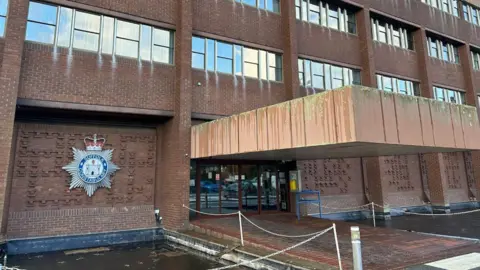 Ben Parker/BBC
Accelerated causes of concern can be issued when a force's failures raise concerns about public safety.
Wilsher found the force was not promptly sharing information with people at risk – information which could help them better protect themselves from violence or harm.
One of the unanswered applications, for example, was found to be from January 2025, but officers were said not to be "fully aware" of the risks such a backlog posed.
Some of the victims they did respond to were also put at risk by the force leaving emails and texts on their devices, despite the risk an offender might see them.
"This means the constabulary can't assure itself that it is managing or reducing the risk of harm to vulnerable people," added Wilsher.
The inspectorate recommended the police cleared the backlog as soon as possible, and made sure disclosures of information were through safe methods of contact.
It also urged the force to acknowledge and better understand the risks such a backlog of requests for information could pose to vulnerable people and their families.
Over the next three months, it should improve its Domestic Violence Disclosure Scheme and make sure officers are trained to make prompt safeguarding referrals.
'Urgent action'
Suffolk Police said safeguarding remained a priority, it "fully acknowledged the seriousness of the issues raised" and "urgent action" was already under way.
"Senior leaders are providing clear oversight, additional resources have been allocated, and robust governance is in place," a spokesperson said.
"Our focus is on making sure vulnerable people receive information promptly; using safe methods of contact and ensuring our disclosure processes meet legal requirements.
"If someone wishes to make an application about a particular partner or former partner you may have concerns about, we would strongly urge you to still please do so."
Do you have a story suggestion for Suffolk? Contact us below.
Follow Suffolk news on BBC Sounds, Facebook, Instagram and X.
