Newborns to be tested for rare condition in trial

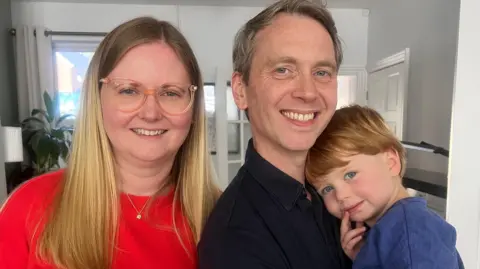 BBC
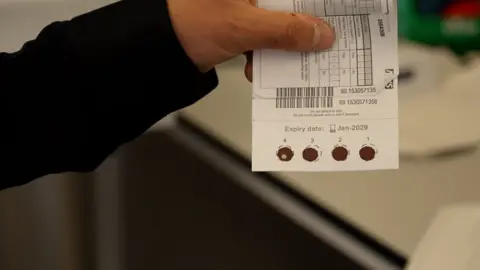
BBCNewborn babies will be tested for Spinal Muscular Atrophy (SMA) from October in a national trial.
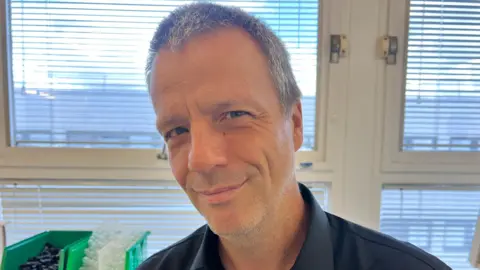
The five-year study, led by Professor Laurent Servais, a paediatric neuromuscular disease specialist at the University of Oxford, will investigate whether adding SMA to the routine newborn blood spot test is effective, practical and cost-effective for the NHS.
Former Little Mix singer Jesy Nelson had campaigned for every baby to be tested after her twins were diagnosed with SMA at six months old.
The trial is led by the Department of Paediatrics in Oxford and will be rolled out nationally from October 2027 after a phased start in Birmingham, Manchester and London.
What is SMA?
SMA is a rare genetic condition affecting around one in 10,000 people, including the twins of former Little Mix singer Jesy Nelson.
Earlier this year, Nelson revealed she had been told her daughters Ocean Jade and Story Monroe Nelson-Foster would "probably never walk".
The singer recently posted on social media about how her twins needed to wear spinal jackets and foot splints in the middle of a heatwave.
Her twins didn't get diagnosed before symptoms arose. She had been campaigning to get the condition tested when babies are born.
Nelson said: "This is a victory for every family affected by SMA, whilst it can't change the future of our children, I know it marks the beginning of a brighter future for future SMA families."
 PA
PAIn England, around 600 children are expected to be born with the condition each year, and often parents don't know they are carriers of the gene.
There are three types of SMA and some children left untreated could die within the first few years of their life with many symptoms unreversible.
"In the most common form the child seems healthy at first" Servais explains.
"Then in the first months they become a little floppy, struggle to support their head and then will have difficulties breathing and swallowing, which will lead to death before two years old.
"Once symptoms show everything that is lost is lost," he said. "The earlier we can intervene, the better it is."
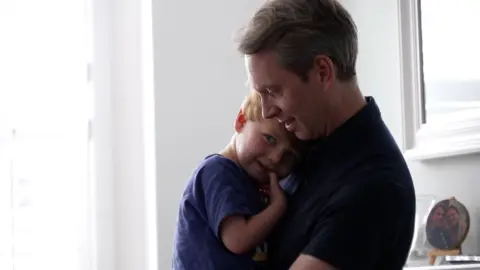
Theodore, known as Teddy, from Chesham, was found to have the rarest form of SMA in 2023 when he was eight weeks old in a pilot study which had started the year before.
"We were in hospital because of his jaundice, and it was only on day four a representative came round asking if we wanted to take part." his mother, Hattie remembers.
"We signed the forms and didn't think much more of it" she added.
They were then called back a few weeks later to tell them Teddy had the rarest form of SMA, which would've presented itself up until teenage years.
"It was devastating, we didn't know anything about SMA before" his dad, James said.
"But he was found pre-symptomatic so it could be treated easily.
"He takes Risdiplam orally as a liquid every day and he's progressing as a toddler should," James added.
"It tastes of strawberry so isn't that un-enjoyable." Hattie joked.
The pilot was led by Servais in the Thames Valley and it established practical evidence about newborn SMA screening – including the diagnosis of Teddy.
Teddy was the only child to have found with SMA in more than 30,000 children tested.
This new study is an evaluation of screening in real-world NHS practice, not a conventional clinical trial of an experimental treatment, like the previous pilot Teddy took part in.
Researchers need to screen a very large number of babies and will follow those diagnosed in the coming five-years measuring the effectiveness of the treatment and its cost.
Birmingham will be the first site to screen all babies born there, then Manchester and then three London hospitals before a full national rollout.
It will initially screen around 400,000 babies, before a national rollout is expected to bring the programme to around 600,000 newborns a year.
Researchers anticipate identifying around 60 babies with SMA each year.
Those children will then be followed to assess their development, including when they sit and walk, their quality of life and the level of care they require.
The condition is tested in other countries, such as Belgium and Scotland, Servais said: "I've not seen these conditions anymore I just see normal and nearly normal kids."
"The best-case scenario is that we have robust data that shows the benefit of newborn screening, not only in terms of clinical benefit, but also of cost-saving."
A previous version of this story said Teddy and his family lived in Caversham.
