Teenager's hospital move 'unusual and concerning'

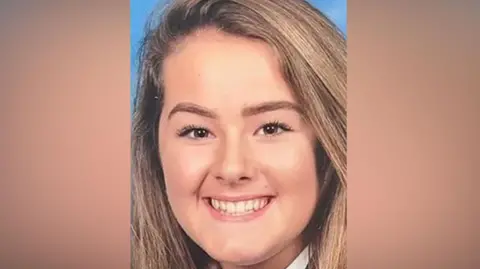 Family handout
This article contains details of suicide and self-harm
A teenager's move to an adult mental health hospital days before she fatally injured herself was "unusual" and "concerning", a psychiatrist has told her inquest.
Emily Moore, from Shildon, County Durham, died in February 2020 while under the care of Tees, Esk and Wear Valleys NHS Foundation Trust (TEWV).
She was moved to its Lanchester Road Hospital from a youth ward two days after turning 18, with a doctor saying the transition contradicted guidelines.
Emily's emerging emotionally unstable personality disorder (EUPD) meant the relationships she formed with medical staff were vital and any changes should be carefully managed to avoid triggering self-harm, the inquest in Crook heard.
Jurors have heard Emily began experiencing mental health problems in 2017 when she was 15, resulting in her being sectioned in March 2019 and diagnosed with EUPD.
She spent four months at TEWV's West Lane Hospital in Middlesbrough, which she complained about and her father described as a "hell-hole", before moving to Ferndene in Prudhoe, run by Cumbria, Northumberland, Tyne and Wear NHS Foundation Trust (CNTW) in July 2019, jurors heard.
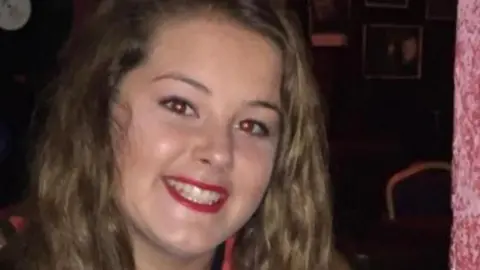 Family handout
She was improving at Ferndene but, two days after turning 18 in February 2020, had to be moved to an adult hospital run by TEWV, with Lanchester Road deemed the "least worst" option for her, jurors have heard.
The inquest heard planning for Emily's move to adult services began more than three months before her birthday, but uncertainty about her future destination remained until days before the transition.
Dr Eman Arebi, consultant psychiatrist at Lanchester Road's 20-bed female-only Tunstall Ward, said she was first told of Emily's impending arrival in an email on 28 January, a week before the teenager was due to move in.
- If you are affected by any issues raised in this article, support can be found at BBC Action Line
She said Emily's case was the first she had seen of an inpatient being moved from a child ward to adult services, and she and her Tunstall colleagues were "concerned" and had "reservations".
"I didn't know Emily at this stage," Arebi said, adding: "I didn't have any information about [her], I was just told she had been in hospital for a long time."
Arebi said it was "very unusual" for someone to move in without a consultation with her team, with a proper transition "very important" so clinicians could learn who the person was.
She said "the way Emily came was the issue" and "at least a few weeks of joint working might have made her more comfortable".
The aim would be to "close any gaps in care" and make the potentially destabilising move "as smooth as possible" for the patient, the jury heard.
National guidelines said a move between child and adult services should be done "carefully" and in "a period of stability", not on their exact 18th birthday or just because they had reached that age, the inquest heard.
Bridget Dolan KC, counsel for the coroner Crispin Oliver, asked if the guidelines had been "followed at all" in Emily's transition.
"I don't think it was," Arebi replied.
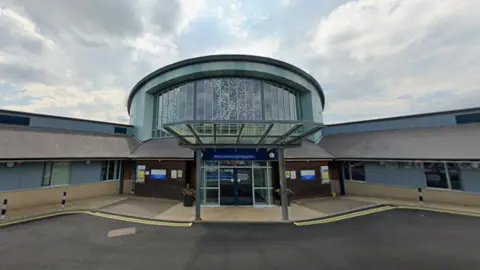 Google
Dr Rachel Smith, a TEWV clinical psychologist specialising in personality disorders, said "ideally" Emily would have been gradually introduced to her new carers to minimise instability.
Emily's relationships with staff were "very important" for the teenager's feeling of "validation and emotional soothing", the inquest heard, with her perception of being "dismissed or criticised" a trigger for self-harm.
Smith said Emily's transition was "very uncertain" for various reasons, including a "breakdown in trust and relationship" between her family and TEWV.
Her parents' preference was for Emily to "go anywhere other than a TEWV bed" after her West Lane experience, the inquest heard.
Asked by Dolan if uncertainty was a "good thing" for an EUPD patient, Smith replied: "No, it wouldn't be the preferred state of play."
The inquest heard Emily visited Tunstall Ward eight days before moving there.
Asked what other preparation had been done with Emily, Smith replied it was "limited if any".
 Supplied
Jurors heard Emily was put on constant observation when she arrived at Tunstall on 6 February, but after an incident-free 72 hours that was changed to only be overnight.
During the day she was on general observation in the communal areas and checked upon at least every 15 minutes when in her room, the inquest heard.
The jury heard Emily had six self-harm incidents, all needing restraint or rapid tranquilisation, in her last month at Ferndene, but none in her time at Tunstall until she fatally injured herself on 13 February.
The inquest has heard Emily's father called the ward that morning to express his fears, after reading a concerning Facebook post his daughter had just published remembering a friend who died at West Lane.
Staff said they would look out for her but hours later she was unconscious, dying two days later, jurors have heard.
Arebi said she was not told about Emily's father's call otherwise she would have gone and spoken to the teenager.
The inquest continues.
