Chalk salmon highlights struggles of the species

 BBC
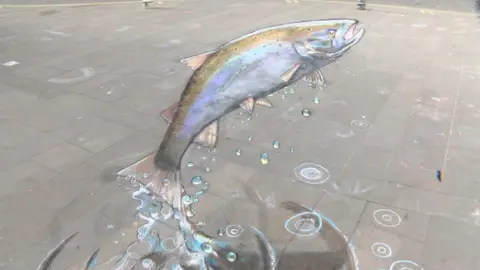
BBCA large chalk drawing of a salmon has been created on a city centre street to raise awareness of the plight of the fish's habitat.
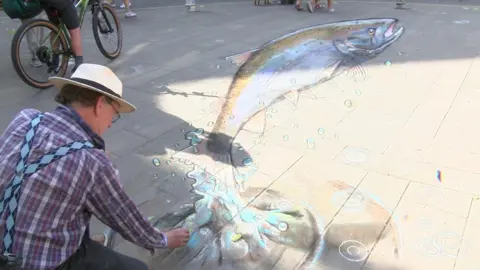
Street artist Julian Beever said he created the work, drawn with a three-dimensional effect, in Winchester to highlight that the Atlantic chalk stream salmon in Hampshire was "on the verge of extinction".
The Project White Hart campaign, made up of a coalition of conservation organisations, is fronted by actor Jim Murray who described the fish as "one of England's most iconic species".
The government said it is restoring chalk streams to better ecological health as part of its reforms to the water sector, while the Environment Agency (EA) said it was committed to protecting the species.
Wild salmon in Hampshire's chalk streams face multiple threats, including rising water temperatures, degradation of habitat, sewage and urban and agricultural pollution.
There are thought to be only 220 chalk rivers in existence - the majority of which are in southern England.
The salmon bury their eggs in the waterways, known for their clear water and gravelly bottoms.
The fish bury their eggs in fragile gravel nests known as redds and shoals of juvenile salmon start their journey from the rivers to the sea each spring.
After often years at sea, adult Atlantic salmon swim thousands of miles to return to the chalk streams where they were born.
Hampshire and Isle of Wight Wildlife Trust figures showed just 133 adult salmon were recorded returning to spawn in 2022 - the lowest figure since monitoring began in 1990.
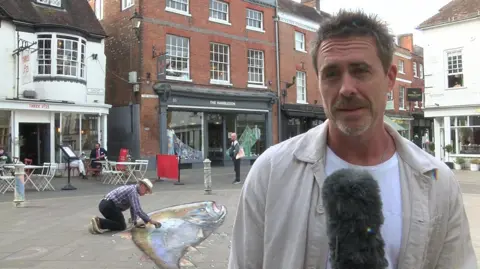
Murray said: "Chalk stream salmon are as rare as the panda or black rhino.
"People assume something this important is being taken care of - but the reality is, it isn't. Hampshire's chalk stream salmon are slipping towards extinction in plain sight.
"This is a mayday moment for one of England's most iconic species."
He added that the fish are "symbolic of a healthy river system" and the chalk artwork - designed to wash away in the rain - was symbolic of how the species could soon also disappear if the waterways are not protected.
"If we can keep these rivers cold and if we can keep them clean from pollution then the salmon will return and by saving the salmon, we'll be saving the chalk streams," Murray said.
The Department for Environment Food and Rural Affairs said chalk streams were "an incredible source of national pride".
"This government is restoring our chalk streams to better ecological health as part of our reforms to the water sector so that we can better protect the habitats of our beloved and endangered species."
The EA said: "Through action including habitat restoration, improved fish passage and strengthened fisheries management, we are working with partners to halt decline and support long-term recovery."
You can follow BBC Hampshire & Isle of Wight on Facebook, X (Twitter), or Instagram.
