STV broadcasts final news programme from Aberdeen

 BBC
BBCSTV's full news programme for northern Scotland has ended, almost a year after controversial changes to the service were first proposed.
The News at Six bulletin on Friday was the last full programme to be broadcast from the company's Aberdeen studio.
From now on, news bulletins seen in the north will be presented from Glasgow.
The changes were allowed by regulator Ofcom despite opposition from the Scottish government, politicians from across the parties and unions.
The scheme sees the effective merger of STV's two separate news services. Until now it has provided one service for the Central Belt and another for the north.
From Monday, most of the 18:00 programme will be shown in both regions, with a requirement for just under a third of the programme to be from each area.
The changes also see the departure of long-serving presenter Norman MacLeod, after almost 40 years with the company.
In a statement he said: "I've had an incredible career at STV, working alongside some truly wonderful colleagues who have made it so special.
"I'll miss the team enormously, but the time feels right to embark on a new adventure."
The exact format which will be broadcast from Monday is being kept under wraps. It is understood the distinct content for the north will include some regional news plus sport and a separate weather forecast.
The part of the programme which will be shown in both areas is likely to include major stories from the north.
One source at STV said: "It'll be something of a soft launch. The branding won't change. Some familiar faces including presenter Andrea Brymer will still be there. Hopefully viewers will feel reassured that is still the service they know and trust.
"Critics who claimed major stories in the north like severe weather, high court cases or big council rows won't be covered are simply wrong. But there will be fewer purely local stories."
The changes have led to 30 job losses and a one-day strike but in the end there were no compulsory redundancies.
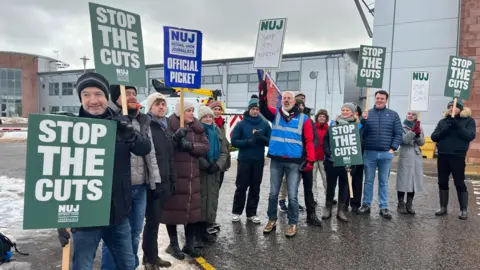
STV staff and politicians were stunned when the proposed changes were announced last September.
Weeks earlier, STV had revamped its Aberdeen studio with a new set and technical equipment.
The initial plan was even more radical. The northern half of Scotland would have been left with no bespoke coverage whatsoever.
STV and regulator Ofcom agreed a modified scheme but this did little to appease the Scottish government, unions, and critics including local business groups.
When Ofcom's final decision was announced last month, First Minister John Swinney warned: "It is clear to me that the proposals agreed to significantly weaken regional news provision in the north and north-east of Scotland and erode local representation."
Critics have questioned why Ofcom supported the plan when most of those who took part in the consultation expressed their opposition.
However, it has become increasingly hard for Ofcom to impose loss-making legal obligations on commercial channels.
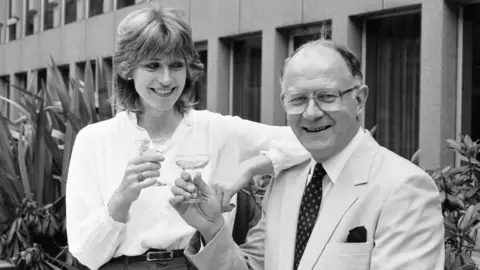
The separate news service for the north was the final legacy of Grampian Television - once a fiercely independent TV station.
Ted Brocklebank - who worked at Grampian for 25 years as a journalist, producer and executive before becoming a Conservative MSP - is saddened by the latest changes but believes they have been almost inevitable for some time.
He said: "I'm coming from a situation where the IBA (the regulator in the 70s and 80s) was very strong on regional broadcasting. Grampian was a great example of that.
"Now it appears from Ofcom that this is no longer needed in Scotland."
He recalls Grampian making a wide range of programmes, from award-winning documentaries on the oil industry to light entertainment.
But he believes the regional news service was its crowning glory.
In the early 80s, Grampian became the first UK regional TV company to gather the day's news footage on videotape - ending the need to spend hours developing and processing film.
Perhaps the most famous face to come through at Grampian was Selina Scott. She left North Tonight to present the ITN News at Ten before hosting BBC Breakfast Time and The Clothes Show.
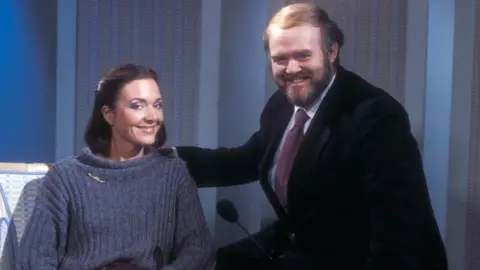
Other national stars made by Grampian were Donny B MacLeod, the hugely popular presenter of the BBC's lunchtime magazine Pebble Mill at One in the 70s and 80, and Donald MacCormick, who anchored Newsnight in its early years.
Diana Speed was a newsreader and on-screen continuity announcer at Grampian in the late 80s and 90s. She went on to work for BBC Radio 4.
She too is saddened by the latest news.
"Grampian TV was a great place to start a career. I worked with some talented and generous colleagues who taught me so much and gave me the skills to go on and apply to Radio 4," she said.
"It also represented the views and culture of the very large part of Scotland which exists beyond the central belt."
Deregulation and the rise of multi-channel TV in the 1990s changed everything.
Grampian was bought by STV in 1997. Over the next few years, local programmes made purely for the north ended, and in 2006 the name itself went.
 PA Media
All commercial broadcasters are facing two challenges: falling ratings and falling advertising.
STV argues the changes to the news service will ensure its sustainability for years to come.
Chief executive Rufus Radcliffe said: "As a commercial public service broadcaster that receives no public funding, we are focused on the future and what we do best - trusted news and high-quality content that continues to resonate with audiences across all of Scotland."
Ratings for news programmes are in long-term decline. More and more people get their news online - whether from reputable sources or not.
How can public service media providers - charged with providing accurate and impartial news - meet this challenge?
STV hopes its revamped service will meet the challenge. The test is whether the public feels the same way.
