'My brush with skin cancer taught me the dangers of the sun'

 BBC
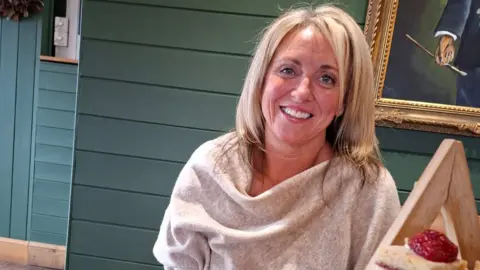
BBCAs temperatures across the UK soar above 30C while people are warned of the weather's dangers, BBC reporter Laura May McMullan explains how her experience with skin cancer taught her about the importance of protecting ourselves.
I was the girl who never went to the doctors.
Even after finding a new, unusually red spot on the back of my right thigh, it still took three months for me to go and see the GP.
From the very beginning, I was told it was an insect bite that got infected but, to be on the safe side, I was referred to a dermatologist who took a biopsy and I thought nothing more of it.
I was also the kind of girl, admittedly, who liked to be tanned because it gave me a boost.
I was on holiday in Fuerteventura in January 2014, sunning myself and unfortunately getting burnt, when I received a text to say the dermatologist needed to speak to me urgently regarding my biopsy results.
It was melanoma and I was being referred immediately to the Christie cancer hospital in Manchester.
To say I was shocked, in disbelief and felt sick to the pit of my stomach is an understatement. The next six months my life were completely turned upside down.
I had to have a wider excision and because my melanoma was 1.5mm, I opted to have a sentinel lymph node biopsy, which detects if the cancer has spread into your lymphatic system.
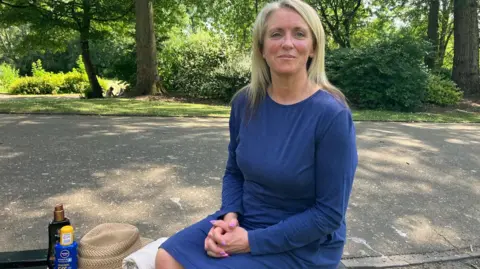
It had and I was given the option whether I just wanted a groin clearance of my lymph nodes or to have some removed from my pelvis as well, in case the melanoma had travelled further.
I opted to have both done, which involved major surgery and left me with a drain in my leg.
I now permanently live with lymphoedema in my right leg – a symptom of lymph node removal.
Thankfully in June 2014, I was told no more melanoma was found. The major surgery had worked and I could get back to living my life.
That was 12 years ago and, although it's taken a lot of strength, scans and becoming a mum, I try to live my life to the fullest because I've been given a second chance.
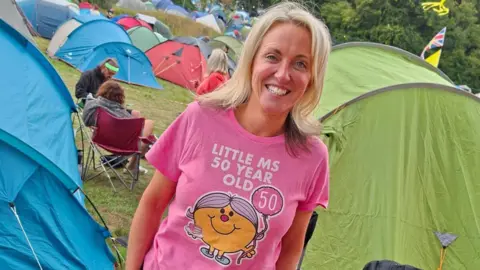
I look back now and find it hard to believe I was so ignorant about the dangers of ultraviolet (UV) rays.
I did also use sunbeds as a teenager and in my early 20s but, up until I was diagnosed at 38 years old, I went on foreign holidays many times a year and now realise the damage I was doing.
What I have come to learn is that burning changes the DNA of your skin. If a child burns just twice before the age of 18, then abnormal cells have been implanted. The more a person then burns, the greater the risk of skin cancer.
Melanoma is the most dangerous type - it transfers into your lymphatic system and can reach your vital organs.
Now, I am extremely aware of how quickly the sun can affect your skin. Everyone has a different burning threshold. It could be just 10 or 15 minutes before the sun starts to penetrate your skin.
'Small steps of prevention'
It is important to apply sunscreen 20 minutes before going into the sun, so that it builds up a barrier against the UV rays.
I personally use factor 50 - Cancer Research UK says we should use 30 and above. I also wear protective clothing as the sun can still penetrate through certain materials.
I apply sun cream to my shoulders, chest, back, arms, legs, even under my clothing, and always wear a vest.
I take a hat and sometimes an umbrella if I go somewhere new, in case there are no shaded areas, and I always choose the shade wherever possible.
It is tempting to think "it won't happen to me". It did happen to me and I would not wish the trauma on anyone.
I would urge everyone to take small steps for prevention, instead of having to deal with the huge steps of battling for your life.
I am pleased to say I am now an ambassador for the Sckin charity which raises awareness about prevention.
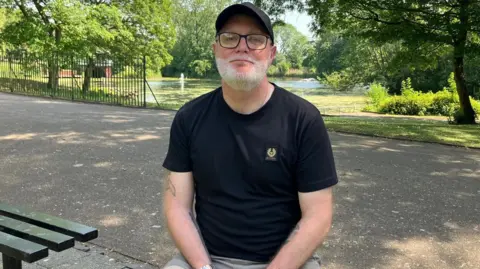
Steve Taylor, from Stoke-on-Trent, is one of the people backing Cancer Research UK's campaign to raise awareness of sun protection.
The 51-year-old has been diagnosed with melanoma twice but became cancer-free after a pioneering immunotherapy treatment.
He told BBC Midlands Today he first saw a mole on his skin in 2012 but by 2023, he had lumps under his arms and was told it was stage four.
This meant it had spread to his abdomen, bowel and lung, which he described as a "life-threatening diagnosis".
He said he did not believe a skin cancer diagnosis would ever happen to him.
"I don't think anyone ever does," he added. "I used to go on holiday, not wear cream, get burnt, peel, get burnt again."
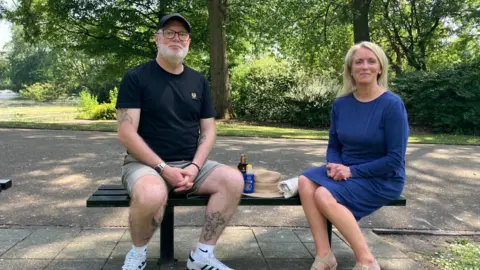
Asked how it felt to be given the diagnosis, he said: "Devastating. You just think your life's ending, that's it.
"You don't know what to do, you kind of go numb. It's total shock."
He said he originally thought the immunotherapy treatment might extend his life but never considered it would actually eliminate the cancer.
On the dangers of burning, he said he never realised how bad it could be.
"When I was young, I was out all day - no top on and no sun cream on," he added.
"Now I don't even think of leaving the house without sun cream, a cap or a top on. Sun safety is massive to me now.
"I don't think people realise how important it is."
Follow BBC Stoke & Staffordshire on BBC Sounds, Facebook, X and Instagram.
