How families rely on 'fragile' care system

 BBC
BBCSocial care services across the South West are facing mounting pressure as demand rises, needs become more complex and funding struggles to keep up, according to those on the front line.
In Dawlish, Devon, Victor Bekker receives four care visits a day after a lung condition and Covid left him chair-bound and in poor health. He said the carers who supported him had become essential to daily life.
"They're great, they know my routine and what I like," he said.
Bekker and his wife Shirley moved to Devon from Zimbabwe, where they said they would have been left to cope alone. His care is funded by the local authority based on his health needs.
"When people complain about the NHS, I want to scream: 'Come and see what we've got, guys.' You know, it's just phenomenal," Shirley said.
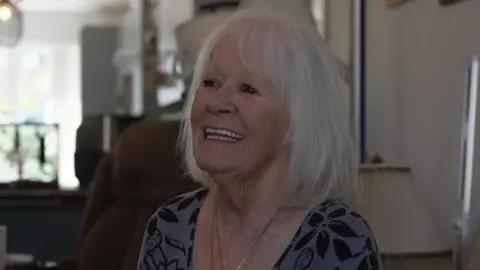
For 85-year-old Ronald Kentisbeer, who is now in palliative care at home in Teignbridge, Devon, carers allow him to stay where he wants to be.
"They couldn't be any better, and they'll really put themselves out," he said.
Care group manager Nikki Grange said support could be fragile.
"It is a tough job and you've got to care to care."
Partner Ronnie Kentisbeer said: "If I didn't have carers, I couldn't keep him at home and that would be the end of him, I think.
"He wouldn't want to go in a care home. He went into hospital a few weeks back and then we lost the package, so we had to renegotiate.
"Everybody does the best they can and it works OK."
Carers said they were stretched, with Abiodun Olafusi saying he could see about 20 clients a day, often working from early morning until late evening.
"Every day is different, I must say," he said.

"We provide care services to clients in their own homes, so you tend to meet different situations and circumstances on every visit."
According to the Kings Fund, which looked at NHS England figures, local authorities spend nearly two-thirds of their budget on working-age adults receiving care at home, known as domiciliary care.
But, for older people, local authorities spend more on care homes.
In care homes, providers said finances were not stacking up.
At Ponsandane, in Penzance, Cornwall, some beds remain empty because there are not enough staff.
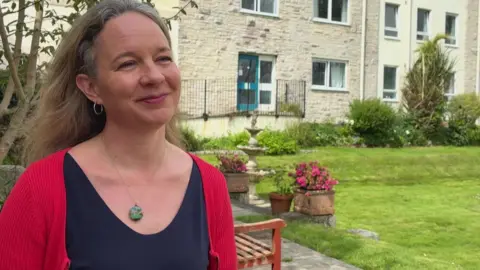
Kim Pankhurst, of the Swallowcourt Group, which includes Ponsandane, said the public funding was not enough.
She said: "Cornwall Council has funded 5.6% and the real living wage rose by 6.7%, and that's the majority of the people we employ because, obviously, care workers and domestics all earn the real living wage... as they should.
"The complexity of the people we look after has massively increased.
"So, the skills of the staff needing their training, the requirements have increased in order to support the more complex health behaviours."
