'It was awful waiting on my diagnosis': NI cancer cases hit record high

 BBC
BBCCancer cases have hit a record high in Northern Ireland with about 10,700 people being diagnosed every year - about 29 new cases each day.
Cancer Research UK, which has published the figures, said tackling waiting lists must be a priority for the Northern Ireland Executive.
It said cancer was the leading cause of death in Northern Ireland, with about 4,600 people dying from the disease every year.
However it said cancer mortality rates were their lowest ever level, having fallen by 18% since the mid-1970s.
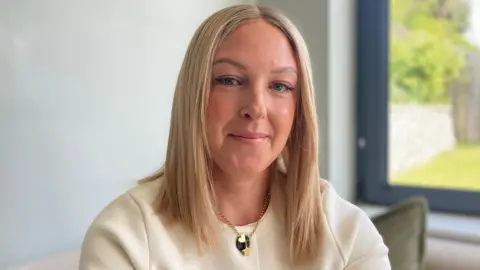
Claire Haire said after "finding a lump" in July she notified her GP, it wasn't until September when she was told it was cancerous.
She told BBC News NI the five-week waiting period was "awful," saying it "felt much longer".
"I kept looking at my phone thinking I might get a phone call. You go through, 'it's nothing' to thinking 'am I going to die?'," she said.
Following on from her diagnosis she described the treatment process as "slow" with "lots of waits in between".
"I understand they want to get the best picture possible and get everything in place, so that the treatment is correct. But the waits in between; waiting for scans, waiting for scan results.
"There were just waits every time and until you know what sort of cancer you're dealing with, it's scary."
The 40-year-old mother of two has just finished chemotherapy - it began in December - and will start 15 "gruelling" sessions of radiotherapy in a fortnight's time.
Having a history of cancer in her family, she claims the longer waiting periods added even more pressure to her situation.
"I feel like because there was so much cancer in my family, that I was bombarded with that pressure of them wanting to know the story and had I got results yet. That anxiety that a whole family feels with cancer, it's not just the individual."
What does the report tell us?
Breast, prostate, lung and bowel cancers account for 54% of new cancer cases in Northern Ireland.
Cancer incidence rates have increased by 14% since the early 1990s.
Almost 57% of people with cancer survive their disease for at least five years in Northern Ireland.
However, that varies by the stage the disease is detected and treated - 87% of people diagnosed at the earliest stage survive their disease for five years, compared to 16% at the latest stage.
Rates in females have increased by 18%, while rates in males have remained stable.
The charity says the sex difference is mainly driven by smoking-related cancer types, where incidence rates have been falling for some time in men but not yet in women.
'Ticking time-bomb'
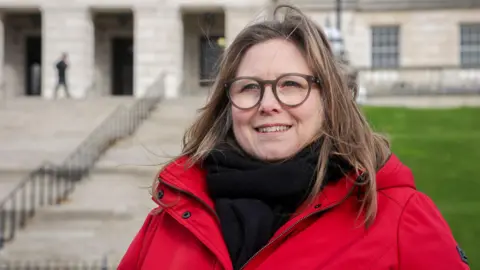
Suzanne Rodgers was diagnosed with stage four cervical cancer but has been cancer free for more than a decade.
"I had no symptoms until I had all the symptoms and I was very healthy at the time and was feeling very well in myself," she told the Good Morning Ulster programme.
"So it was the shock and obviously you're thinking about your family.
"I count myself very, very fortunate that at the time I got my diagnosis things moved very quickly and I moved from diagnosis to treatment."
She said every day after getting the diagnosis and before the treatment started felt like "a ticking time-bomb, sitting there because you know that every day this is getting worse, the cancer is potentially growing, the tumour is getting bigger.
"So my heart goes out to anybody who finds themselves in that situation," she said.
 Cancer Research UK
She said she also wanted to "give a positive message to anybody who's just starting out on that road".
"You hear all the doom and gloom, but it really is doable, it really can be managed," she said.
"Check yourself for lumps and bumps and all the rest of it, because the earlier you can get your diagnosis, then obviously the better chance that you have.
"You can't control how long it's going to take before you start your treatment, but you can control or have some positive input into when you discover there is a problem."
'We need an emergency plan'
Liz Morrison, of Cancer Research UK, said only a third of people in Northern Ireland began treatment within 62 days of a GP red-flagging them
The target is 95%.
"If you look at other parts of the UK that's about two thirds of people - still not good enough, but it's twice as bad here as it is anywhere else," she said.
"The executive has to prioritise cancer waiting lists, it can't afford not to. We need an emergency plan, a stabilisation plan.
"We need to take a step back and say why? How did we go from 83% in 2013 to 30% now of people meeting those targets.
"There are pockets of really good practice in Northern Ireland
"We need to look at who's doing it well. Which specialities do we need to focus on?
"We have to ask the doctors, the managers, the radiologists, the clinicians, because all of these people are working incredibly hard, but we need to say, 'where's it working, where's it not working?'"
What has the Department of Health said ?
A spokesperson for the Department of Health said they welcomed the report, adding they recognise that "sustained investment will be required to support service transformation over the coming years".
They acknowledged while there has been an increase in cancer case numbers, they said "these are largely driven by population growth and ageing, rather than rising underlying risk".
The statement added: "Cancer waiting times are too long and remain a priority.
"The Department is working closely with Trusts to address the underlying issues by strengthening cancer pathways, improving capacity across diagnostics and treatment and continued tracking of patients through their cancer journey."
