Mythical shapes and the impact of oil: The nominees for the art world's most prestigious prize

 Belinda Lawley
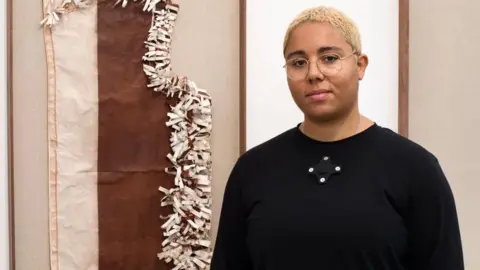
A spoken-word performance about life in the industrial north and sculptures which examine the political history of oil are among the shortlisted artworks for this year's Turner Prize.
The works by artists Simeon Barclay, Kira Freije, Marguerite Humeau, and Tanoa Sasraku will go on display in Middlesbrough later this year before a winner is announced in December.
Jury chair Alex Farquharson said the shortlisted works offered "a compelling reflection of the breadth and vitality of contemporary British art".
The four shortlisted artists are awarded £10,000 each, while the eventual winner will receive £25,000.
One of the most prestigious awards for visual arts, the Turner Prize was established in 1984 to promote public debate around new developments in contemporary British art.
The prize is named after painter JMW Turner and awarded annually to a British artist for an outstanding exhibition or other presentation of their work.
This year's four shortlisted works will go on display at the Middlesbrough Institute of Modern Art, Teesside University, with the winner announced there on 10 December.
Farquharson said this year's selection presents a "rich and diverse range of work" that "offer distinct perspectives through which to explore the world around us".
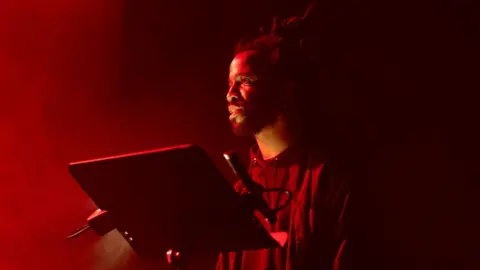
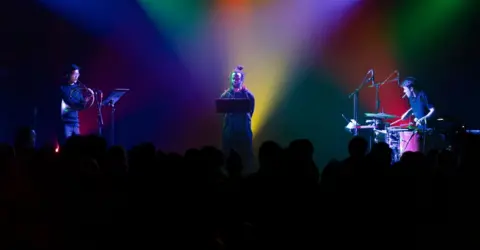
The Ruin by Simeon Barclay
 Anne Tetzlaff
 Anne Tetzlaff
What is the work? Barclay's hour-long spoken word performance draws on his upbringing in Huddersfield and his experience of the industrial landscape of northern England, against a soundtrack of live percussion and horn.
What did the jury say? The jury praised Barclay's debut performance for its "exploration of Britishness, class, race and masculine identity, through an evocative, experimental use of language and a psychologically immersive soundscape"
Chance of winning? Barclay stands out among this year's four artists as the only one whose work is based on live performance rather than sculpture. His topical content could help him secure the first win for a spoken-word work since 2019.
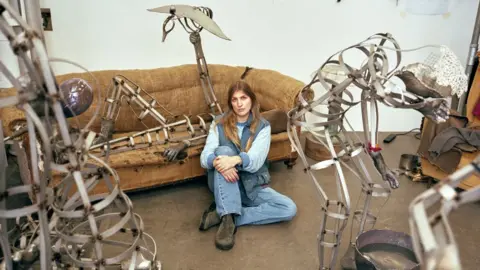
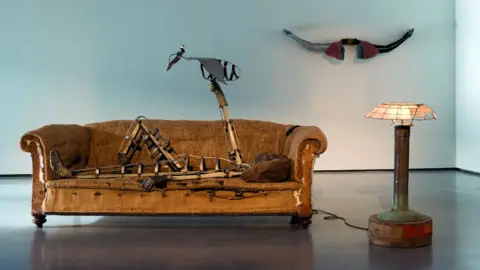
Unspeak the Chorus by Kira Freije
 Lewis Ronald
 Lewis Ronald
What is the work? Freije uses metal, fabric and found materials to create sculptures that explore universal human emotions, such as stonecast faces and life-size figures constructed from bare metal armatures.
What did the jury say? They praised the "emotional depth" of Freije's work, highlighting its "unique sculptural vocabulary of materials and forms, as well as the haunting and expressive way she transformed the space through her arrangement of figures".
Chances of winning? Freije's anonymous and androgynous figures are open to viewers' interpretation, but most would consider them striking and memorable regardless of their meaning - judges are likely to be impressed by the artist's distinctive style.
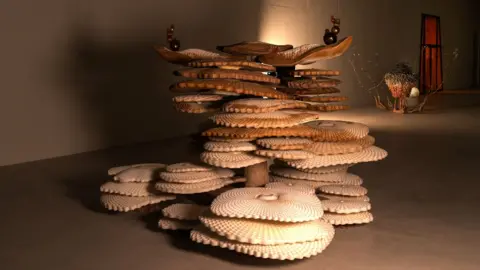
Torches by Marguerite Humeau
 Mathilde Agius
 Julia Andreone
What is the work? Humeau's work examines the history of the earth and imagined future worlds via sculptures that include references to specific natural species and are accompanied by a looped cycle of light and sound.
What did the jury say? They were impressed by Humeau's cinematic exhibition and its "engagement with ecological and existential themes through inventive forms, speculative scenarios and dynamic shifts in scale".
Chances of winning? Unlike some of the other shortlisted works, Humeau's installation does not come from a human-centred perspective. Instead, her science-fictional shapes could impress the judges with their mythical quality.
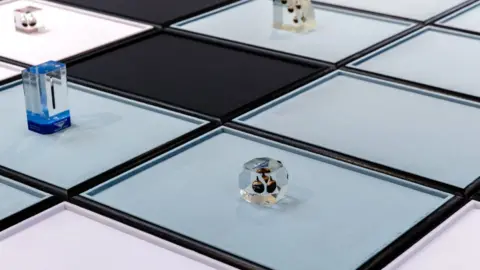
Morale Patch by Tanoa Sasraku
 Jack Elliot Edwards
 Jack Elliot Edwards
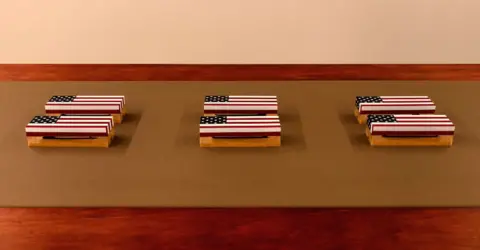
What is the work? Sasraku's installation explores geopolitical ideas through object-like sculptures, with a focus on recent political and military histories of oil.
What did the jury say? They praised the precision and sophistication of the installation, saying it "addresses complex historical issues with strong contemporary resonance, and its use of a clinical, minimalist display that conveys both irony and seriousness".
Chances of winning? In the time of the Iran war and headlines about oil prices, Sasraku's work is perhaps the most topical on this year's shortlist. There's a strong chance judges could be impressed by the relevance of the installation, and the clinical and corporate way it's presented.
