'Women are still not safe 40 years after Beast of Birkenhead case'

 BBC
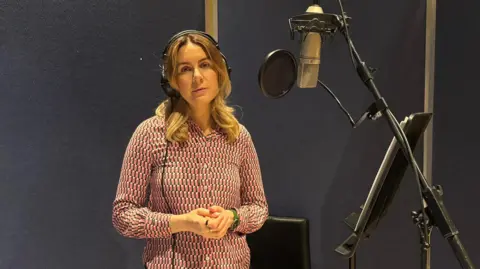
BBCFor the past 12 months, I have worked on a podcast about the brutal attack and murder of 21-year-old Diane Sindall in Birkenhead in 1986, and the man, Peter Sullivan, who spent 38 years wrongly imprisoned for the crime.
When the podcast Crime Next Door: The Beast of Birkenhead was first pitched to me, Sullivan was still in prison and there was potential for an appeal, but nothing had been confirmed.
That meant I would be telling the story of a young woman murdered, and a potential miscarriage of justice.
Initially I was hesitant to take part, because the prospect of making work about violence against women was not going to be easy to be confronted with daily.
But I was also scared.
If the man in prison didn't do it, who did? And, in telling the story, would that put me in danger?
 PA
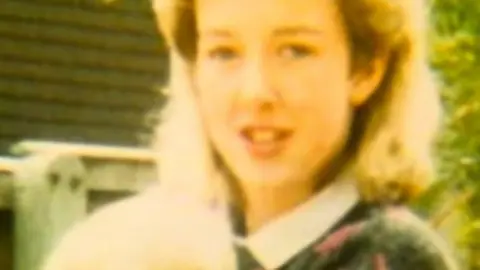
PAGoing back nearly 40 years to when the attack took place, it was glaringly obvious how much more prevalent sexism was in society. How much more difficult it was for a woman to report assault.
You have to remember we're going back to a time when it was legal for a husband to rape his wife, a law that wasn't changed in the UK until 1991.
In 1986, when Diane was killed, violence against women was not the issue we see it as today. Women were made to feel shame about being the victims of abuse, they weren't believed and even if they overcame this, there was nowhere for that woman to go.
I know what some of you will be thinking, this still happens today. My thoughts exactly.
And while there have been some improvements, in my opinion we haven't come nearly far enough in resolving the issue of violence against women.
It became a focus of mine and my two producers, Kate Bissell and Gemma Maull, that the audience didn't just think, 'that was then'. We needed them to look further, what about now?
A large part of the research for the podcast was centered around reporting at the time. Diane was described as "pretty" and "nice", and it was mentioned in almost every article she was engaged to her childhood sweetheart.
I spoke to a journalist who acknowledged this isn't how he would report this kind of story today. That, thankfully, has changed.
But I can also understand his perspective for doing it then. His job was to report, but also help the police bring the murder to people's attention, help them find a suspect. He knew what would need to be said to get the public's sympathy.
But can we honestly say as a society our value on women is much different now? Don't we still, in 2026, uphold the hierarchy of importance and value on a woman's life based on how attractive she is, if she is attached to a man, if she is kind, quiet, or slim? Not to mention more socio-political elements like her race, class or if she is transgender or a sex worker.
Positive steps?
When Diane was murdered, women in the community rallied. They fundraised for a memorial stone, organised a Reclaim the Night march and set up a support service for women, a charity, RASA, that still exists today. I spoke to operations manager Lorraine Wood, about the issues women face in society, particularly around violence.
She told me she thinks the police have got better at supporting victims of crime and that services like theirs have also improved.
"I think people feel that there is more support available for them now and you're less likely to be shut down that you might have been years ago," Lorraine said.
"I think the improvement has come with support workers and specialist officers who are trained in this field, and they've set up a specific unit to tackle rape and to tackle sexual offenders. That's really positive."
In the podcast we spoke to an ex-police officer who highlighted police at the time giving a lack of consideration to victims of domestic violence.
When we put this to Merseyside police they responded: "What we can do is reassure the public that today in response to violence against women and girls, Merseyside Police is committed to supporting victims with a comprehensive victim‑centered approach to tackling the issue, with dedicated resources, specialist training, and new ways of working to safeguard victims and pursue perpetrators."
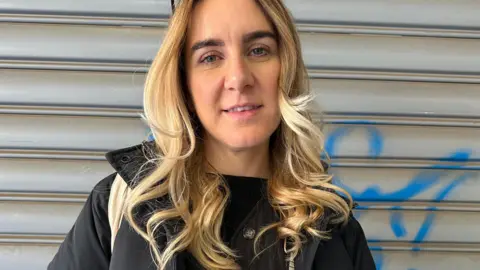
We also spoke to a woman called Yvonne, she remembers the attack, and went on the be a campaigner for women's safety.
She told me: "Women's safety was obviously a big issue and Diane's murder had brought that to the fore. Very much so. But it wasn't just women's safety.
"Because women's safety is built on the foundation of how you view women, how you think about them, what you think about their abilities, about their capabilities, about their competence, how they should be treated in the workplace, about how they should be treated as part of the community.
"So women's safety is actually built on all those things. It's not just something that that exists in isolation."
After transcribing this interview, I immediately pulled this quote and sent it to my girl mates. This! This is what it means to be a woman right now.
Women are often still perceived and therefore treated in a way that makes us unsafe. Whether that fear is extreme, a fear of murder, violence, or the fear of being undervalued, dismissed, blocked from career progression.
This woman was talking about what it meant to be a woman forty years ago, but sadly, her words still made perfect sense to me today.
Lorraine echoed my thoughts. "While there are lots of things in place now that weren't in place back in the eighties, what hasn't changed is the sense of safety for women. So women still feel very unsafe.
"Outside of the house, in the house. Unfortunately, I don't know a single woman who will say, 'I can walk down the street and I don't question who's behind me', or 'I don't worry about my safety'."
Remember that initial fear of mine - who really did kill Diane and am I safe telling her story?
Unfortunately my rationale to overcome this fear was a depressing one. I asked myself, as women are we ever truly safe? And so I spent twelve months making a podcast about violence against women, but I was honest from the start.
That I was scared, and that yes this was affecting me. I do think it is the case in journalism, that there's an expectation for our journalists to be strong, to hold the listeners' hands, to show the public where they themselves would not dare to go.
I think it is also, if not more so, to do with society's ideas that as women we are not honest about how scared we actually feel - because that would mean acknowledging how unsafe we actually are, when in reality, being confronted daily with the reality of violence against women was not a shock for me - and it will not be a shock to most women.
It is a reminder of something most of us spend our days trying not to let impact us.
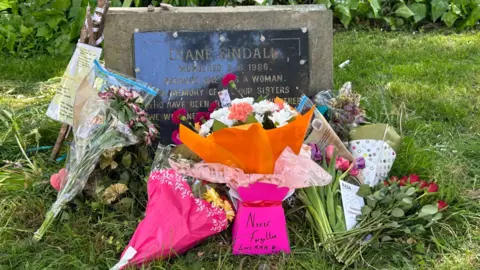
Murdered Because She Was A Woman are the words engraved on Diane Sindall's memorial stone. It is not something that we are able to forget.
When I think about how safe women feel and how able we are to acknowledge that uncertainty, it comes back to the last thing we say to each other after a night out: Text me when you get in.
Because we don't want to say what we're really thinking. I want to know you are safe. I'm worried about you. I'm worried that whoever got her will get you too.
Listen to the best of BBC Radio Manchester on Sounds and follow BBC Manchester on Facebook, X, and Instagram. You can also send story ideas via Whatsapp to 0808 100 2230.
