'I had no fears about robotic surgery after my cancer diagnosis'

 BBC
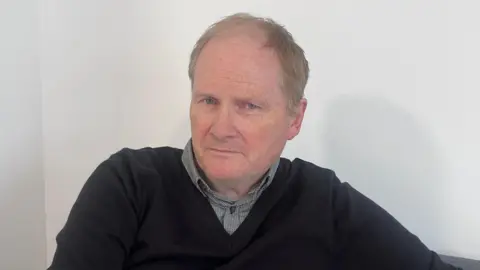
BBC"I had absolutely no fear of robots" - that was William Duncan's reaction when he was offered robotic surgery to remove cancer in his oesophagus.
The former engineer was diagnosed with oesophageal cancer in October 2025.
His cancer was caught early, so when his consultant said they could "deal with this robotically" William said he did not need time to think about it.
A few months later, the 59-year-old became the first person in Northern Ireland to have his cancer removed in an oesophagectomy using robotic assisted surgery.
Traditionally the procedure is performed through open surgery, leaving much larger wounds, increased risk of infection and pain.
Robotic assisted surgery has benefits for patients over previous techniques, including reduced pain and blood loss, shorter hospital stays and quicker recovery times.
Coming from an engineering background, William, from Douglas Bridge in County Tyrone, said he had no reservations going for the robotic surgery.
"I've worked with robots, so I knew that robotic technology is the way forward.
"I had absolutely no fear of robots.
"In fact, I was privileged to be given the opportunity for it," he said.
Symptoms of oesophageal cancer
Symptoms of oesophageal cancer can affect your digestion, but they might be hard to spot, such as:
- having problems swallowing (dysphagia)
- feeling or being sick
- heartburn or acid reflux
- symptoms of indigestion, such as burping a lot

William's first symptom was difficulty swallowing, but he said "being a typical man, I just ignored it".
It gradually got worse and after waking up in the middle of the night choking and throwing up he said he knew "there was something badly wrong".
At one stage he ended up in a hospital ED as he could not keep any food down and was referred for tests.
When William was diagnosed with oesophageal cancer, he said that was when "the floor opened up for me".
But his attitude quickly changed to 'the best form of defence is attack'.
When robotic surgery was suggested, William's response was clear.
"I said instantly: 'No, I'll do it now. I don't need any time to think about it. I'm 100% ready to do it.'"
The surgery was "very successful", and William was out of hospital in nine days, having spent just one night in intensive care.
"The recovery time has been brilliant.
"I'm back doing things now that I haven't been able to do for the last couple or three years. It's definitely benefited me a lot in recovery time," he said.

As a classic car enthusiast William is looking forward to getting the vehicles back on the road, but he has advice to anyone who has symptoms like he had.
"Don't do what I did and that was nothing. Get it checked out as soon as possible. Go to your doctor and explain your symptoms and don't be put off by acid reflux or anything like that.
"Don't ignore it the way I did," he added.
And if you are offered robotic surgery?
"Go for it 100%. Have no fear of it. We have one of the best cancer teams in the world at our doorstep," he said.
Expansion of robotic surgery in NI
 Shaun Whitmore/BBC
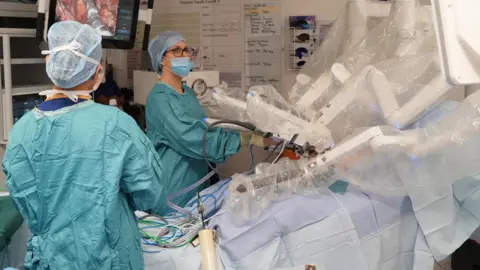
There are four robots in hospitals across Northern Ireland, and they cost about £2m each.
Two are at Belfast City Hospital and there is one each at Altnagelvin and Ulster hospitals.
Robotic surgery was first used in Northern Ireland for the treatment of prostate cancer, the use of robots is expanding to other specialities such as colorectal, upper gastrointestinal and gynaecology procedures.
Robotic surgery requires only very small incisions, which are possible thanks to the use of miniaturised cameras and instruments, controlled remotely by a surgeon/
This allows greater visibility and precision than would be available in conventional techniques, making procedures easier for surgeons and safer for patients.
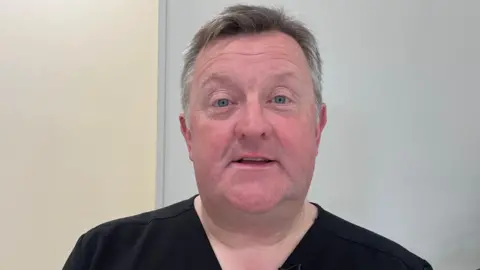
Mark Taylor, regional clinical director for elective care, said robotic surgery is "very innovative".
"The benefits of robotic surgery are firstly to the patient. So smaller wounds, less pain and earlier discharge from hospital.
"Secondly, in terms of surgeons, it's important that this is the future. So, to recruit and retain surgeons, we have got to be on a par with our counterparts throughout the world.
"And thirdly, in terms of the survival of the surgeons, so actually surgeons working with robotic surgery have less incidence of back pain and neck pain.
"And there's one other component for me, and that is if we can get people out of hospital earlier, then that will have an impact on our waiting lists," he said.
