'I was so focused on finding a cure, I wasn't living'

 Sarah Lewis
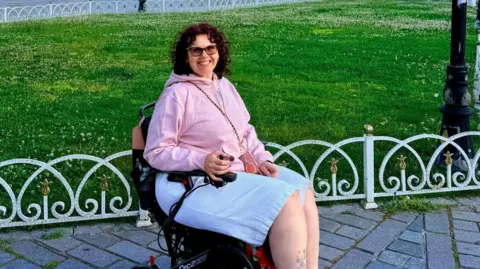
When Sarah Lewis started experiencing frequent migraines and choking on her food, she brushed it off, putting it down to being overtired and eating too quickly.
But within weeks of experiencing a headache that didn't go away, she couldn't walk in a straight line, had pins and needles down one side of her body and tremors in her hands.
In 2023, Lewis was diagnosed with Functional Neurological Disorder (FND) at the age of 43, which left her with speech problems and unable to walk unassisted.
"It's been the steepest of learning curves. The things that you have to consider that wouldn't enter your head, just daily challenges," she said.
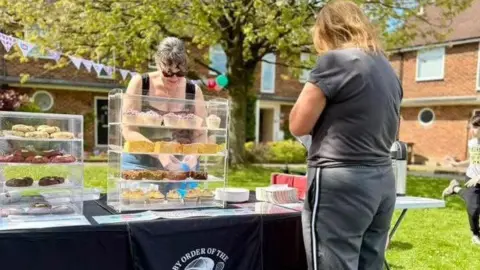
Now three years on, the mum of two from Solihull uses a wheelchair and has set up a cake business, called Cakey Blinders, determined not to let the condition stop her from living her best life.
"I was so focused on trying to find a cure, I was driving myself crazy and I realised I wasn't living properly," she said.
 Sarah Lewis
Lewis was inspired to start her cake company in October 2025 to provide her home-educated 11-year-old son with a real-life example of marketing and ways to run a business.
From getting cakes out of the oven, to helping serve customers at market stalls and taking photos for social media, her family help her with all aspects of the business.
"Baking is my therapy, everything switches off and it's just me and the cake," she said.
The 46-year-old added that knowing the story behind a celebration cake was a special moment and loved being a part of people's special occasions.
 Sarah Lewis
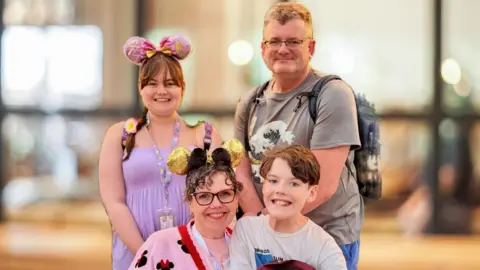
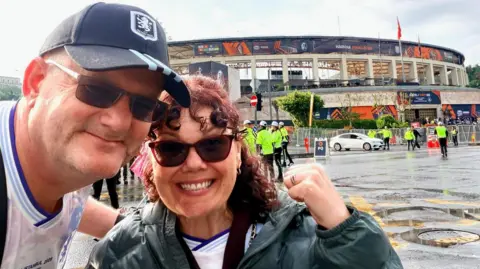
Lewis has travelled to a number of places with her family since her diagnosis, like Egypt, Disneyland Paris and Istanbul for the UEFA Europa League final.
She said that having a positive mindset was important as FND had "taken enough from me" and she was determined not to let it take away the quality of her life.
"I just think if I wasn't upbeat I wouldn't do anything, as everything is so challenging and fatigue is one of the most limiting aspects," she said.
 Sarah Lewis
Lewis said that the challenges she faced used to make it frightening to go outside, but her mindset has changed to "be resilient, handle the knocks and move forward".
"Ultimately it's brought {our family} closer together, as it's made us realise how much we love each other. We really cherish the time we get together," she said.
She added that she was "determined" to let her children have the "best memories" , even though they couldn't do the same things they used to be able to do.
What is FND and how does it affect the body?
FND is a condition that affects the functioning of the nervous system with symptoms that tend to change over time.
The NHS said that most people experienced symptoms that were short -lived, but for others they persist for months or years and are very disabling.
Treatment options like psychotherapy, physiotherapy or occupational therapy were available with many people finding specialist treatment "resolves symptoms completely", it said.
However, others can remain disabled by functional neurological symptoms "for many years", but with the "right approach gradual improvement can be expected".
Follow BBC Birmingham on BBC Sounds, Facebook, X and Instagram.
