Family criticise test delays at drug death inquest

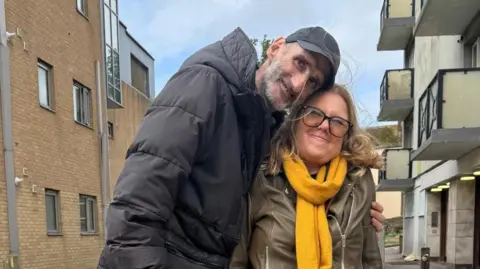 Family
The family of a man who died in a drugs-related incident have said that the system for testing blood samples after death "is not fit for purpose" in Kent.
Antony Irvin, 52, was found dead at his home in Ramsgate in September. His family believe substances in his blood could have been missed because of the delay.
An inquest in Maidstone heard that toxicology tests took place almost three weeks after Irvin's death, with analysis completed at the end of December.
The coroner said that delays to testing were "not unusual in these circumstances due to cuts and reduction in service levels", while Kent County Council (KCC) said that toxicology tests could take many weeks, but there had been no cuts.
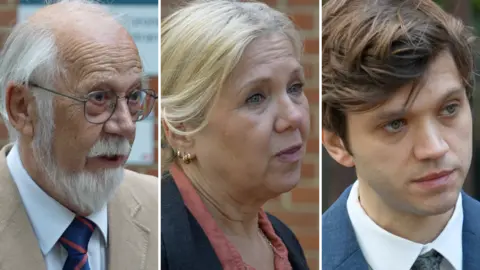
After the inquest, Irvin's brother, Tom Powell, said: "The delays in taking and testing our brother's blood seem to be routine and that seems to be a systemic failure in East Kent and Thanet."
Irvin's sister, Nicola Irvin, added: "It's a shocking thing to hear that data isn't gathered because the money isn't there for people to do their jobs properly and that becomes standard practice – and that standard practice is not fit for purpose because of those cuts."
The family raised concerns that substances like synthetic opioids that can contaminate supplies without users' knowledge may have been missed.
A recent report by King's College London said that those types of drugs degrade in post-mortem blood and the harm caused was likely to be "significantly underestimated".
Kent and Medway assistant coroner Mark Haskell said that it was possible that Irvin was using some kind of synthetic opioids, but added: "I have no evidence of that."
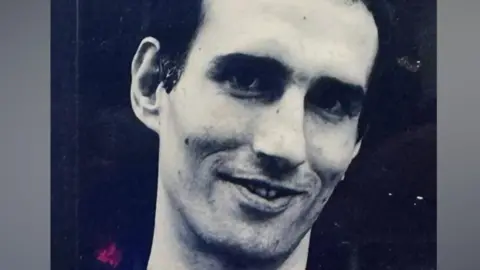 Family
Irvin, described by his father, David Irvin, as loving, kind, cheerful and "almost always optimistic", grew up in Broadstairs and moved to Ramsgate about 10 years ago.
He was supported by a charity who prescribed him methadone to aid his addiction.
The coroner concluded that morphine found in Irvin's blood was a result of heroin broken down to a fatal dose of morphine, which combined with methadone, led to his death.
A KCC spokesperson said: "Coroners' toxicology analysis is detailed and complex and, across the country, can take many weeks to complete."
They said that KCC's Kent Scientific Services (KSS) delivered toxicology testing, and there had been no cuts to Kent and Medway Coroners or KSS.
The council added that it had invested an extra £250,000 in services over the past year, he said.
If you have been affected by any of the issues in this story, help and support is available at BBC Action Line.
Follow BBC Kent on Facebook, on X, and on Instagram. Send your story ideas to southeasttoday@bbc.co.uk or WhatsApp us on 08081 002250.
