Early learning disability diagnosis 'made such a difference'

 Family photo
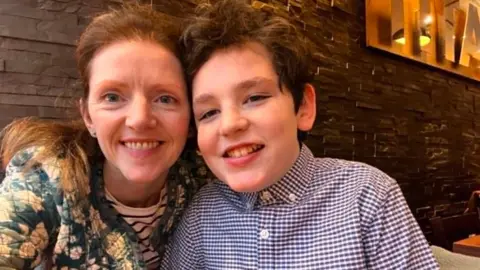
A mother whose son was diagnosed with a rare genetic disorder at the age of three has said early intervention was key for supporting families facing learning disability challenges.
Kelly's 13-year-old son Gael has Fragile X Syndrome, as well as autism and ADHD.
The condition causes physical abnormalities, behavioral issues and a range of other health problems, including developmental delays and learning disabilities.
Kelly said in the US they were "really big advocates of doing genetic testing following an autism diagnosis" and that early finding "changed everything" for their family.
While she is originally from the Isle of Man, Kelly and her family lived in the states for 20 years, and it was there that Gael was diagnosed with autism at three years old.
After they received the news, she discovered she carried the gene responsible for Fragile X syndrome and had unknowingly passed it on.
"It's not an individual diagnosis, it's a family diagnosis," she said.
"Once my son was diagnosed, we found 24 other family members that either carry the gene or have the full mutation like my son does."
'Heartbreaking'
Speaking during Learning Disability Week on the Isle of Man, Kelly described the early years after diagnosis as isolating and overwhelming.
"So much of it was a lot to learn really quickly with no family support nearby," she said.
But she told of life in Boston where specialist support and intensive therapies were put in place straight away and had helped her son develop speech after years of delay.
She said early intervention was responsible for "how well he's doing right now".
Moving back to the Isle of Man five years ago, Kelly began volunteering with Manx Mencap, a charity that works to empower people with learning disabilities.
She said when she returned to the island, when her son was eight, she noticed marked differences in support for families seeking diagnoses.
"I do really believe in the power of early intervention and it made such a difference to our son," she said.
"It's heartbreaking when you see families here that are struggling with a young child and they don't know where to go."
Manx Care has been contacted for a response.
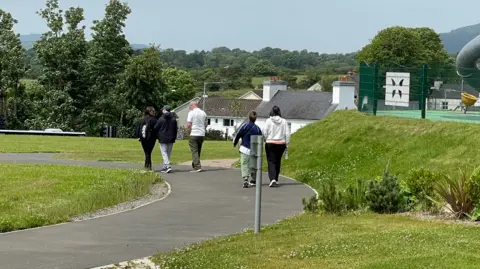
For fundraiser Debs Dixon, this week was about recognising people with learning disabilities as valued members of society as well as tackling isolation.
She said many families still faced barriers to activities and everyday opportunities that others often took for granted, particularly where additional support needs or accessibility were involved.
"I think it's literally getting access maybe to activities that mainstream people would have access to with their families," she said.
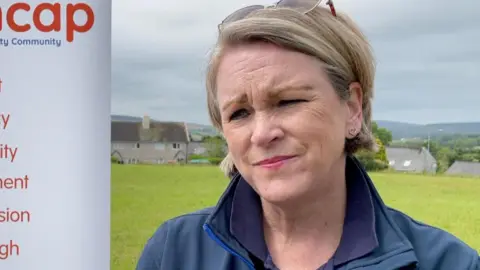
She added that changes to public funding had left charities increasingly stepping in to provide services and opportunities.
A review into learning disability care in 2025 found an overhaul was needed on the island, reporting a "mismatch" in services.
"Until opportunities are equal for families and people with disabilities then we're still behind the curve," Dixon said.
Safeguarding practitioner for health with Manx Care, Pete Corkill, said the events for Learning Disability Week were designed to ensure people with disabilities had a direct role in shaping services.
Adults and young people with learning disabilities will speak publicly about the issues, interests, and ambitions that matter most to them, he said.
Corkill added: "Until we actually listen to people about what's important to them and about their lives and their experiences on the Isle of Man, we're very much running blind."
Specialist speech and language therapist Ealish McDonald said one of the aims of the week was to challenge assumptions and ensure people's voices were heard.
"When the theme is Do You See Me?, we need to actually be amplifying those voices," she said.
MacDonald said: "We should be promoting addressing people as adults, directly speaking to the person regardless of how much they do or don't understand."
Read more stories from the Isle of Man on the BBC, watch BBC North West Tonight on BBC iPlayer and follow BBC Isle of Man on Facebook and X.
