Council set to lose tens of millions on property sales

 PA Media
A council is set to lose tens of millions of pounds after selling off properties originally bought as commercial investments costing £301m.
Somerset Council declared a "financial emergency" in 2023 and said it would sell buildings such as shops and offices, mostly bought by former district councils.
The government gave the authority special permission to spend the money raised on running day-to-day services like adult social care, following warnings it could go effectively bust.
The council said by avoiding going bust it was "able to sell assets in a managed way to achieve the best possible results, while also protecting key public services and reducing the need for further borrowing".
Based on the prices of the properties sold so far, and the value of those remaining, the council is set to make a £90m loss on the money borrowed for the investments.
The original 48 properties cost £301m, including fees and stamp duty.
How did we get here?
Four district councils, which were replaced by Somerset Council in 2023 along with the county council, bought the 48 properties for £301m as part of an investment strategy taken by a number of English local authorities.
They included retail parks, office blocks and shop units both in Somerset and across the country, like the M&S building in Yeovil, TK Maxx in Worcester and Teeside Jaguar Land Rover showroom.
They were meant to be commercial investments which would bring in rent while also growing in value over time.
The 28 properties which the council has already sold off brought in £56.4m of rent while they were owned by the local authorities.
But some properties in the portfolio have significantly lost value due to falling market prices in recent years.
Councillor Liz Leyshon, Lib Dem lead member for finance, said "Covid and the lockdowns made a really big difference" to property values, as well as the invasion of Ukraine and rising interest rates.
"That accumulated impact has been a bit of a perfect storm," she added.
How much has this scheme cost?
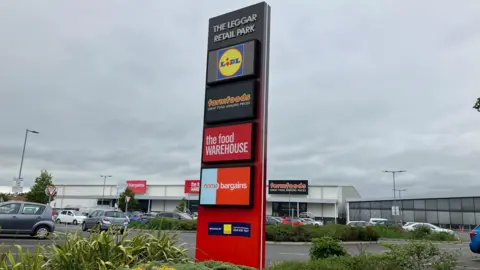
Newly-released figures show the prices the council got for a ceramics factory in Stoke-on-Trent (£14m), an Audi dealership in Cardiff (£5m), a retail park in North Shields (£11m) and a B&Q and Costa in Glastonbury (£5m).
So far, Somerset Council has sold 28 properties for £128m, making a £39m loss on these sales. However, it said that was to some extent off-set by £56m in rental income generated during their ownership.
Leyshon said the rental income had "enabled [the councils] to protect better the services they provided for their residents".
The 20 properties the council still owns bring in rent of £8m a year.
20 properties, currently valued at £79m, remain unsold - of which 18 have been authorised for disposal by councillors.
The council expects to bring in £61m from asset sales in 2026/27.
A council spokesperson also said some of the properties weren't bought for "pure investment purposes" such as M&S in Yeovil which was bought to keep the store operating in the town centre.
What does this mean for local residents?
 Google Maps
The £128m Somerset Council has raised so far from property sales will be spent on day-to-day services for local residents like adult social care and children's services.
A council spokesperson said the authority asked the government for financial support and was encouraged to sell assets and investments to balance its budget.
It was given special permission by the government to use the money from selling off properties towards day-to-day services.
Council leaders said without this, the authority could have gone effectively bust, which involves commissioners coming in and taking "drastic action", including a "fire sale" of assets.
The spokesperson said the council had "protected services and disposed of assets in a managed way to achieve the best possible results".
However, the council will still have to find money to pay back the original loans taken out to buy the properties.
The purchases were largely funded by borrowing from the Public Works Loan Board, which the council is responsible for repaying with interest. It makes these payments from its revenue budget.
Has this happened elsewhere?
 JLL
JLLJonathan Carr-West, of the Local Government Information Unit think tank, said councils across England had been encouraged to invest in commercial property by the coalition government around 10-15 years ago.
Carr-West previously said many found the purchases actually "exacerbated their financial problems".
In recent years, Southampton City Council has raised more than £15m from commercial property sales, Swindon Borough Council put two industrial estates up for sale for £16m and Birmingham City Council sold off hundreds of homes built for the Commonwealth Games which were never used and left the authority with more than £142m of debt.
Meanwhile Woking Borough Council, which declared itself effectively bankrupt, is selling off a flagship regeneration project to try and reduce its debts.
Follow BBC Somerset on Facebook and X. Send your story ideas to us on email or via WhatsApp on 0800 313 4630.
