Poet wins Eisteddfod Chair for second time for 'exhilarating and tender' work

 The National Eisteddfod
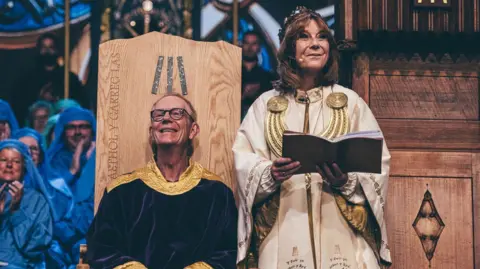
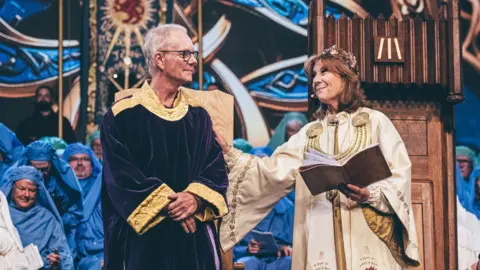
One of the National Eisteddfod's most prestigious honours has been awarded to poet Emyr Lewis for his work, which has been described as "exhilarating and tender".
Lewis won this year's Eisteddfod Chair after judges praised his winning poem for its originality in a competition that attracted 16 entries - the highest number since 1988.
It is the second time he has received the award, having previously won in 1994.
Judges described the winning work as "a riot of an awdl" - a long poem - spanning eight centuries and said it brought "astonishing novelty" to the competition.
Presenting the award on behalf of his fellow judges, Idris Reynolds said the theme "Line/Lines" had given poets "the freedom to go wherever they wished".
He said two entries had stood out in the competition.
One, submitted under the pseudonym Pwll y Wrach, was described as "a masterly awdl" rooted in the history and tradition of west Wales.
However, the judges said Lewis' winning work shone in its "originality".
Describing the winning entry, the judges said: "This is a riot of an awdl, bringing astonishing novelty to the chair competition.
"It leads the eisteddfodic awdl into places it has never gone before, plunging into the absurd depths of the subconscious. It is a train journey through the nightmares of the night beneath the curve of an uneven, fickle moon."
"They described it as an "exhilarating and tender awl".
 The National Eisteddfod
Lewis was born in London before moving to Cardiff with his family at the age of six.
He attended Ysgol Gymraeg Llundain, in west London, and Rhydfelen Comprehensive School, where his interest in poetry was sparked by his Welsh teacher, Nia Daniel.
Lewis worked as a lawyer until 2019, when he became head of the department of law and criminology at Aberystwyth University, where he is now a professor. He has published three poetry collections.
 The National Eisteddfod
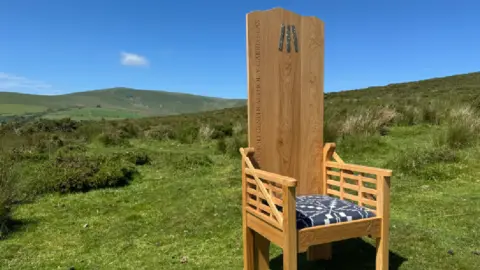
The wood in this year's chair, which is awarded annually at Wales' most important cultural festival, came from the land within the Pembrokeshire Coast National Park, with materials also sourced from this year's catchment area in west Wales.
The front of the chair was inspired by the chair of Lord Rhys, which can be seen at nearby Cardigan Castle, where the first recorded Eisteddfod was held in 1176.
The event, which includes a competitive element and promotes Welsh language and culture, attracts around 150,000 people each year.
Eisteddfod roughly translates into English as "sitting-together".
Next year's event will take place near Machynlleth, in Powys.
