I hunted the men who secretly film their wives and share footage online

 BBC/Rock Paper Productions
Men have secretly filmed their wives and girlfriends and posted footage online, before boasting about their recordings.
Others targeted strangers, with one hiding a camera on a walking route in the hope of catching women urinating.
Charity Refuge reported a 78% rise in technology-facilitated abuse referrals, while Welsh Women's Aid said the scale of the problem is hard to quantify because most victims don't even know it's happening.
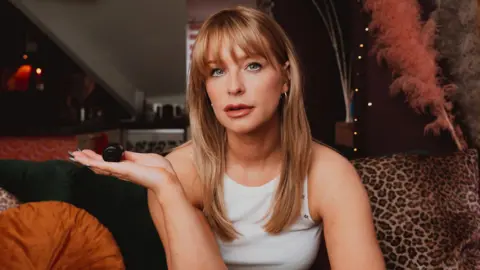
In a new BBC documentary uncovering a dark online network of hidden cameras, Hunting the Spycammers, presenter Jess Davies teamed up with investigative journalist Liam Connell, who has previously infiltrated secretive online networks.
The topic is personal to Davies, who was secretly photographed naked while sleeping, with the image shared on a private WhatsApp group.
The pair gained access to a voyeur website - a hub from which users link to encrypted chat groups - and uncovered people openly exchanging tips on secretly filming people and boasting about their recordings.
"It's a never-ending cycle of mass distribution of non-consensual content of women," Davies said.
"It feels like these women are being hunted down and preyed upon."
The programme revealed people were hiding cameras in bedrooms, bathrooms, changing rooms and other private spaces.
"It felt so extremely violating, to think someone you cared for could do this to me. It makes you feel worthless," she said.
"Seeing similar images of other victims shared in the forum that we infiltrated brought those feelings of betrayal back and made me question where my image ended up.
"Could it have made its way to one of these forums?"
Davies said some dismiss the impact of such actions as harmless or "just banter".
"For others, like the voyeurs we mention in our film, they felt if the victim never knew they were filmed without consent then there was no problem.
"It really highlights how dismissed online harms and image abuse is.
"Behind each image or video is a person who has to live with that betrayal for the rest of their life."
She added: "What is really disturbing is how many of the perpetrators were filming and sharing content of people - mostly women - that were their loved ones.
"It really highlights how anyone can be targeted with this harm."
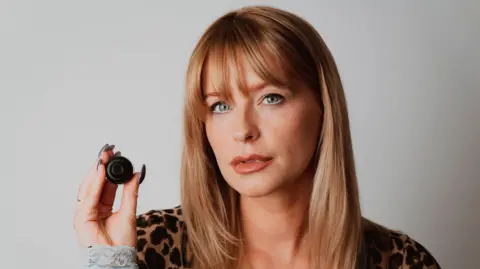
During her investigation, the 33-year-old, who grew up in Aberystwyth, Ceredigion, discovered the range of cheap spycam technology available, with cameras disguised as everyday objects such as pens, air fresheners and plugs.
 BBC/Rock Paper Productions
Davies also confronted the owner of the forum they infiltrated.
She said: "He told us he regularly checks content and takes down non-consensual content, but looking at the evidence we'd found, it seemed little thought had gone into the long-lasting harm this content has on the victims.
"It felt as if the people who had been filmed without their consent had been totally overlooked and dismissed, their consent wasn't needed.
"In fact, it was the lack of consent which motivated many of the spycammers."
Davies hopes the documentary raises awareness of the harm caused by hidden spy cameras and reinforces that abuses of privacy and "consent should never be normalised".
Are secret recordings illegal?
In the UK, filming someone is not automatically a crime.
For example, in public spaces, people are often allowed to film what is visible to them.
Secret recording becomes a crime for a number of reasons, including if it is voyeurism, takes place in an area where the person being filmed can expect privacy, or is done to cause harassment or alarm.
Domestic abuse charity Refuge is calling for tougher regulation of hidden surveillance devices and better police training to identify and investigate their use.
"What is especially worrying is how accessible and affordable these devices are, allowing more perpetrators to weaponise them as a form of control," said its policy and public affairs manager Bo Bottomley.
It has seen a 78% rise in referrals for cases of technology-facilitated abuse in the last year.
But the charity said nearly every survivor it supported has experienced some form of technology-facilitated abuse, and there has been a rise in reports of hidden cameras and microphones being used in homes.
A spokesperson from Welsh Women's Aid said "this form of covert surveillance can strip away a person's sense of privacy and safety".
The charity warned that the harm extends far beyond the initial recording, with shared images and videos having a devastating impact on survivors' lives and leaving many feeling unsafe, even in their own homes.
"This form of abuse is particularly challenging to quantify. Many survivors will not be aware that this is happening to them," they added.
Refuge also called on tech companies to act quickly to remove shared spycam footage and provide information to police to help identify those responsible.
The UK government said it did not "tolerate covert filming or the harassment of victims".
Its Violence Against Women and Girls (VAWG) Strategy includes measures to tackle online and technology-facilitated abuse, while exploring ways to improve the safety of smart and connected devices.
A spokesperson added: "It is already illegal to share intimate images without consent. Through the Crime and Policing Act, we are going further by making it an offence to take intimate images without consent, including by installing equipment such as cameras to enable people to do so.
"We are funding a national centre to improve the police response to violence against women and girls."
Hunting the Spycammers will be available on the BBC's YouTube channels and the BBC iPlayer on Wednesday 15 July
