What can go in Wolverhampton's new food bins?

 City of Wolverhampton Council
Weekly food waste collections have begun for Wolverhampton's kerbside households.
The scheme, which started on Monday, has been introduced under government recycling rules aimed at increasing recycling rates and reducing the amount of food waste disposed of with general rubbish.
Why is this happening?
The new collections are part of the government's Simpler Recycling reforms, which require councils across England to introduce weekly food waste collections.
In Wolverhampton, collected food waste will be sent to an anaerobic digestion facility where it can be used to generate energy and produce fertiliser.
What can go in the food waste bin?
Residents can recycle:
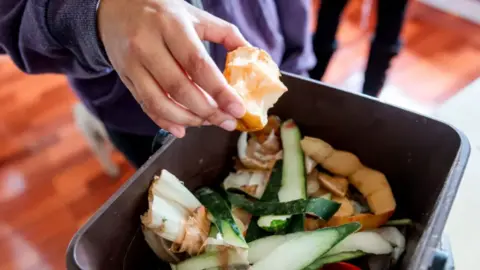
- Leftovers and plate scrapings
- Fruit and vegetable peelings
- Mouldy or expired food
- Meat and fish, including bones
- Eggshells
- Tea bags
- Coffee grounds
- Uneaten pet food
 City of Wolverhampton Council
What cannot go in it?
The caddies should not be used for:
- Milk, oil and other liquids
- Plastic bags
- Compostable or biodegradable plastic
- Garden waste and flowers
- Pet litter or pet waste
- Nappies
When is it collected?
Food waste will be collected every week.
Residents should put their outdoor caddy out on the same day as their normal refuse and recycling collections.
 Getty Images
Will it smell?
The council says weekly collections should help reduce smells by removing food waste from homes more regularly.
The caddies also have locking lids designed to keep odours in and animals out.
Do I need to buy liners?
No.
Households have been provided with free liners and can request more by attaching the reorder tag supplied with each roll.
If you don't have a tag, you can tie a liner or another bag to the handle of your outdoor caddy instead, the council says.
Will I be fined if I do not use it?
No.
The council said residents can choose whether to take part and will not face fines for not using the service.
What happens to the food waste?
Collected food waste will be taken to an anaerobic digestion facility where it will be turned into energy and fertiliser.
The council says this can reduce greenhouse gas emissions while turning food waste into useful products.
Follow BBC Wolverhampton & Black Country on BBC Sounds, Facebook, X and Instagram.
